eNews
Starsports.com targets 10 mn unique visitors during ICC T-20 World Cup


MUMBAI: To say cricket is a religion in India could be an understatement. Cricket fanatics who are unable to watch live action on television find help in mobile phones and sports websites to get near live updates. These cricket devotees now have a whole new comprehensive experience on offer in Starsports.com.
Ever since its launch in June 2013, starsports.com has drawn nearly 28 million unique visitors for all its sports properties and the average time spent is 45 minutes per match. Starsports.com claims these numbers – comparable to television – are the highest ever on a digital platform.
“During the recently concluded Asia Cup, we witnessed 4.5 million unique visitors, and with over 10 million video views, the numbers are really humbling,” says Star India digital head Ajit Mohan. “The average time spent on video content was 32 minutes. Thus, Asia Cup was an affirmation that if someone is willing to create a great video experience there is a great appetite for it out there.”

Heading into the ICC T-20 World Cup, Starsports.com is going through a fairly major revamp. “It all began in June 2013 with Starsports.com and our major pull was the proposition of watching live matches on the go or on desktops for a subscription price with a great video player having timelines and data integrations with the option of tracking data without leaving the live video,” adds Mohan.
Now the portal is expanding the proposition with the insight that when sports fans are not in front of their TV sets there is a huge interest in following the matches. And of course the interest is higher when India is playing.
“So far, most companies for sports on the web will give the option of text commentary, or give ball by ball commentary. Over the last six months with the onset of Starsports.com with live video available on subscription and text commentary, we have changed the way sports is perceived on the web,” explains Mohan.
Starsports.com believes that there is a whole new space in between which can be shaped by it and create an experience that is way better than text commentary.
The three major changes that will be experienced on the revamped site, as Mohan puts it, will be Zip Clips, Graphical Representations and streaming of live action with a 5-minute delay.
 |
Zip Clips: Starsports.com is creating a new match centre, where sports fans will be able to enjoy the live match through a series of clips. Almost ball by ball we will have ‘Zip Clips’ to catch up with the game or follow the game. So one doesn’t really have to sit and read the scores but gets to experience it with a series of short clips. And the clips will be almost in real time.
Graphical Representations: The other thing added to the mix is a lot more graphical representation during the match and provide nuggets and insights. There will be experimentation with capturing in graphics where the match stands at that point in time.
5-minute delayed live stream: And the third and most promising proposition for sports fans is streaming of the live action with a five-minute delay. This should encourage increased video consumption also in homes that do not have more than one TV screen.
Cricket fans pressed for time and also those having low bandwidth can watch ‘zip clips’ to catch up with the near live action or when in leisure, cricket fans can watch the match with a five minute delay. For those wanting to watch live streaming, there’s a small charge to be paid.
Starsports.com carried out loads of tests for nearly four months on how to make the best use of the zip clips feature and created the work flow from both the content and the technology point of views. Taking into consideration the fact that there are bandwidth constraints across the nation, Starsports.com strives to provide the best in video content at great quality.
“Essentially, we are shaping a new service for fundamentally addressing the need for following a match. When the sports fan is not in front of the television, and therefore, to create a full video experience that is beyond what they are used to in terms of text commentary but also addresses the issue of time and convenience,” expounds Mohan. “It’s still a world where people are concerned about data charges and bandwidth and we are saying let us help you solve the concern by reducing the duration of the clips.”
The prices for the tournaments and matches are quite reasonable given that they will get to watch it in high definition. ICC T20 World Cup 2014 Pass: Rs 100; The FA Cup 2013: Rs 100; Premier League Season Pass: Rs 500; Formula 1 – 2014 Season Pass: Rs 500; La Liga Season Pass: Rs 500; Football Season Pass: Rs 800; All Sports Day Pass (floating): Rs 20; Match Week Pass (floating): Rs 30 (which starts from Friday).
 |
The zip clips will be supported by ads but they would only feature on the clips of particularly longer duration, and it has a great value proposition for advertisers. “I believe advertisers increasingly value ads when the fans are really engaged in a full video experience. So our aim is to let them target engaged sports fans, so there is no point in cluttering the clips with ads. But there will be ads against these clips and for the delayed five minute stream, only the live stream will be ad free,” expounds Mohan.
Thus with these three offerings Starsports.com is trying to keep sports fans pleased with the proposal of watching shorter clips to play catch-up with the live action or to watch the five minute delayed stream at leisure or if you are really keen to watch M S Dhoni smack the ball out of the park live just shell out a few extra bucks.
“We have always had a tournament pass, season passes on soccer and our objective has always been to keep the prices reasonable and we believe in delivering quality content at that price,” beams Mohan.
Speaking on Starsports.com’s association with Vodafone, Mohan adds, “They are a very valued partner for us, I think as a telco looking to shape data and video consumption, they are acutely aware of the power of sports, so we are powering Vodafone Sports with our curated content and all of what we are doing here will help us shape that service as well.”
Social media acts as a catalyst for driving viewers from all over the web to the content on offer. These clips will be made available for easy sharing, “But I guess primarily people want to watch the matches and the shorter clips and for us to deliver a great video experience, we don’t want to clutter our social media with the buzz word like most providers do,” explains Mohan.
Looking at the kind of brands that the portal has on board and already in talks with some of the leading brands for the ongoing T-20 World Cup, industry sources estimate that starsports.com generated ad revenue of around Rs 7-8 crore during the recently concluded Asia Cup and would generate around Rs 15-16 crore from the ongoing ICC T-20 World Cup.
“We have received a great response from the advertisers and a lot of brands are looking for a great video experience on the web. It’s no longer about banner ads and they are keen to grab the attention of engaged sports fans,” says Mohan.
Starsports.com is gung-ho about touching the 10 million unique visitors mark during the ICC T-20 World Cup tourney. “Our target has always been to hit the 50 million unique visitors mark between the major tournaments namely the recently concluded Asia Cup, the ongoing T-20 World Cup and the upcoming big-ticket tourney the Indian Premiere League,” says Mohan.
There are three major things that one looks at when delivering the best experience through a sports service – one is having great storytellers, great infrastructure and the video player.
Expanding on these three aspects, Mohan says: “We have a dedicated sports team working on the digital front, focusing on how to communicate stories on the web. We have learnt a lot over the past year to deliver the best in sports experience on the web and finally our video player is something that we are proud of after investing so much on building one of the best players in the market currently that can support great graphic content as well.”
Starports.com is clearly living up to its claim of being the YouTube of sports in India and is focused on building a strong backbone for video content delivery and continuing to invest in improving the experience even further.
“For us, the response we receive from the ICC T-20 WC and the IPL will be a good trial of (whether) we are able to both communicate and bring in a sports fan,” says Mohan.
“Sports fans have been used to something else and it’s not easy to bring a change in habits as most people have been following a text scorecard over the years and our challenge is to tell them that there is a better way to consume sports,” concludes Mohan.






eNews
Paisabazaar launches Credit Premier League 2.0
Nationwide campaign rewards highest credit scores with Rs 1 lakh top prize.
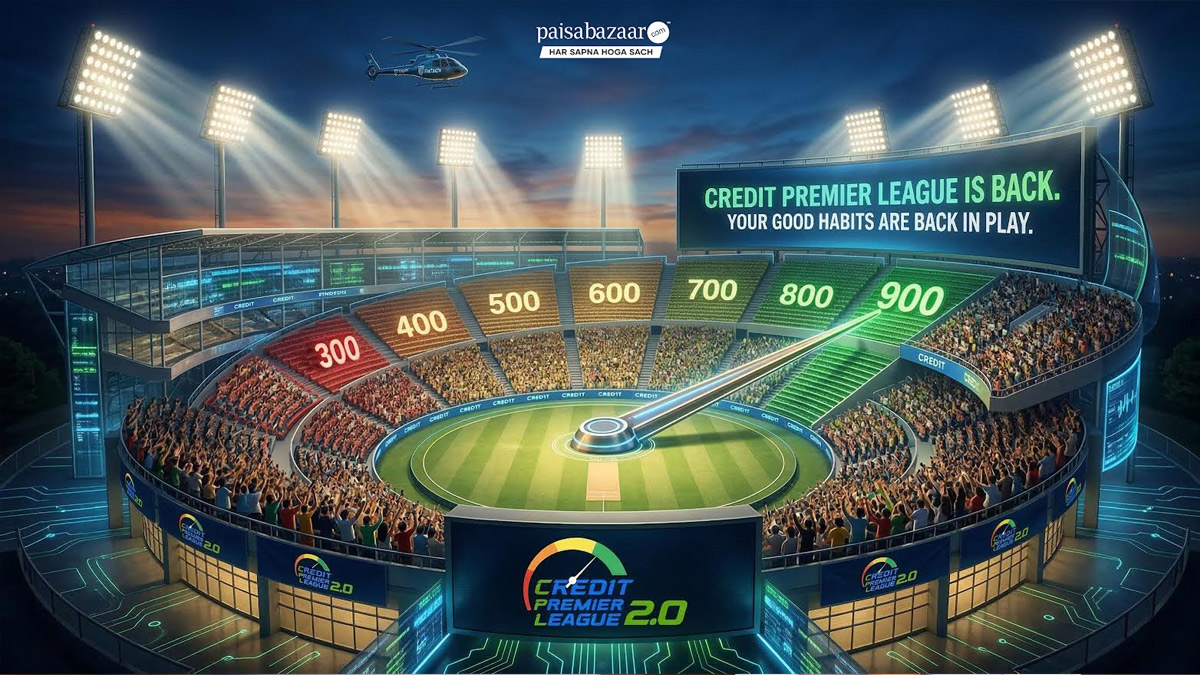
MUMBAI: When credit scores become a national league, even your CIBIL report starts feeling like it’s playing in the IPL and Paisabazaar has just kicked off the second season. Paisabazaar, India’s leading marketplace for financial products and the country’s largest free credit score platform, has announced the return of the Credit Premier League (CPL) 2.0, a fun, nationwide initiative to recognise and reward individuals with the highest credit scores.
Building on the success of the first edition, CPL 2.0 introduces higher rewards and broader participation. The individual(s) with the highest credit score in the country will win Rs 1 lakh, while state champions will each receive Rs 10,000. Additionally, all participants from the winning state, the one with the highest average credit score will also be rewarded.
All winnings will be credited directly to winners’ PB Wallet, allowing them to pay credit card bills, recharge mobiles, or settle utility bills seamlessly on the Paisabazaar platform.
Paisabazaar CEO Santosh Agarwal said the campaign aims to make credit awareness more engaging and mainstream. “With CPL, we are bringing together engagement, gamification and rewards to make conversations around credit scores more mainstream,” he noted. “Our focus remains on building a financially aware and credit-healthy Bharat.”
The first edition of CPL saw over 5.5 million participants, with the highest individual score touching 861. Delhi recorded the highest average credit score of 746.
Consumers can participate simply by checking their free credit score on the Paisabazaar platform or app. The CPL leaderboard and rankings will be available exclusively on the Paisabazaar App.
In a country where financial dreams are serious business, Paisabazaar has found a smart way to turn credit scores into an exciting game – because when your financial health gets rewarded, everyone wants to play.






