News Broadcasting
Star in process of selling its 26% stake in MCCS to ABP

MUMBAI: Star India is in the process of transacting the sale of its 26 per cent stake in Media Content & Communications Services (MCCS), the company that owns and operates three news channels, to its joint venture partner Ananda Bazar Patrika (ABP) Group.
“We have offered our shares to ABP Group at a mutually agreed value. We are in the process of selling our entire stake in MCCS”, said Star India chief executive officer Uday Shankar in an interview with Indiantelevision.com.
The completion of the transaction will free News Corp from owning any stake in a local news venture in India. Star had already disengaged itself from any involvement in MCCS and the Star brand name had been taken out of the Hindi, Bengali and Marathi news channels.

In April this year, Star and Ananda Bazar Patrika (ABP) Group had announced their divorce. MCCS, the joint venture company with Star as a 26 per cent stake owner and ABP holding the balance 74 per cent, launched Star News in March 2004, Star Ananda (Bengali) in June 2005 and Star Majha (Marathi) in June 2007.
According to a source, Star is selling its stake at a value that is not high. Shankar, however, declined to talk on this. “We do not talk about our financials. All that I can say is that we have split amicably,” he said.
MCCS has operationally broken even since FY’11, from its loss of around Rs 60 million in the earlier year on a revenue of Rs 2.13 billion, according to market estimates. The company’s revenue in FY’12 has crossed Rs 2.6 billion.
When asked whether Star was planning to buy a stake in NDTV, Shankar said the company had decided to exit the news business in India because of the 26 per cent FDI cap in the news sector. “We will not invest in any news venture including NDTV till the FDI cap is upped. “
Star feels that the whole economics of the TV news business in India is not working. “News Corp is not a financial investor. If you are not in the driver’s seat or have no significant say in the business, it doesn’t make strategic sense at all,” said Shankar.
But won’t the former MCCS CEO and a newsman himself miss the news business? “We have created a tremendous entertainment footprint and will now build the sports business. News is definitely a gap in our portfolio. But unless there is a change in the FDI limit, it doesn’t make sense,” said Shankar.
Balaji Telefilms is the other joint venture company where Star has exited from any involvement but is holding on to its 25.9 per cent stake. While Star has been wanting to sell for long, the promoters of Balaji Telefilms have not made the purchase yet as the share prices have slipped drastically over the years. In the joint venture termination agreement inked in 2008, Balaji had the right to purchase the shareholding held by Star for an aggregate price of Rs 190 per share. But that period has lapsed and Star has the right to independently find a buyer for its stake in Balaji Telefilms.






News Broadcasting
CNN-News18 to host Fury in the Gulf conclave on West Asia crisis
Three-hour summit to unpack geopolitical fallout and impact on India
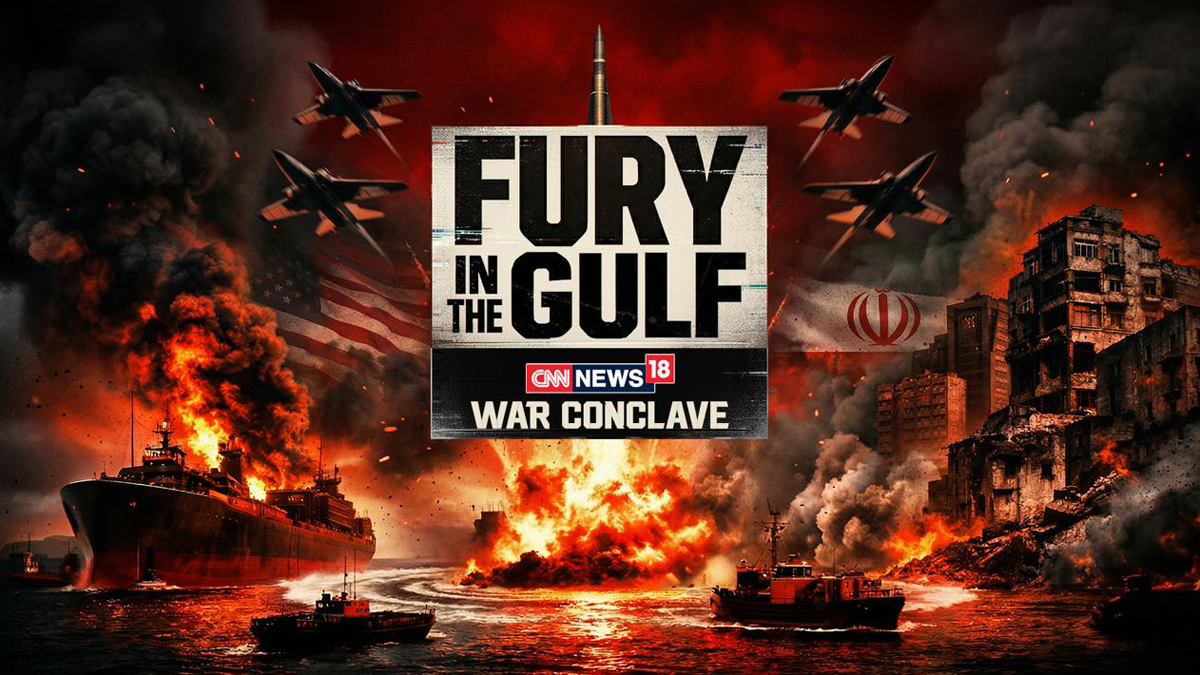
MUMBAI: CNN-News18 is set to host a special three-hour broadcast, Fury in the Gulf – War Conclave, on April 7, aiming to decode the escalating West Asia crisis and its far-reaching implications for India.
Scheduled from 4:00 PM to 7:00 PM, the conclave comes at a time when tensions between Iran and the United States are reshaping global geopolitics and triggering economic uncertainty. With India’s deep energy ties, trade links and large diaspora in the Gulf, the developments carry significant domestic relevance.
Built around the theme ‘Conflict, Consequences, and The Future,’ the programme will feature six curated sessions combining one-on-one interviews and panel discussions. The focus is to cut through the clutter and offer viewers a clearer understanding of the fast-evolving situation.
Key sessions include ‘Diplomacy in Times of War’ featuring Shashi Tharoor, and ‘World After the Iran Conflict’ with voices such as Ram Madhav, Reuven Azar, representatives from the European Union and the Iranian Deputy Envoy. Another session titled ‘Another Dunkirk?’ will bring together K. J. S. Dhillon and Jitin Prasada among others.
CNN-News18 editorial affairs director Rahul Shivshankar said, “In times of war, clarity becomes the most powerful tool. Fury in the Gulf – War Conclave brings together credible voices to address the questions and confusion that arise amid an overwhelming influx of information.”
He added that the initiative is aimed at delivering “facts, perspective, and insight” at a time when misinformation can easily cloud public understanding.
Echoing the sentiment, CNN-News18 CEO– English and business news Smriti Mehra said the conflict marks a defining global moment, with consequences that extend well beyond the region. She noted that the conclave seeks to present the crisis with “depth, nuance and responsibility” so audiences can better grasp its real-world impact.
As geopolitical tensions continue to dominate headlines, the conclave positions itself as an attempt to bring order to the noise, offering viewers a structured, insight-led look at a complex and rapidly shifting global situation.






