
I&B Ministry
Spectrum auctions next month, DoT issues notice and sets quantity on offer


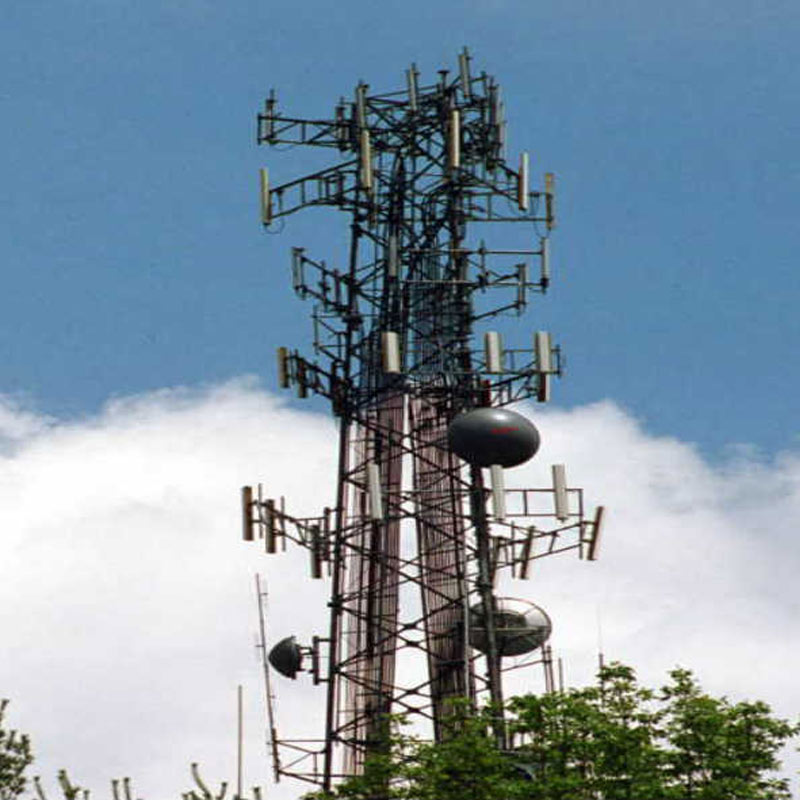
NEW DELHI: The Government has decided to allot the right to use certain spectrum for 20 years through Spectrum Auction to be conducted next month.
The Notice Inviting Applications (NIA) for Auction of Spectrum has already been uploaded by Department of Telecom on its website www.dot.gov.in today.
The Government believes that this will provide a great opportunity to the existing service providers as well as new entrants. The existing service provider may acquire additional spectrum so as to match international level of spectrum holding.
A single auction will be conducted in Simultaneous Multiple-Round Ascending (SMRA) format for seven bands: 700MHz, 800MHz, 900MHz, 1800MHz, 2100MHz, 2300MHz and 2500MHz bands together.
1 Spectrum put on offer is as follows;

2 The total quantity of spectrum put to auction is 2354.55 MHz. This includes 197 MHz of additional spectrum in 1800 MHz band and 37.5 MHz in 800 MHz band released due to harmonization of spectrum in these bands.
3 Rates of SUC for the access spectrum held or/and to be acquired through the forthcoming auction by various access service providers in 700 MHz, 800 MHz, 900 MHz, 1800 MHz, 2100 MHz, 2300 MHz & 2500 MHz bands shall be as follows:-
(i) Spectrum acquired in forthcoming auction in 700, 800, 900, 1800, 2100, 2300 & 2500 MHz band is to be charged at the rate of 3% of AGR excluding the revenue from wire line services.
(ii) The weighted average of SUC rates across all spectrum assigned to an operator (whether assigned administratively or through auction or through trading) in all access spectrum bands including BWA spectrum obtained in 2010 auction shall be applied for charging SUC subject to a minimum of 3% of AGR excluding revenues from wireline services. The weighted average is to be derived by sum of product of spectrum holdings and applicable SUC rate divided by total spectrum holding. The Weighted Average Rate should be determined operatorwise for each service area.
(iii) The amount of SUC payable by the operators during 2015-16 at weighted average derived after taking into consideration the spectrum acquired in the coming auction and excluding the spectrum in 2300 MHz/2500 MHz band acquired/allocated prior to 2015-16, be treated as the floor amount of the SUC to be paid by the operators. Further, in case there is a reduction in AGR of the service provider, the floor amount of SUC shall be reduced proportionately.
4 The option of making payment either full upfront or through deferred payment option has been retained.
5 In case of deferred payment option, the quantum of upfront payment in case of over 1GHz band i.e. 1800 MHz, 2100 MHz, 2300 MHz & 2500 MHz has been slightly modified w.r.t. 2015 auction from 33% (NIA 2015) to 50% of the bid amount. However, in case of below 1 GHz band i.e. 700 MHz, 800 MHz & 900 MHz there is no change w.r.t 2015 auction and has been kept same as 25% of bid amount.
6 The spectrum will be assigned to the successful bidder within 30 calendar days from the date of receipt of due payment under both options.
7 For the successful bidder, the Lock-in period of equity in the company has been reduced to one year instead of earlier stipulation of minimum period of 3 years or completion of roll out obligation, whichever is later.
8 There is no change in the eligibility condition. All existing Access Service providers and the entity that are eligible to acquire Access Service authorisation are eligible to participate in this auction.
9 In case of deferred payment option the same methodology of making part payment as upfront and balance payment in 10 yearly instalments after 2 year of moratorium is retained
10 The interest rate for the deferred payment option has been prescribed at the prevailing SBI base rate of 9.3% (it was 10% in 2015 auction).
11 The method of calculation of spectrum cap w.r.t. previous auction has been modified. The spectrum surrendered has also been included in the calculation of spectrum cap apart from the spectrum put to auction and assigned spectrum. The spectrum cap shall not be reduced in case spectrum is allocated for non-commercial use after auction.
12 The department recognise that in case of mobile system, coverage is to be complemented by capacity augmentation. There are many other steps that had been taken for ease of doing business and speedy roll-out of the network. Such as;
(i) Submission of self-certification of completion of roll-out obligation to the tune of 90%.
(ii) The roll-out obligation has been further eased out. Now the roll-out obligation shall be treated as fulfilled once the required numbers of district headquarters or block headquarters are covered by use of any technology in any band.
(iii) The frequency allocation process has been further streamlined so as to facilitate bidder to have maximum quantity of contiguous spectrum provided it does not disturb the block of 5 MHZ for other bidders.
13 The various stakeholders have been consulted and after publication of this NIA, a pre-bid conference is also planned to be organised by 13th August, 2016 to have further interaction with the stakeholders and answer their queries. Further bidder has the opportunity to submit its queries by 19th August, 2016 and the department will issue clarification by 29 August 2016.






