iWorld
PMO wants 5G launch by 15 Aug; DoT seeks Trai recommendations



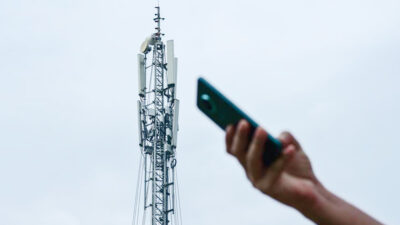
Mumbai: In view of the prime minister’s office (PMO) being keen on initial 5G launch by 15 August, the Department of Telecommunications (DoT) has requested the Telecom Regulatory Authority of India (Trai) to expedite its recommendations on 5G spectrum auctions, possibly before March.
“In response to decisions/action points emanating from deliberations of a monitoring group, PMO has requested DoT to work towards the initial launch of 5G by 15 August 2022, and also explore the possibility of obtaining requisite recommendations from Trai before March 2022,” said DoT.
The telecom regulator is working on the DoT’s request for recommendation on modalities such as reserve price, band plan, block size and quantum of spectrum to be auctioned, that were earlier expected to come in by March-end.
According to recent indications by the telecom department, 5G spectrum auctions are likely to be held in May. Telecom secretary K Rajaraman told news agency PTI that the DoT has already selected MSTC as the auctioneer for the upcoming auction.
In light of revised spectrum availability in 900 Mhz and 800 Mhz as a result of vacations/surrenders by Indian Railways and GoI, the DoT has also requested Trai to examine the need to review channel plan in 800 Mhz band and number of spectrum blocks that can be made available for telecom services in 800 Mhz band while providing their recommendations in response to DoT’s reference dated 13.09.2021 regarding upcoming spectrum auctions.
Airwaves in several bands including 526-698 MHz, 700 MHz, 800MHz, 900 MHz, 1800 MHz, 2100 MHz, 2300 MHz, 2500 MHz, 3300-3670 MHz, and 24.25-28.5 GHz have been identified for 5G auctions in India.
Norms for 526-698 MHz and millimetre band (24.25 – 28.5 GHz) are being worked out even as the aviation and broadcasting industries in India, and globally have voiced concerns regarding possible interference in C band spectrum (3.7-4.2 GHz). Public broadcaster Prasar Bharati has also raised an objection to the auctioning of 526-582 MHz frequency band that is being used by Doordarshan for providing terrestrial TV broadcasting.