eNews
Sops offered to promote indigenous electronics industry

NEW DELHI: In a move to give incentive to the electronics sector, the Government has taken steps to expedite investments into the Electronics System Design and Manufacturing (ESDM) sector in India to achieve the goal of ‘Net Zero imports’ in electronics by 2020.
The Modified Special Incentive Package Scheme (M-SIPS) is expected to create employment opportunities and reduce dependence on imports. The projects already received under the scheme have the potential to generate employment to the extent of up to one million persons (direct and indirect).
Under the amendments, applications will be received under the scheme upto 31 December 2018 or till such time that an incentive commitment of Rs 100,000 million is reached, whichever is earlier. In case the incentive commitment of Rs 100,000 million is reached, a review will be held to decide further financial commitments.
A separate Committee headed by Cabinet Secretary and comprising of Niti Aayog CEO, Expenditure Secretary, and Ministry of Electronics and Information Technology (MeitY) will be set up in respect of mega projects, envisaging more than Rs 68,500 million (approximately US$ 1 billion) investments.
The Policy covers all States and Districts and provides them an opportunity to attract investments in electronics manufacturing.
So far, 243 applications have been received under the scheme, out of which 75 applications have been approved involving investment proposals of Rs 179,970 million.
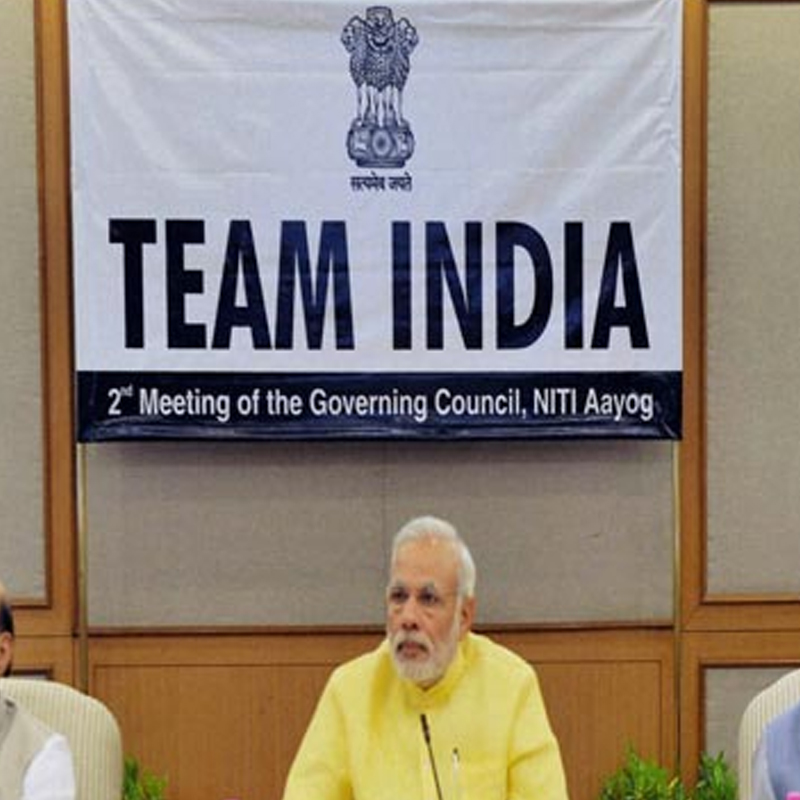
In the cabinet meeting held under the chairmanship of the prime minister Narendra Modi, the amendments that were approved say that for new approvals, the incentive under the scheme will be available from the date of approval of a project and not from the date of receipt of application.
The incentives will be available for investments made within five years from the date of approval of the project.
Approvals will normally be accorded to eligible applications within 120 days of submission of the complete application.
A unit receiving incentives under the scheme, will provide an undertaking to remain in commercial production for a period of at least three years.
The Appraisal Committee recommending approval of project will be chaired by Secretary, Ministry of Electronics and IT.
The Cabinet had in July 2012 approved the M-SIPS to provide a special incentive package to promote large scale manufacturing in the Electronic System Design and Manufacturing (ESDM) sector. The scheme provides subsidy for capital expenditure – 20% for investments in Special Economic Zones (SEZs) and 25% in non-SEZs.
The Scheme was amended in August, 2015 for scope enhancement and simplification of procedure. The Scheme has attracted investments in the ESDM sector to the tune of Rs 1,268,380 million, of which investments of around Rs 179,970 million have been approved by the MeitY. The M-SIPS has been able to create positive impact on investment in electronics sector.