iWorld
SonyLiv leverages Clevertap to gain greater understanding, segment, engage & track users

MUMBAI: Analytics and engagement technology provider CleverTap has announced that Sony Pictures Networks India Private Limited (SPN) has selected the company’s platform for real-time behavioral data and user insights for its SonyLIV video on demand (VOD) service. A pioneer of over-the-top (OTT), SPN will leverage CleverTap to gain greater understanding of their users while improving their ability to segment, engage and track them throughout the user lifecycle.
CleverTap, with offices in San Francisco, New York, LA, Mumbai and Bangalore, provides a comprehensive behavioral analytics and user engagement suite that enables brands to identify, target, measure and monetise users across mobile and web. SonyLIV provides multi-screen engagement to users on all devices.
CleverTap’s unique combination of analytics and engagement tools is achieving rapid adoption around the world for its ability to offer developers and marketers like SonyLIV a powerful solution for designing and implementing timely, personalized and impactful growth strategies. The platform’s capabilities for real-time analytics and segmentation along with multi-channel messaging, A/B testing and personalization support the application of data-based insights to drive stronger and more valuable long-term customer relationships.

“The proliferation of mobile and web apps in the digital world leads to confusion, and it’s getting increasingly difficult for developers to rise above the noise. A few years ago, just building an app was enough to capture user attention. Now it’s only the first step,” said CleverTap CEO Sunil Thomas. “Today, developers need in-depth understanding of their users along with relevant and actionable insights to even begin achieving their business objectives. In other words, the better you understand your customer, the better you can serve them.”
“Having analytics and engagement within the same platform is critical to our customer acquisition and retention strategy,” stated SonyLIV EVP and Head of Digital Business Uday Sodhi. “CleverTap’s advanced segmentation engine allows us to track, analyze and target the right customers in real-time and send timely, contextual messages using their powerful Live User Segments feature. The platform’s powerful campaign management tool has also enabled us to lift engagement, and its robust technology offers us complete confidence that CleverTap can scale with us as we achieve exponential user growth.”
CleverTap is able to support such massive use cases because of the technology innovations and engineering enhancements that go into the platform everyday. It’s scalable, secure architecture quickly processes millions of data points in a fraction of a second and gives businesses access to real-time user insights that help influence their app engagement strategy.






Gaming
DPIIT partners with Krafton to boost tech-media startups
New MoU aims to accelerate innovation in gaming, esports and AI-driven entertainment.
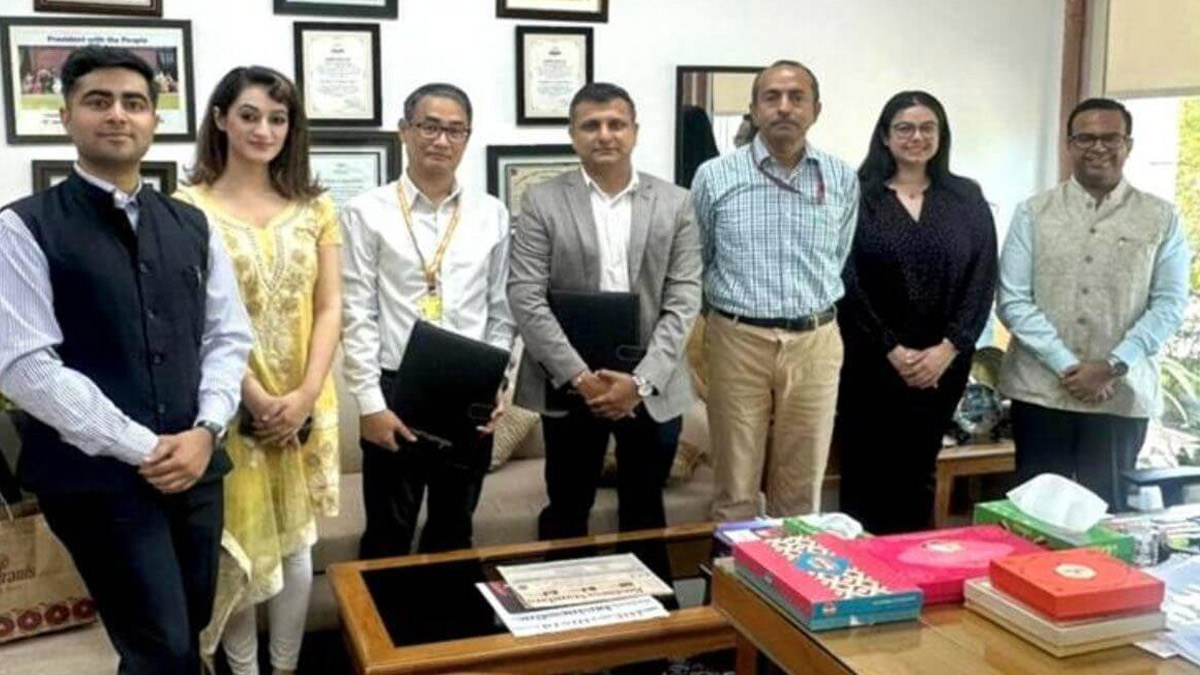
MUMBAI: When government meets gaming, sparks are bound to fly and this time, the partnership promises to level up India’s startup scene in more ways than one. The Department for Promotion of Industry and Internal Trade (DPIIT), under India’s Ministry of Commerce and Industry, has signed a memorandum of understanding with Krafton India Pvt. Ltd. to support early-stage startups working at the intersection of technology and media. The agreement, formalised on Thursday, reflects a growing effort by policymakers to harness private-sector expertise for the country’s booming digital entertainment ecosystem.
Under the partnership, selected startups will gain access to mentorship, industry networks and structured opportunities to engage with established players. The initiative is designed to help young companies move from prototype to market-ready products, test concepts, secure market access and integrate into larger industry ecosystems.
Sanjiv, a joint secretary at DPIIT, described the collaboration as part of a broader strategy to strengthen India’s digital and creative economy. He emphasised that such alliances are essential for helping startups develop globally competitive solutions in emerging sectors such as online gaming, esports, interactive media and artificial intelligence.
The programme will feature innovation challenges under the government’s startup initiatives, along with hackathons, workshops and masterclasses covering game design, animation, immersive technologies and AI applications. Selected startups may also be considered for pilot projects with industry partners based on their performance.
In a sector where ideas move at the speed of a battle royale, this partnership could be the ultimate power-up giving promising startups the mentorship and exposure needed to turn creative sparks into sustainable success stories.








