iWorld
Social Media-the stadium for 2014 World Cup


MUMBAI: Brazil had a reason to cheer this FIFA World Cup season. While it lost the big title, it was still the hub of all the excitement related to the football extravaganza. What is interesting to note is that social media platforms like Facebook and Twitter became another venue where the action unfolded with an audience comprising global fans.
The entire span of the World Cup saw a total of 672 million tweets being sent out: the highest number, Twitter has announced so far related to any event.

Of the 672 million tweets, a bulk of the conversation was during the live matches. The semi-final between Brazil and Germany saw fans sending out more than 35.6 million tweets —setting a new Twitter record for a single event.
The other top four matches were Germany versus Argentina with 32.1 million tweets. Next was Brazil versus Chile which garnered 16.4 million tweets followed by the match between Netherlands and Argentina receiving 14.2 million tweets. Finally it was the Brazil versus Colombia game which got 12.4 million tweets.
Three of the top five most-tweeted moments occurred during Brazil’s 7-1 semi-final loss to Germany on 8 July, while the other two moments came in during the final match. The top five moments that generated the biggest peaks of Twitter conversation, measured in tweets per minute (TPM), during the entire tournament was Germany defeating Argentina to win the World Cup final with 6,18,725 TPM. Next was Germany’s Sami Khedira scoring a goal assisted by Mesut Ozil during the semi-final versus Brazil which got 5,80,166 TPM. Germany’s Mario Gotze scoring the winning goal of the World Cup on 13 July generated 5,56,499 TPM. Germany’s Toni Kroos scoring his second goal in the semi final against Brazil was fourth in line with 5,08,601 TPM. Finally, Toni Kroos scoring his third goal during the same semi-final match against Brazil garnered 4,97,425 TPM.
The top 10 mentioned players in India during the WC were Lionel Messi, Luis Suarez, Cristiano Ronaldo, James Rodriguez, David Luiz, Robin Van Persie, Neymar Junior, Mesut Ozil, Pepe and Wayne Rooney.
While Twitter was buzzing, Facebook wasn’t far behind. 350 million people joined the conversation during the entire span of the World Cup generating 3 billion interactions (posts, comments and likes).
Brazil’s demolition by Germany spurred around 66 million people to create more than 200 million Facebook interactions in the semi final match. People thronged to the platform: 10.5 million people from the US in the final and host country Brazil with 10 million. Men in the age group of 18-24 posted on Facebook the most as compared to any other demographic. This was followed by men aged 24-34, women aged 18-24, women aged 24-34 and men aged 13-17.
NeymarJr saw the most fan growth on his page since approximately 15 million fans ‘liked’ his page since the beginning of the World Cup.
Meanwhile, to give a perspective of the fervor and excitement surrounding FIFA World Cup – Vdopia a leader in online and mobile video advertising recently released an info-graphic calling it ‘The ultimate multi-screen event’ after examining the impact of online and mobile devices on fan interaction with the World Cup.
The report found that fans across the Asia Pacific (APAC) region and India were following the FIFA on multiscreens like TV followed by mobiles and then laptops. The most significant trend the report noted was a paradigm shift in consumer’s video consumption behaviour termed as “multi-screen intake” or “platform agnostic” intake. Simplified, it means a typical consumer who was watching the match, checked FIFA updates and shared highlights of his favourite match on his mobile, updating them on Facebook, looking up for some information on their tablet or just sending an email – all during the same time.
Some of the finds mentioned that the mobile has become the second most preferred medium in APAC after television with 80 per cent of the respondents looking at television+smartphones. It also said that 2,50,000 Indian unique viewers visited football sites everyday via their mobile. It says that the social buzz volumes in India were the highest between 8:00 pm to 4:00 am.
The report further mentions that India saw one of the highest ever online sports audiences in May with 6.5 million viewers who watched 59.7 million sports related videos in May 2014. The report appropriately sums up that the 2014 FIFA World Cup has been regarded as the ‘most social event ever.’






iWorld
OpenAI hits back at Elon Musk’s lawsuit ahead of trial
Company calls claims “baseless” and accuses Musk of trying to disrupt a rival.
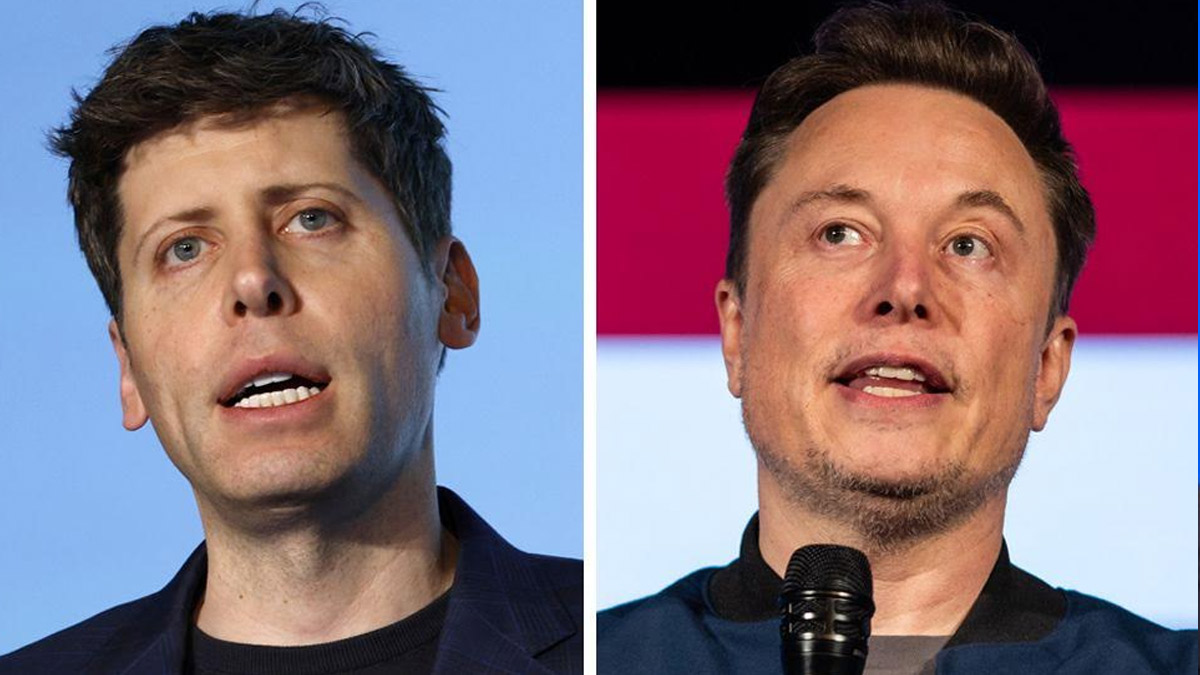
MUMBAI: When the stakes are measured in billions and egos are involved, even Silicon Valley titans can turn a courtroom into a battlefield. OpenAI has issued a sharp public response to Elon Musk’s ongoing lawsuit, accusing the billionaire of filing the case to harass a competitor rather than address genuine concerns. In a strongly worded statement shared on its official X account, OpenAI described Musk’s allegations as “baseless” and suggested the lawsuit is an attempt to disrupt the company as the case heads toward trial later this month in Oakland, California.
The response comes after Musk’s legal team recently amended the complaint, proposing that any damages potentially exceeding $150 billion should go to OpenAI’s nonprofit entity rather than to Musk personally. OpenAI questioned the timing and motive behind this change, calling it a late-stage attempt to “pretend to change his tune” on the nonprofit structure.
The company further labelled the lawsuit a “harassment campaign”, arguing that Musk’s actions are driven by personal rivalry, ego, and a desire for greater control and financial upside.
At the heart of the dispute is Musk’s claim that OpenAI has abandoned its original nonprofit mission of developing artificial intelligence for the benefit of humanity. A co-founder who left in 2018, Musk is seeking governance changes, including the removal of CEO Sam Altman from the nonprofit board, and the return of certain financial gains linked to Altman and President Greg Brockman.
OpenAI has firmly rejected these allegations, maintaining that its current hybrid structure, a public-benefit corporation overseen by a nonprofit parent remains true to its long-term goals. The company has also previously accused Musk of anti-competitive behaviour aimed at weakening its leadership.
As the case prepares for a jury trial, this public exchange highlights the deepening rift between two of the most influential figures in the AI revolution and raises broader questions about governance, mission, and power in the fast-moving world of artificial intelligence.
In the high-stakes game of AI, it seems the real drama isn’t just inside the models, it’s playing out in courtrooms too.






