Connect with us

I&B Ministry

Rules focus on self-classification, not censorship: Javadekar tells OTTs

Published

on

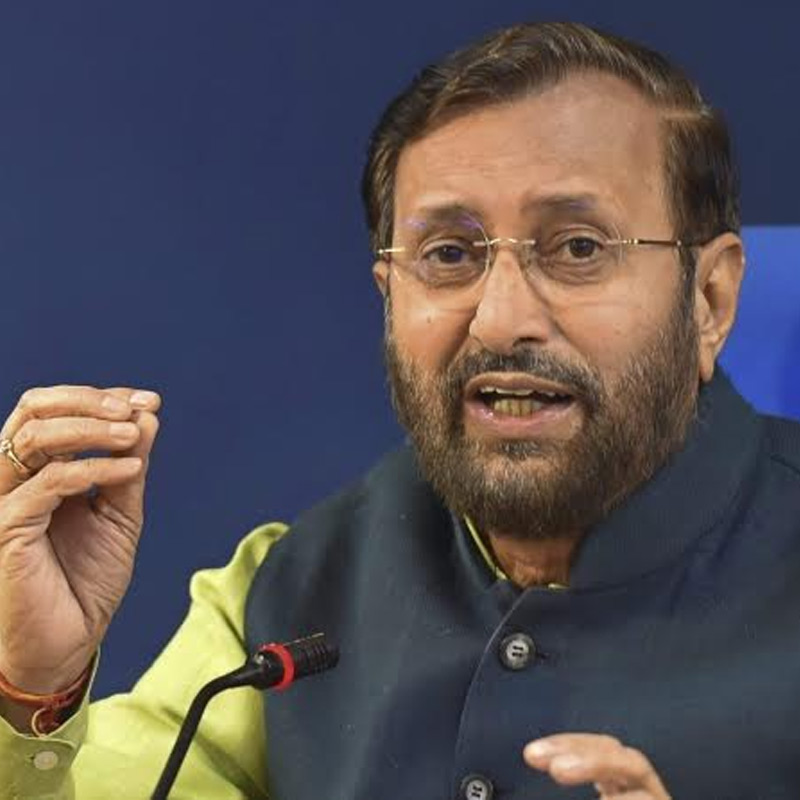
KOLKATA: Minister of information and broadcasting Prakash Javadekar on Thursday held an interaction with representatives of various OTT platforms including from Disney+ Hotstar, Amazon Prime, Netflix, Jio, Zee5, Viacom18, Shemaroo, Mx Player, ALTBalaji.

The Union minister mentioned that the government had engaged in several rounds of consultation with OTT players in the past and stressed the need for self-regulation.

Javadekar stated that he had received representations from cinema and TV industries that while there were regulations for them, none existed for the video streaming industry. Thus, it was decided that the government would come out with a progressive institutional mechanism for OTT players and develop a level playing field with the idea of self-regulation. The minister appreciated that many OTT platforms had welcomed the rules.

Advertisement

Informing the industry representatives about the provisions of the rules, the minister said it merely requires them to disclose information and that there is no requirement of registration of any kind with the ministry. He added that a form for this will be ready soon. Quelling fears over curtailment of creative freedom, he stated that the new digital media rules focus on self-classification of content instead of any form of censorship. Further, OTT platforms are expected to develop an effective grievance redressal mechanism.

Previously, the Centre had proposed a three-tier mechanism for these platforms for content-related issues. The first tier would be officials appointed by these companies. As a second-tier, there would be a self-regulatory body that would address complaints. The third tier would be a government-appointed panel.

Dispelling rumours, the minister clarified that in the self-regulatory body, no member will be appointed by the government, and that an inter-departmental committee will be formed to look into complaints that remain unresolved at the self-regulatory level.

Advertisement

The industry representatives welcomed the rules and thanked the minister for addressing most of their concerns. Finally, the minister added that the ministry is open to any clarification or queries from the industry.

Click to comment

Leave a Reply

Your email address will not be published. Required fields are marked *

I&B Ministry

Prasar Bharati sets EPG standards for DD Free Dish platform

New specs define 7-day guide, LCN mapping, and device compatibility.

Published

on

MUMBAI: Your TV guide just got a backstage pass structured, scheduled, and far more in sync. Prasar Bharati has released detailed technical specifications for Electronic Programme Guide (EPG) services on DD Free Dish, laying down a standardised framework for how channels and programme information are organised and delivered. At the core of the update is a defined EPG data structure, covering genre-based categorisation, scheduling formats, and Logical Channel Numbering (LCN). The aim is simple: make navigation less guesswork and more guided experience across the platform’s over 40 million households.

The specifications also introduce a seven-day programme guide window for each channel, alongside clear rules for channel grouping and LCN mapping effectively deciding not just what you watch, but how easily you find it.

On the technical front, the document outlines requirements for Program Specific Information (PSI) and Service Information (SI), including descriptor usage across tables such as PAT, BAT and NIT. It further details service lists and network linkage parameters, giving OEMs and developers a clearer blueprint for integration.

Advertisement

Importantly, the framework is designed to work seamlessly with television sets equipped with in-built satellite tuners, enabling users to access DD Free Dish directly without additional hardware, an incremental but meaningful step towards simplifying access.

The platform will continue to operate on GSAT-15 transponders, using MPEG-4 compression and DVB-S2 transmission standards, ensuring continuity even as the interface evolves.

While largely technical, the move signals a broader push towards standardisation and user-friendly discovery in India’s free-to-air ecosystem because sometimes, the real upgrade isn’t what’s on screen, but how easily you get there.

Advertisement
Continue Reading

Advertisement News18
Advertisement
Advertisement
Advertisement
Advertisement Whtasapp
Advertisement Year Enders

Indian Television Dot Com Pvt Ltd

Signup for news and special offers!

Copyright © 2026 Indian Television Dot Com PVT LTD

This will close in 10 seconds