DTH
Rampant cord cutting on cable continues: Chrome Data Study


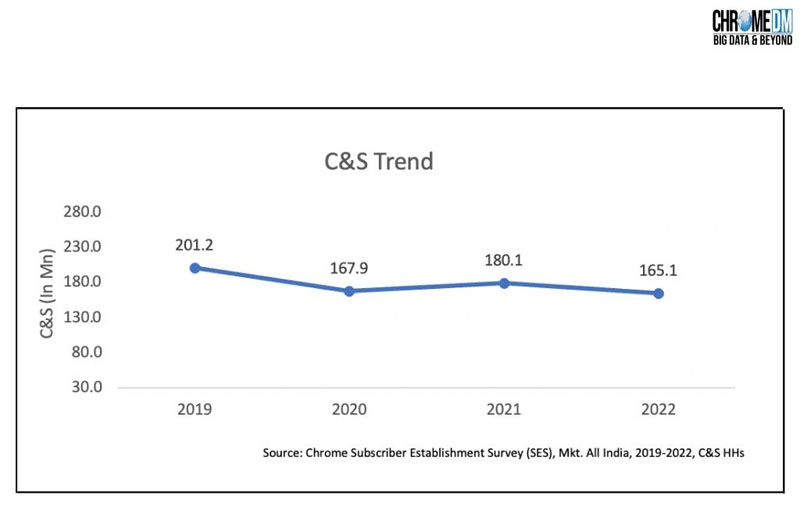
Mumbai: The new findings from Chrome Data Analytics and Media’s July Subscriber Establishment Survey (SES) reported a significant drop in cable and satellite (C&S) homes, where the subscriber base has dropped from 201.2 million to 165.1 million households since 2019.
This is based on a pan India ground survey that was done between January and July 2022; the sample included one out of every 175 households and included over 219 million TV households across the nation.
Chrome DM surveys regularly, and it plays an important role in shaping our understanding of the changing TV landscape.
Speaking on these findings, Chrome DM CEO and founder Pankaj Krishna said, “The reason for the decline is that the medium is changing. In television, in terms of content, it will keep booming, but the modes of consumption are changing so it is affecting Cable and Satellite (C&S) homes.”
He further added, “This is the great race to entertainment, and OTT looks to be the reigning champion. I believe this trend will continue till ‘streaming’ is cemented as the new alternative in this turn of transition.”
Pankaj believes with 5G coming in, we will witness a lot of disruption as well on how people consume content. “So the reason for the decline in cable and satellite homes is that the homes are wired through a cable and satellite connection but the overall consumption is increasing through the broadband internet (Connected TV) consumption. TV shows are increasing as well,” he added.
Pay DTH and digital cable
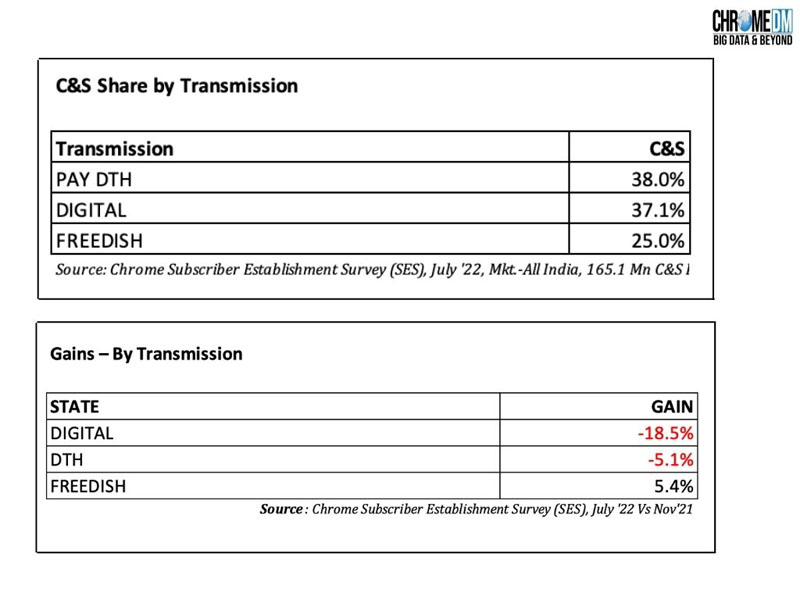
According to the Chrome Data Analytics and Media July report, pay DTH has a market share of nearly 38 per cent and digital cable is close to over 37 per cent.
Digital cable experienced a significant decline of 18.5 per cent, whilst Pay DTH experienced a more restrained decline of 5.1 percent in the same findings. Pay DTH continues to have a significant presence in southern markets, where Andhra Pradesh reigned supreme with considerable share growth of 11.9 per cent.
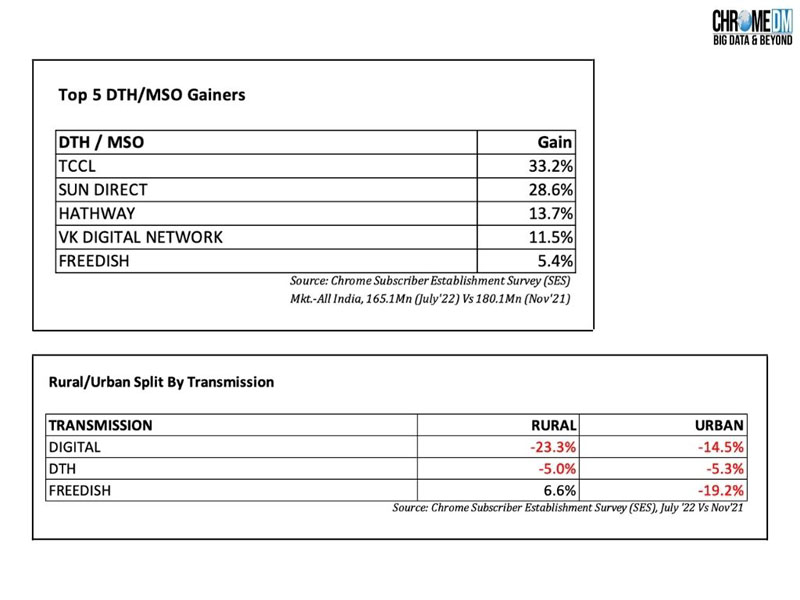
In terms of its total subscriber base, Tamizhaga Cable TV Communication (TCCL) was the leading gainer by a sizable margin of 33.2 per cent.
Covid Impact
The report stated that it would be an understatement to say that Covid-19 disturbed the market economy. The pandemic ushered in a new period of hesitation and unpredictability when any fleeting sense of assurance was purchased on the cheap.
The markets fell, and the major players warned that the economy was on the verge of a devastating downturn.
According to the report, the commercial sector was completely destroyed by the Covid-19 outbreak, and the cable and satellite industries were just one of the numerous victims.
Before the first economic downturn, the profits appeared to be guaranteed, but after Covid, it served as a foreshadowing of what was to come. The numbers foretold the end of this once-dominant sector.
The pandemic caused changes in social and cultural dynamics, which quickly followed as the economy began to slow down in the backdrop. The lockdowns forced a lot of migratory workers to return to their small rural villages, which caused a huge flood of subscribers to leave urban marketplaces, the report mentioned.
The report found that to combat rising inflation and the economic slump, many people unsubscribed to curtail domestic expenditure, which includes keeping a TV set and paying for cable subscriptions.
Freedish
Freedish was the only one to experience a positive increase of 5.4 per cent while continuing to ascend north in rural areas.
The other transmissions were impacted by the pandemic’s dwindling market share, but Freedish managed to hold onto its lead while the others did not.
Again, this was largely the result of it being provided for free and having a substantial market share in rural India, which was untouched by the migrant issue. Odisha continued to be a top gainer, with its rural market growing by only about 16.8 per cent throughout this time.
OTT impact
Similar to this, urban residents were losing interest in cable TV and rapidly shifting their viewing preferences online. Many people have joined the growing number of cord-cutters and are now satisfying their watching needs online. Thus, the cord-cutting epidemic has ushered in a streaming-era digital revolution.
The report stated that cable and satellite subscriptions have consistently decreased as viewers’ interest in traditional linear TV has declined, but a further rise in streaming usage is increasing.
According to the survey, many cord-cutters still find this to be an appealing alternative because they don’t want to pay extra for the cable or digital subscriptions that are usually included with standard TV equipment.