
News Broadcasting
Radical changes in FDI regime; Most sectors on automatic FDI route


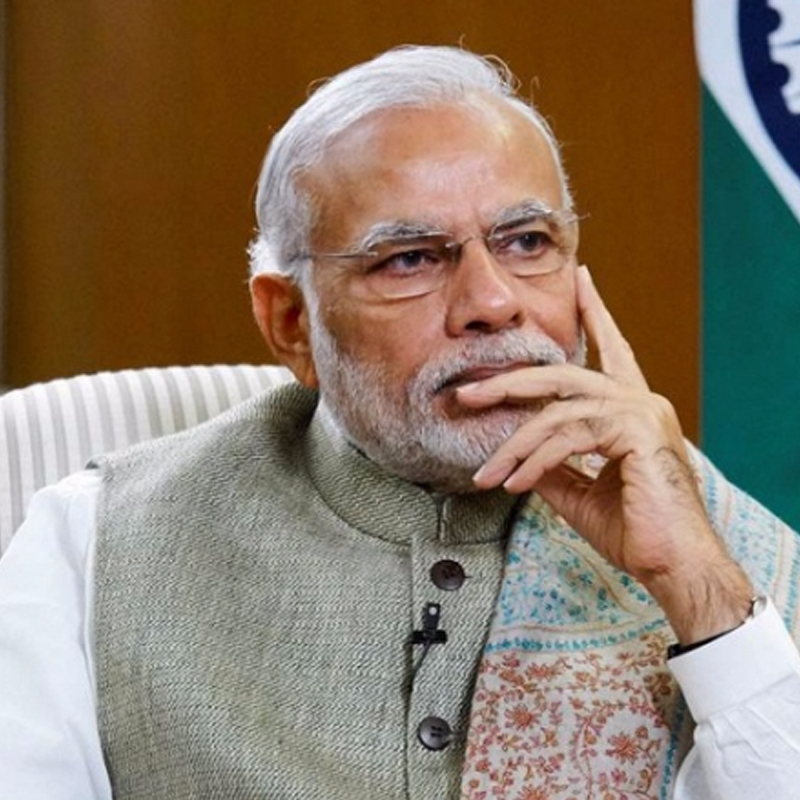
MUMBAI: The Union Government has radically liberalized the FDI regime today, with the objective of providing major impetus to employment and job creation in India. The decision was taken at a high-level meeting chaired by Prime Minister Narendra Modi today. This is the second major reform after the last radical changes announced in November 2015. Now most of the sectors would be under automatic approval route, except a small negative list. With these changes, India is now the most open economy in the world for FDI.
In last two years, Government has brought major FDI policy reforms in a number of sectors viz. Defence, Construction Development, Insurance, Pension Sector, Broadcasting Sector, Tea, Coffee, Rubber, Cardamom, Palm Oil Tree and Olive Oil Tree Plantations, Single Brand Retail Trading, Manufacturing Sector, Limited Liability Partnerships, Civil Aviation, Credit Information Companies, Satellites- establishment/operation and Asset Reconstruction Companies. Measures undertaken by the Government have resulted in increased FDI inflows at US$ 55.46 billion in financial year 2015-16, as against US$ 36.04 billion during the financial year 2013-14. This is the highest ever FDI inflow for a particular financial year. However, it is felt that the country has potential to attract far more foreign investment which can be achieved by further liberalizing and simplifying the FDI regime. India today has been rated as Number 1 FDI Investment Destination by several International Agencies.
Accordingly the Government has decided to introduce a number of amendments in the FDI Policy. Changes introduced in the policy include increase in sectoral caps, bringing more activities under automatic route and easing of conditionalities for foreign investment. These amendments seek to further simplify the regulations governing FDI in the country and make India an attractive destination for foreign investors. Details of these changes are given in the following paragraphs:
1. Radical Changes for promoting Food Products manufactured/produced in India
It has now been decided to permit 100% FDI under government approval route for trading, including through e-commerce, in respect of food products manufactured or produced in India.
2. Foreign Investment in Defence Sector up to 100%
Present FDI regime permits 49% FDI participation in the equity of a company under automatic route. FDI above 49% is permitted through Government approval on case to case basis, wherever it is likely to result in access to modern and ‘state-of-art’ technology in the country. In this regard, the following changes have inter-alia been brought in the FDI policy on this sector:
i. Foreign investment beyond 49% has now been permitted through government approval route, in cases resulting in access to modern technology in the country or for other reasons to be recorded. The condition of access to ‘state-of-art’ technology in the country has been done away with.
ii. FDI limit for defence sector has also been made applicable to Manufacturing of Small Arms and Ammunitions covered under Arms Act 1959.
3. Review of Entry Routes in Broadcasting Carriage Services
FDI policy on Broadcasting carriage services has also been amended. New sectoral caps and entry routes are as under:

4. Pharmaceutical
The extant FDI policy on pharmaceutical sector provides for 100% FDI under automatic route in greenfield pharma and FDI up to 100% under government approval in brownfield pharma. With the objective of promoting the development of this sector, it has been decided to permit up to 74% FDI under automatic route in brownfield pharmaceuticals and government approval route beyond 74% will continue.
5. Civil Aviation Sector
(i) The extant FDI policy on Airports permits 100% FDI under automatic route in Greenfield Projects and 74% FDI in Brownfield Projects under automatic route. FDI beyond 74% for Brownfield Projects is under government route.
(ii) With a view to aid in modernization of the existing airports to establish a high standard and help ease the pressure on the existing airports, it has been decided to permit 100% FDI under automatic route in Brownfield Airport projects.
(iii) As per the present FDI policy, foreign investment up to 49% is allowed under automatic route in Scheduled Air Transport Service/ Domestic Scheduled Passenger Airline and regional Air Transport Service. It has now been decided to raise this limit to 100%, with FDI up to 49% permitted under automatic route and FDI beyond 49% through Government approval. For NRIs, 100% FDI will continue to be allowed under automatic route. However, foreign airlines would continue to be allowed to invest in capital of Indian companies operating scheduled and non-scheduled air-transport services up to the limit of 49% of their paid up capital and subject to the laid down conditions in the existing policy.
6. Private Security Agencies
The extant policy permits 49% FDI under government approval route in Private Security Agencies. FDI up to 49% is now permitted under automatic route in this sector and FDI beyond 49% and up to 74% would be permitted with government approval route.
7. Establishment of branch office, liaison office or project office
For establishment of branch office, liaison office or project office or any other place of business in India if the principal business of the applicant is Defence, Telecom, Private Security or Information and Broadcasting, it has been decided that approval of Reserve Bank of India or separate security clearance would not be required in cases where FIPB approval or license/permission by the concerned Ministry/Regulator has already been granted.
8. Animal Husbandry
As per FDI Policy 2016, FDI in Animal Husbandry (including breeding of dogs), Pisciculture, Aquaculture and Apiculture is allowed 100% under Automatic Route under controlled conditions. It has been decided to do away with this requirement of ‘controlled conditions’ for FDI in these activities.
9. Single Brand Retail Trading
It has now been decided to relax local sourcing norms up to three years and a relaxed sourcing regime for another five years for entities undertaking Single Brand Retail Trading of products having ‘state-of-art’ and ‘cutting edge’ technology.
Today’s amendments to the FDI Policy are meant to liberalise and simplify the FDI policy so as to provide ease of doing business in the country leading to larger FDI inflows contributing to growth of investment, incomes and employment.






