I&B Ministry
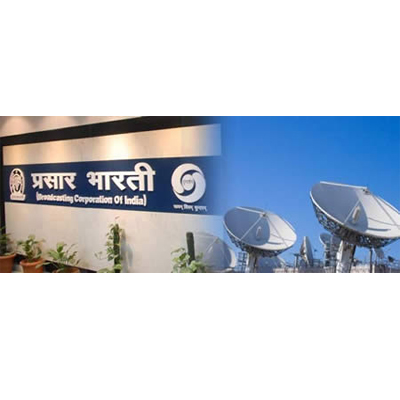
Prasar Bharati exempt from service tax
In what should come as a relief to pubcaster Prasar Bharati, the Solicitor General of India has clarified that Prasar Bharati need not pay service tax.
It may be recalled that when finance minister Yashwant Sinha presented his budget he had proposed that the pubcaster should be made to pay “since it is a commercial organisation, Prasar Bharati does not need the exemption from the five per cent service tax.”
Following this, Prasar Bharati referred the matter to the information & broadcasting ministry, which in turn sought the solicitor general’s directive on the matter through the law ministry.
Meanwhile, in an unrelated development, the Standing Committee on Information Technology has reportedly criticised the I&B Ministry over its slow completion of projects. The committee slammed the ministry’s tendency to “wake up” to the need to use budgetary allocations towards the end of the financial year. Timely completion of projects will ensure that the public derives the full benefits of broadcasting/telecasting services, the committee said.
The committee noted that out of an outlay of Rs 3,250 million (revised to Rs 2,900 million) provided to the ministry for schemes pertaining to national broadcaster Doordarshan, the ministry utilised only Rs 1,578.6 million till February 2002.

I&B Ministry
MeitY proposes continuous labelling for AI-generated content
Draft IT Rules amendments mandate visible labels, feedback open till May 7, 2026
MUMBAI: If AI is blurring the line between real and rendered, the government wants the label to do the talking non-stop. The Ministry of Electronics and Information Technology has proposed tighter disclosure norms for AI-generated content, signalling a sharper regulatory push on transparency across digital platforms.
Under draft amendments to the Information Technology (Intermediary Guidelines and Digital Media Ethics Code) Rules, 2021, the Ministry has moved to strengthen how such content is identified. The key shift lies in Rule 3, sub-rule (3), clause (a), sub-clause (ii), where the earlier requirement of “prominent visibility” is being replaced with a stricter mandate labels must now remain “continuous and clearly visible” for the entire duration of the content.
In simple terms, no more blink-and-miss disclaimers. If content is AI-generated, the label must stay on screen, start to finish.
The Ministry has also extended the deadline for stakeholder feedback on the proposed changes to May 7, 2026, widening the consultation window as it seeks industry and public input. The move follows earlier consultation papers released on March 30 and April 10, which addressed intermediary compliance and digital media oversight in light of existing advisories and directions.
Alongside the amendments, the government has released multiple documents, including draft rules covering intermediary obligations, artificially generated information and digital media governance, as well as a consolidated version of the IT Rules incorporating the proposed revisions.
The direction of travel is clear. As AI-generated content becomes more sophisticated and more difficult to distinguish from reality, the regulatory response is shifting from guidance to enforceable visibility.
For platforms and creators alike, the message is straightforward: if it’s generated, it must be declared and not just once, but all the way through.