Connect with us

I&B Ministry

Prakash Javadekar says UPA government suppressed media

Published

on

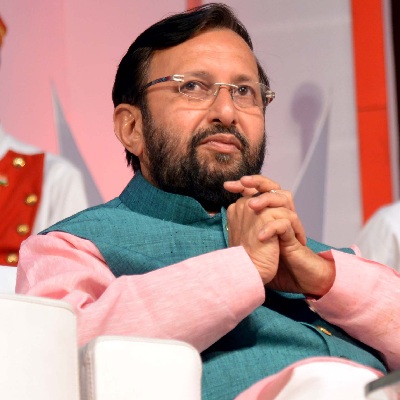
MUMBAI: “There are 16 crore TV homes in the country, but only 8000 to 9000 peoplemters are being utilised to measure TRPs,” said Union Minister for Information and Broadcasting Prakash Javadekar during his Mumbai visit on 21 June.


The ever smiling Javadekar, did not fail from raising a few relevant issues even during his packed schedule. The Minister addressed the press on two occasions during the day. While he was the chief guest at the ‘Narad Gaurav Puraskar’ award ceremony organised by the Vishava Sanvad Kendra, he also was present at the Foundation Day celebration of the Mumbai Marathi Patrakar Sangh.

Advertisement


Javadekar also stressed on how every channel was fighting to gain the maximum eye balls. “In this quest, every channel claims to be numero uno, but how is that possible and especially with only 8000-9000 peoplemeters measuring TRPs?” he questioned.  


Advertisement

Every form of media, according to the I&B Minister, must evolve their own mechanisms which are independent to behave in a responsible manner. “Since India’s own freedom struggle, the freedom of the press has not come free. Great leaders have sacrificed and therefore the freedom of the press must be preserved,” he emphasised.


The newly appointed Minister also dropped a word of caution. He said, “The UPA government had followed a draconian emergency mindset.”  He added that he has come some files pertaining  to a channel called Janam where the previous government had shown tremendous reluctance in providing the necessary licenses as one of its promoters was allegedly a RSS sarsanghchalak. “This should not be the case as the same principles should be followed for all channels,” he expressed.

Advertisement


The channels promoters told a newspaper that they had been given the run around for a couple of years but a licence was issued with the explaination being that one of the channel’s promoters is associated with the RSS. They additionally informed the newspaper that those backing Janam  were NRIs and one of the promoters’ father was a RSS member.


Advertisement

Javadekar has apparently written about this case to home minister Rajnath Singh, and it’s quite possible that its licence will be processed and cleared soon, says the newspaper.


Commenting on the current media scenario, Javadekar concluded by saying that sensationalism is not journalism.


Advertisement
Click to comment

Leave a Reply

Your email address will not be published. Required fields are marked *

I&B Ministry

Prasar Bharati sets EPG standards for DD Free Dish platform

New specs define 7-day guide, LCN mapping, and device compatibility.

Published

on

MUMBAI: Your TV guide just got a backstage pass structured, scheduled, and far more in sync. Prasar Bharati has released detailed technical specifications for Electronic Programme Guide (EPG) services on DD Free Dish, laying down a standardised framework for how channels and programme information are organised and delivered. At the core of the update is a defined EPG data structure, covering genre-based categorisation, scheduling formats, and Logical Channel Numbering (LCN). The aim is simple: make navigation less guesswork and more guided experience across the platform’s over 40 million households.

The specifications also introduce a seven-day programme guide window for each channel, alongside clear rules for channel grouping and LCN mapping effectively deciding not just what you watch, but how easily you find it.

On the technical front, the document outlines requirements for Program Specific Information (PSI) and Service Information (SI), including descriptor usage across tables such as PAT, BAT and NIT. It further details service lists and network linkage parameters, giving OEMs and developers a clearer blueprint for integration.

Advertisement

Importantly, the framework is designed to work seamlessly with television sets equipped with in-built satellite tuners, enabling users to access DD Free Dish directly without additional hardware, an incremental but meaningful step towards simplifying access.

The platform will continue to operate on GSAT-15 transponders, using MPEG-4 compression and DVB-S2 transmission standards, ensuring continuity even as the interface evolves.

While largely technical, the move signals a broader push towards standardisation and user-friendly discovery in India’s free-to-air ecosystem because sometimes, the real upgrade isn’t what’s on screen, but how easily you get there.

Advertisement
Continue Reading

Advertisement News18
Advertisement
Advertisement
Advertisement
Advertisement Whtasapp
Advertisement Year Enders

Indian Television Dot Com Pvt Ltd

Signup for news and special offers!

Copyright © 2026 Indian Television Dot Com PVT LTD

This will close in 10 seconds