I&B Ministry
No DAS III extension beyond 31 Jan, reiterates MIB


MUMBAI: Cable Subscribers in DAS Phase III urban areas, who have not yet taken set-top boxes, are advised to obtain the same from the MSO/cable operators in their areas immediately, failing which they would not be able to watch TV services through Cable TV Networks after 31 January, 2017.
It is brought to the notice of all concerned that Ministry of I&B would not grant any extension beyond 31 January, 2017 to switch off analog signals in Phase III urban areas. In this connection, Chief Secretaries of all States/UTs have been requested recently to ensure that the Authorized Officer get acquainted with their powers and specified rules to enforce them against defaulters if they continue to carry analog signal in Phase III urban areas after 31 January, 2017.
The Ministry had issued instructions to all the broadcasters, multi-system operators (MSOs) and local cable operators (LCOs) to ensure that no analog signals are transmitted over the cable networks in Phase III urban areas after 31st January, 2017. “Authorised officers” under Sec 11 of the Cable TV Networks (Regulation) Act can seize the equipment of the MSOs/Cable Operators, if they continues to carry analog signal in Phase III urban areas after 31 January, 2017.

On account of court proceedings, Ministry of Information & Broadcasting had earlier given time up to 31 January, 2017, to switch over to digital mode of transmission in Cable TV Networks in Phase III urban areas.
Also Read: MSO registrations remain slow even as DAS deadlines approach
Also Read: Slow pace of court cases, MSO registration may delay DAS deadline




I&B Ministry
India tightens anti-piracy law, blocks sites and Telegram channels
New rules bring jail terms, fines and faster takedowns of illegal content
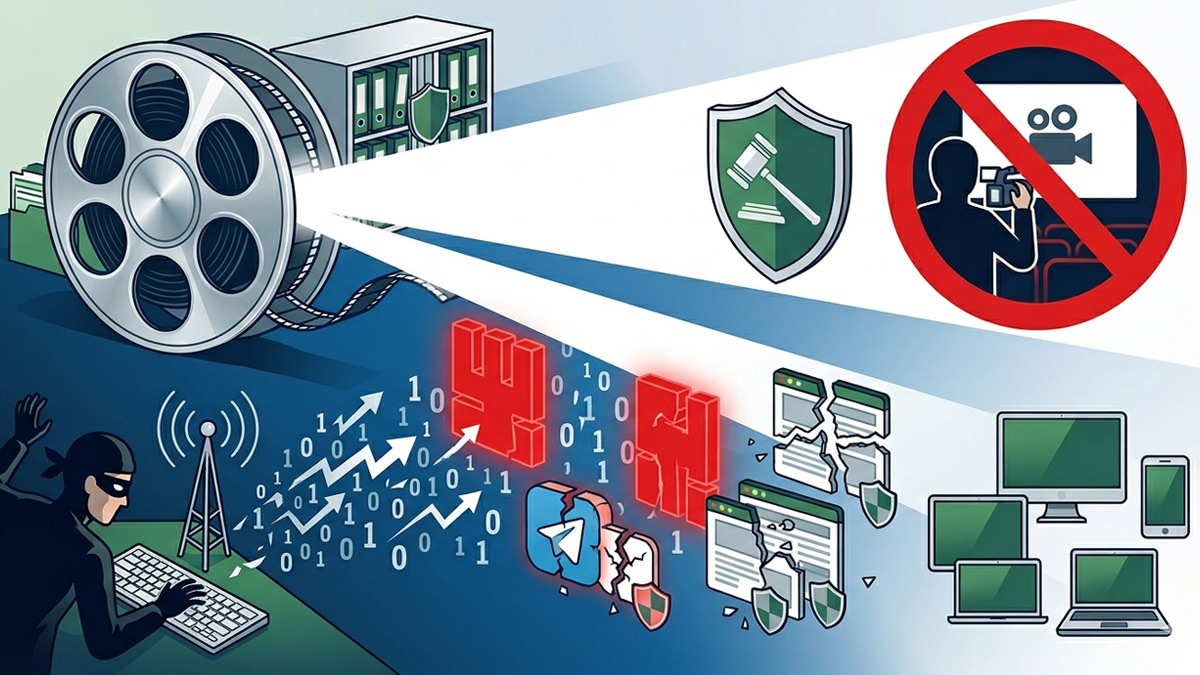
NEW DELHI: The Government of India has stepped up its fight against film piracy, invoking stricter provisions under the Cinematograph Amendment Act 2023 to crack down on unauthorised recording and distribution.
The law now imposes tougher penalties, including jail terms ranging from three months to three years and fines starting at Rs. 3 lakh, which can go up to 5 per cent of a film’s production cost. The provisions target both illegal recording in cinemas and unauthorised online transmission.
In a fresh enforcement push, authorities have notified the Telegram platform to act against piracy, leading to the identification of 3,142 channels allegedly distributing copyrighted content without permission. In parallel, access to around 800 piracy websites has been blocked through internet service providers.
The action has been taken under the Information Technology Act 2000, which empowers the government to direct intermediaries to remove unlawful content. The framework is further reinforced by the Information Technology Rules 2021, requiring platforms to act swiftly when notified of violations.
An institutional mechanism is also in place, allowing copyright holders and authorised representatives to file complaints through designated nodal officers. Once verified, these complaints trigger takedown notices to intermediaries for disabling access to infringing content.
The update was shared in Parliament by Government of India minister of state information and broadcasting l murugan in response to a query from Parimal Nathwani.
The government’s latest move signals a sharper, more coordinated approach to tackling piracy across both physical and digital channels. For the film industry, it is a step towards protecting revenues, while for viewers, it reinforces the shift towards legitimate content consumption.








