News Broadcasting
News channels spend highest time on crime stories


MUMBAI:Crime, law and order stories rule the roost on news channels. At least for the period 14 September to 24 October 2008 when news channels dedicated 29 per cent of their coverage time on such kind of content, according to News Content Track (NCT), a monitoring service recently launched by Tam.
The study conducted by Tam covers Hindi channels Aaj Tak and Star News and English channels Times Now and NDTV 24X7.
During the period, news channels have spent 513.22 hours of programming on crime, law and order stories. Next in the rung is sports coverage which occupies 13.48 per cent (234.09 hours).

Top content type
CONTENT TYPE Duration in Hour:Min:Secs % contribution
CRIME/LAW & ORDER
513:22:25
29.54
SPORTS NEWS
234:09:29
13.48
POLITICAL NEWS/GOVERNMENT NEWS
217:51:04
12.54
ENTERTAINMENT NEWS
199:30:19
11.48
FINANCIAL NEWS
121:29:59
6.99
BUSINESS NEWS
66:46:40
3.84
SOCIAL
58:49:14
3.39
SPIRITUAL/RELIGION
57:27:32
3.31
ASTROLOGY
57:05:23
3.29
MISHAPS/FAILURE OF MACHINERY
44:38:12
2.57
source : News Content Track, Tam
period : 14 Sept- 24 Oct
News on politics is still not the favourite with news channels. Political news covers only 12.54 per cent (217.51 hours), followed by entertainment news which is 11.48 per cent (199.30 hours) of the entire programming.
News channels spent 6.99 per cent on financial news and 3.84 per cent on business news. Humour covers 2.17 per cent of the time while news on sting and scandals contributes 0.02 per cent. News channels spend the minimum time on spoofs (0.01 per cent, 0.08 minutes).
Top stories
Story
Total %
DELHI BOMB BLASTS
115:13:26
6.63
BORDER GAVASKAR SERIES 08
74:03:48
4.26
BOLLYWOOD UPDATES
57:21:48
3.30
ZODIAC FORECAST
57:05:13
3.29
SHOOT OUT IN DELHI
51:34:40
2.97
AUSTRALIA TOUR OF INDIA(2008)
49:41:01
2.86
INDIAN MARKET UPDATES
40:39:20
2.34
COMEDY PROGRAM
37:24:24
2.15
MNS WORKERS BEAT UP OUTSTATION CANDIDATES (MUMBAI)
36:26:22
2.10
REPORT ON BLASTS IN INDIA
34:41:58
2.00
source : News Content Track, Tam
period : 14 Sept- 24 Oct
The Delhi bomb blast became the top story (6.63 per cent) that was shown repeatedly by the news channels during this period, followed by the India-Australia cricket series (4.26 per cent). In the top story ranking, Bollywood updates covered 3.30 per cent while zodiac forecast was 3.29 per cent.






News Broadcasting
Kamlesh Singh receives Haldi Ghati Award from MMCF
India Today Group editor honoured for three decades of journalism at Udaipur ceremony.
MUMBAI- Kamlesh Singh just turned a lifetime of sharp words into a shiny shield because when journalism wakes up a society, even the Maharana of Mewar wants to pin a medal on it.
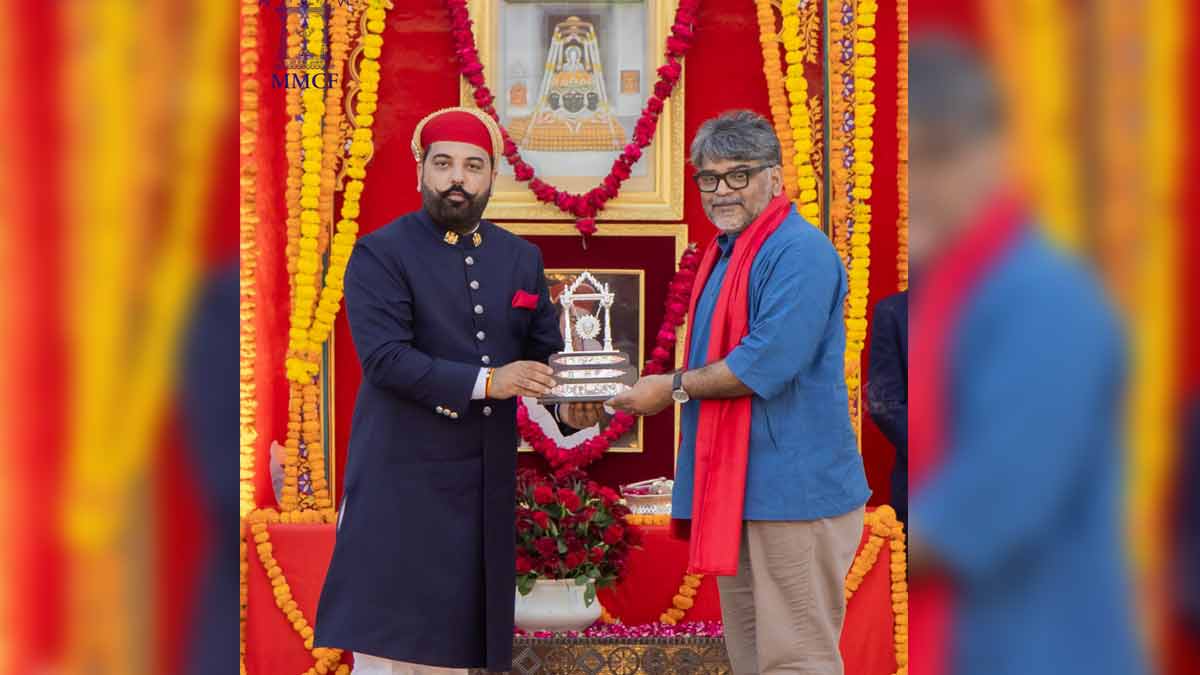
The Maharana of Mewar Charitable Foundation (MMCF) conferred its prestigious Haldi Ghati Award on Kamlesh Singh, a senior editor at the India Today Group, during a ceremony in Udaipur on 15 March 2026. The national award, instituted in 1981-82, recognises “work of permanent value that initiates an awakening in society through the medium of journalism.”
Singh, who leads several editorial initiatives including Aaj Tak Radio, the Teen Taal community and The Lallantop, was presented the honour by Lakshyaraj Singh Mewar, Managing Trustee of MMCF. The citation highlighted his three decades of contributions to Indian media, innovations in digital journalism, mentoring young reporters, and his popular podcast persona “Tau” on Teen Taal, which fosters thoughtful public discourse.
The Haldi Ghati Award, named after the historic Battle of Haldighati symbolising valour and resilience, is one of four national awards given annually by MMCF. Past recipients include Tavleen Singh, Piyush Pandey and Raj Chengappa.
Other honourees this year included Padma Vibhushan Pt Hari Prasad Chaurasia, Vedamurti Devvrat Rekhe, Treeman of India Marimuthu Yoganathan, Vir Chakra Capt Rizwan Malik, and US-based researcher Molly Emma Aitken, who received the Colonel James Tod Award for contributions to understanding Mewar’s spirit and values.
In an era where headlines often shout louder than substance, the MMCF quietly reminded everyone that real journalism isn’t about noise, it’s about the quiet, persistent work that stirs society awake, one thoughtful story at a time.







