iWorld
Netflix plans to become leading producer & distributor of high-quality Indian content


MUMBAI: Online properties are gradually overtaking television in the race to become video content leaders. From mass programming, entertainment now is moving towards personalised experience curated for each individual. Netflix plans to become a leading producer and distributor of high-quality Indian content. In 2017, it has been doubling down on Indian investment and looking to put together a good content library.
This year, it announced partnerships with Videocon, Airtel and Vodafone — which would help Netflix go deep into the diverse Indian market, taking in up millions of users to watch Netflix on a mobile phone, TV or through a set-top box.
Netflix, although, very expensive as compared to the monthly subscription of other OTT / VoD players in India came to the rescue of content lovers, Netflix Asia vice president of communications Jessica Lee tells Verve.

Be it TV shows or movies, Netflix, which closed Q2 2017 with 104 million members globally, has revolutionised video watching. It offers movies such as Okja and War Machine (both 2017) to a battery of shows such as House of Cards, Narcos and The Crown. Even though Netflix India charges the steepest subscription, it remains popular owing to its content.
A viewer earlier spent months following a TV series to conclusion, but now, Indians are finishing a series in three days (although, the global average is four days) such as Unbreakable Kimmy Schmidt, Narcos, Bloodline Jessica Jones. The most-loved genre in India is sci-fi, Netflix believes.
Netflix believes it is touching a pool of consumers in India with a great passion for diverse entertainment. The VoD service offers global original shows from The Crown and Stranger Things to mainstream, star-driven Indian films such as Shah Rukh Khan movies, Baahubali and Dangal.
It is also working on independent films with film-makers in India. Comedy is another popular genre in India which Netflix is thriving on with original specials from Aziz Ansari, Russell Peters, Ali Wong, Chris Tucker, Hasan Minhaj and Dave Chappelle.
Some of the popular Netflix originals in India, one of its heaviest users of the ‘download’ feature, are Daredevil, Luke Cage, Narcos, House of Cards, The Crown, Stranger Things and Master of None. As a global platform, Netflix sees great stories travelling across regions which is a huge opportunity for Indian content creators.
Indian content is a part of Netflix’s global plan. For 2017, its content budget is USD 6 billion for both, licensed and original content. It plans to reach over 1,000 hours of original content this year — about 400 original TV series and films including ones from India.
On the originals front, Netflix is focused on finding great Indian stories – for the world to see, ‘Sacred Games’ being the first. It recently announced two other originals, Selection Day and Again. Another area for Netflix is top-quality local stand-up originals with, for example — Aditi Mittal and Vir Das.
Netflix believes watching together is becoming a trend in India, with 79 per cent of couples surveyed saying that streaming is a way to spend time together. It has gathered that India is a nation of commute streamers. Indians, it says, are 82 per cent more likely to stream at 9 am, and the peak streaming time in India is 5 pm.
An interesting habit Netflix has observed in India is that while 31 per cent of its subscribers sign up on mobiles, they move to TV around six months later. While sign-ups on television are lower (at 12 per cent), within six months that behaviour grows to about 32 per cent. Netflix concludes that consumers are taking advantage of the flexibility it allows — to watch on multiple devices.
ALSO READ :
Netflix to premiere multilingual original The Eddy by Academy award-winner Chazelle
Indian content at Netflix to be creatively lead by Disney’s Simran Sethi
Disney parts ways with Netflix, plans sports & TV shows VoDs, buys BAMTech majority





iWorld
Bill Ackman makes a $64bn bid for Universal Music Group
The hedge fund boss wants to list the world’s biggest record label in New York and thinks he knows exactly what ails it
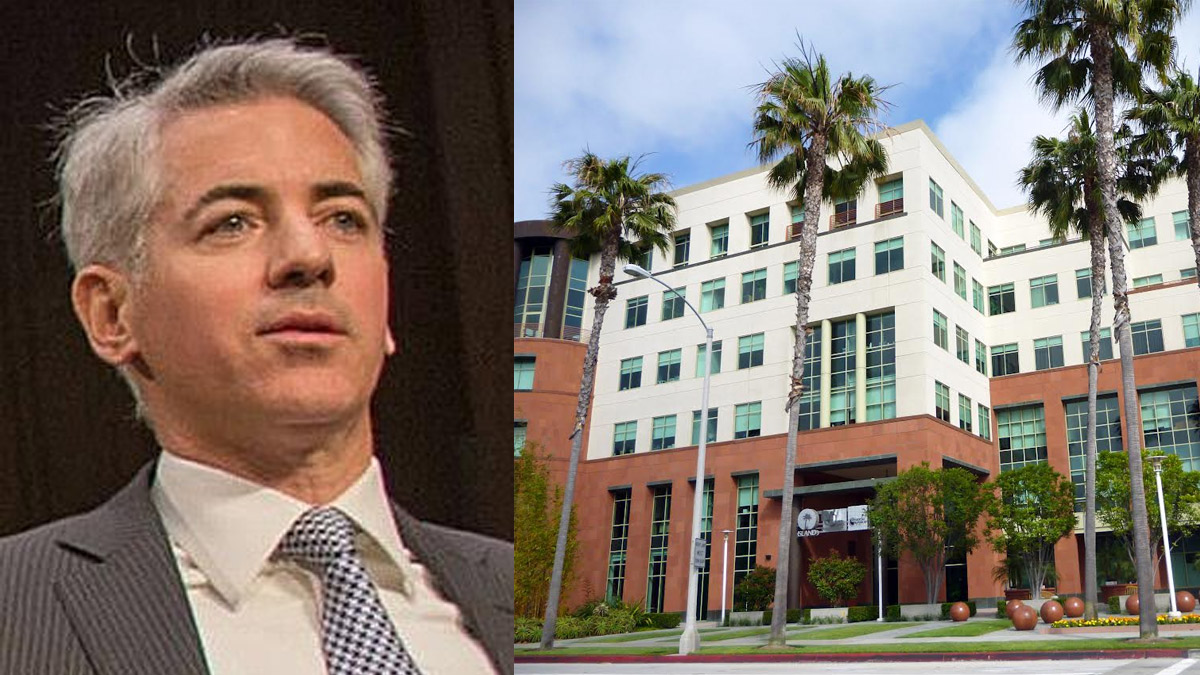
NEW YORK: Bill Ackman wants to buy the world’s biggest record label. Pershing Square Capital Management, the hedge fund run by the billionaire investor, submitted a non-binding proposal on Tuesday to acquire all outstanding shares of Universal Music Group in a business combination transaction worth roughly $64.4 billion (around 55.8 billion euros).
Under the terms of the offer, UMG shareholders would receive 9.4 billion euros in cash, equivalent to 5.05 euros per share, plus 0.77 shares of a newly created company, dubbed New UMG, for each share held. Pershing Square values the total package at 30.40 euros per share, a 78 per cent premium to UMG’s closing price on April 2.
The deal would see UMG merge with Pershing Square SPARC Holdings, with the combined entity incorporating as a Nevada corporation and listing on the New York Stock Exchange. New UMG would publish financial statements under US GAAP and become eligible for S&P 500 index inclusion. Pershing Square says the transaction is expected to close by year-end, with all equity financing backstopped by Ackman’s firm and its affiliates, and all debt financing committed at signing. The transaction would cancel 17 per cent of UMG’s outstanding shares, leaving New UMG with 1.541 billion shares outstanding.
Ackman has a long history with UMG. Pershing Square first bought approximately 10 per cent of the company from Vivendi in the summer of 2021 for around $4 billion, around the time of UMG’s listing on the Euronext Amsterdam exchange. He has since trimmed that position, raising around $1.4 billion from the sale of a 2.7 per cent stake in March 2025, and resigned from UMG’s board in May 2025, citing new executive and board obligations arising from recent investments.
His diagnosis of UMG’s troubles is blunt. The company’s stock has fallen around 33 per cent over the past twelve months on the Euronext Amsterdam exchange, and Ackman lays out six reasons why. These include uncertainty around the Bolloré Group’s 18 per cent stake in the company, the postponement of UMG’s US listing, the underutilisation of UMG’s balance sheet, the absence of a publicly disclosed capital allocation plan and earnings algorithm, a failure to reflect UMG’s 2.7 billion euro stake in Spotify in its valuation, and what Ackman calls suboptimal shareholder investor relations, communications and engagement.
The Bolloré stake has long cast a shadow over the company. Cyrille Bolloré stepped down from UMG’s board in July 2025 as the Bolloré Group battled the French financial markets regulator over its stake in Vivendi, which holds a further capital interest in UMG. UMG had confidentially filed a draft registration statement with the US Securities and Exchange Commission in July 2025 for a proposed secondary listing in America, but put those plans on hold in March 2026, citing market conditions.
Ackman has kind words for UMG’s management, at least. “Since UMG’s listing, Lucian Grainge and the company’s management have done an excellent job nurturing and continuing to build a world-class artist roster and generating strong business performance,” he said. But he made his diagnosis plain: “UMG’s stock price has languished due to a combination of issues that are unrelated to the performance of its music business and importantly, all of them can be addressed with this transaction.”
In other words, Ackman believes UMG is a great business trapped inside a broken structure. If the board agrees, he intends to fix that, loudly and in New York.






