iWorld
Netflix expects rapid content growth from India

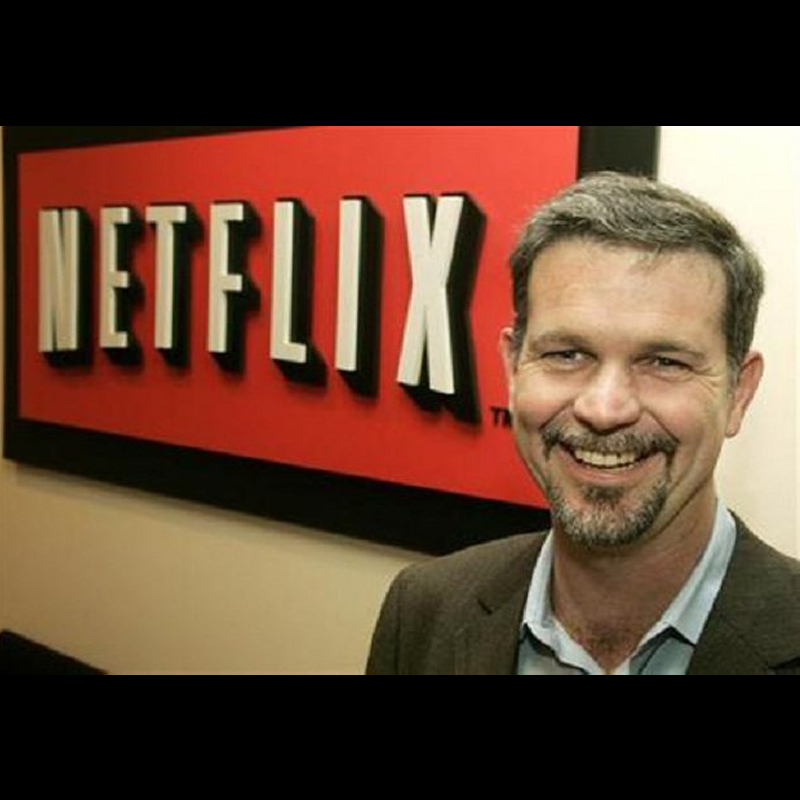
MUMBAI: When Netflix CEO and president Reed Hastings comes calling—and it was his second visit to India this year—you know it means serious business. On a content partnership and library programming hunt, the video-streaming service’s team met up with several Indian media houses, including Shah Rukh Khan-promoted Red Chillies Entertainment and other independent production houses last week.
Hastings and the Netflix team had a meeting late last week with the editorial team of Network18, a part of Viacom18, an equal Indian joint venture of the US media giant Viacom and a group company of India’s oil-to-energy-to-telecoms-to-broadcast conglomerate Reliance Industries Limited (RIL).
Netflix later clarified on Monday to Indiantelevision.com that Hastings met up with the editorial team of Network18 before his interview was conducted on the business news channel last week and that no business was discussed.
Incidentally, Viacom18 not only sits on a huge library of Indian language programming and the ability to produce fresh shows but is also active in the studio business having produced several Hindi blockbusters. Its latest production Padmavati, though, has run into a history vs. fiction controversy and, according to an official statement from the company, the 1 December 2017 release of the film has been voluntarily deferred.
Both RIL chief Mukesh Ambani and Hastings believe that digital holds a great future for content distribution. Ambani on Friday at the Viacom18 10th anniversary bash here extolled the “synergies” that can come from the talent in the “Viacom18 family and digital distribution” (of Voot and Reliance Jio) where there’s “no limit to growth”. Hastings, in an interview to CNBC-TV18 channel last week, said Netflix “makes TV watching so easy because it is on the internet.”
Expect Rapid Content Increase from India, says Hastings
Excited about the one billion plus Indians who “are just wild about entertainment and television market,” Netflix CEO Reed Hastings is betting big here and wants to source more content—originals and Bollywood related—even as his team hunts for partnerships.
“You should expect rapid increase (in Indian content on Netflix), dozens of series a year from now will be underway,” Hastings told business news channel CNBC-TV18 in an interview aired late last week when asked to give a sense of investments being made in content from India for the rest of the world. “Of course, there are the global shows we have like Narcos, filmed in Columbia, popular all around the world. We have got a new German original Dark…and then we are adding more Bollywood films. We are also adding Sacred Games and originals that we are doing here in India.”
Though he has “never completed a whole Bollywood movie” having sampled several of them, Hastings said he does “get the subtlety” of the content and it was fascinating to see the “breadth of entertainment (in India) and how that works”.
According to Hastings, Netflix is a comparatively new player in India, being active for just two years, but would be indulging in producing more content for the Indian market and simultaneously the world too.
He also did not envisage that uneven bandwidth infrastructure in India could pose problems to streaming services. “We launched in Mexico five years ago, which had a relatively slow internet, and it has just accelerated tremendously because people want to watch Netflix, YouTube, other content sourced online and it is moving to the internet life,” he said. “In India, in last two years with Reliance Jio, just the biggest explosion in bandwidth (has happened) that the world has ever seen. It is just incredible what is happening here in India. As we go to other countries, (we are) saying an investment like Reliance Jio is transformative for the society.a”
Though Netflix globally is spending crazy amounts on content and customer acquisition—its content budget is approximately $8 billion—analysts say the company is also adding to its liabilities.
Despite reporting an impressive earnings report for Q3 of 2017 in October, analyst Ryan McQueeney of US’ Zacks Investment Research pointed to some shortcomings: “Netflix’s third-quarter report revealed that its long-term debt now totals $4.89 billion. This is up nearly 46 per cent from the $3.36 billion in long-term debt that it started the year with, and it marks a 106 per cent growth in debt from the end of the year-ago period. Investors should also note that Netflix said its total liabilities have reached $13.62 billion, up from $10.91 billion at the end of 2016 and $9.82 billion in the prior-year quarter.”
However, such criticism hasn’t deterred Netflix or its co-founder yet. “Content is best when it really has a local flavour, but then it is approachable by other people,” Hastings said in the CNBC-TV18 interview, adding, “We have an American comedian, Hasan Minhaj, who does stand-up in California and he is popular all over the world now on the Netflix platform. Same is with Narcos. So you get all these interesting crossovers.”
Netflix relies a lot on data and technology to source and create content. Pointing out that the 110 million-member global company has reached its position because it was producing content that people were “excited about”, Hastings said that they use artificial intelligence to help them figure out what was best.
“We call it informed intuition. While we want the creatives to have a lot of data but ultimately, it is a judgment call of a human being with a creative vision and that is the intuition. The intuition is the most important part but we would like it to be informed by how other shows have done,” he explained.
Like a true champ, Hastings did not shy away from giving credit to his competitors where due. “Hotstar is doing a great job here in India. They are leading in the subscription internet category. There are a lot of other global internet companies, YouTube, Facebook, Amazon and Apple. So there are many competitors – the traditional media companies and the entire internet sector. And what that is doing is everybody is bidding to have the most valuable content. So the prices now for creators are increasing,” he told the TV channel interviewer.
Netflix-Red Chillies Partner For Multilingual Spy Series
A new multilingual Netflix original series, based on the book Bard of Blood, in partnership with Shah Rukh Khan’s Red Chillies Entertainment has been announced. Penned by young Indian author Bilal Siddiqi, the book will be brought to life as an eight-episode high-octane political espionage thriller series for more than 109 million Netflix members around the world.
Khan said in a statement, “We have always tried to create world-class content and entertainment from India. Netflix has shown that Indian stories have a global audience and we would love to use this platform and its reach to tell more stories.”
Set against the backdrop of the Indian sub-continent, the multilingual series will tell the story of an expelled spy, Kabir Anand, who is recalled from his new life as a Shakespeare professor in Panchgani to save his country and long-lost love. A combination of combat skills, intellectual background and personal circumstances propel Kabir to avenge the past and face his deadliest enemies in a race against time. The series will be shot on location and the characters will interact in Hindi, Urdu, English and other languages.
“We believe in the global vision of Red Chillies to create groundbreaking content out of India. It’s exciting to deepen our relationship with Red Chillies and expand our slate of originals in India,” Hastings said.
In a series of tweets, dwelling on the partnership, Khan said “Netflix and Red Chillies chill” and later joked “think will cast Reed Hastings in the series too. He is a natural.”