News Broadcasting
NDTV’s Chaubey to head Broadcast News political bureau

MUMBAI: Broadcast News, the newly-floated television company by Television Eighteen Ltd in association with Rajdeep Sardesai and Sameer Manchanda, has managed to lure away one of the key editorial professionals from the NDTV team, even as other journalists are expected to join the new entrant in the English news channel space.
NDTV senior special correspondent Bhupendra Chaubey will be hopping on board Broadcast News as chief political correspondent, heading the political bureau. He will be designing and presenting special political programmes. He had a five year long stint at NDTV. Before joining NDTV, Chaubey dabbled in documentary film making.
Others who are scheduled to join Broadcast News from NDTV include, anchor-cum-correspondent Anubha Bhonsle, business correspondents Sandeep Banerjee and Arijit Burman.

According to broadcast industry sources, the four of them have put in their papers at NDTV. Additionally, senior correspondent Suman Chakraborty is also likely to make a trek to Broadcast News.
As Broadcast News editor-in-chief Rajdeep Sradesai has time and again said, the proposed news venture’s high point would be political news. Insiders say the slant is likely to be on views.
Though the name of the first channel from Broadcast News stable is yet to be finalised, a source close to the development said Indian Broadcast News or IBN is a name being toyed with.
Broadcast News is a venture that was set up earlier this year with TV 18 holding 74 per cent equity stake, while the remaining 26 per cent is distributed amongst senior people. The Raghav Bahl-promoted television Eighteen has announced that it plans to raise $50 million from international market for expansion and new products.





News Broadcasting
CNN-News18 to host Fury in the Gulf conclave on West Asia crisis
Three-hour summit to unpack geopolitical fallout and impact on India
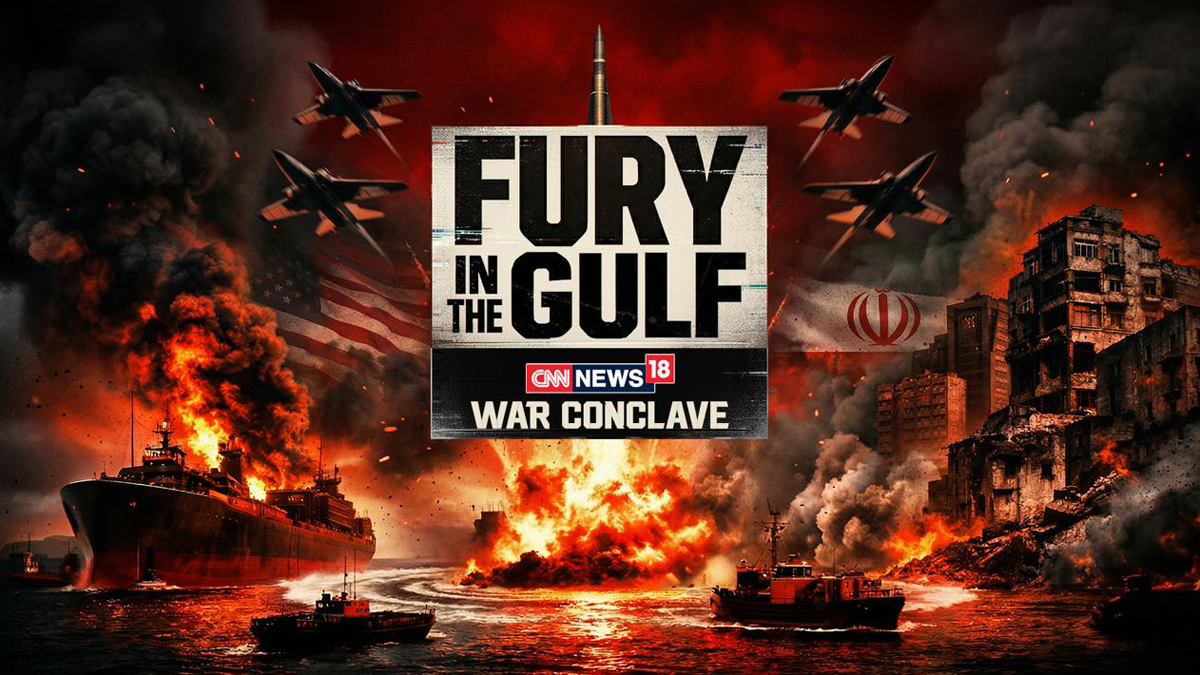
MUMBAI: CNN-News18 is set to host a special three-hour broadcast, Fury in the Gulf – War Conclave, on April 7, aiming to decode the escalating West Asia crisis and its far-reaching implications for India.
Scheduled from 4:00 PM to 7:00 PM, the conclave comes at a time when tensions between Iran and the United States are reshaping global geopolitics and triggering economic uncertainty. With India’s deep energy ties, trade links and large diaspora in the Gulf, the developments carry significant domestic relevance.
Built around the theme ‘Conflict, Consequences, and The Future,’ the programme will feature six curated sessions combining one-on-one interviews and panel discussions. The focus is to cut through the clutter and offer viewers a clearer understanding of the fast-evolving situation.
Key sessions include ‘Diplomacy in Times of War’ featuring Shashi Tharoor, and ‘World After the Iran Conflict’ with voices such as Ram Madhav, Reuven Azar, representatives from the European Union and the Iranian Deputy Envoy. Another session titled ‘Another Dunkirk?’ will bring together K. J. S. Dhillon and Jitin Prasada among others.
CNN-News18 editorial affairs director Rahul Shivshankar said, “In times of war, clarity becomes the most powerful tool. Fury in the Gulf – War Conclave brings together credible voices to address the questions and confusion that arise amid an overwhelming influx of information.”
He added that the initiative is aimed at delivering “facts, perspective, and insight” at a time when misinformation can easily cloud public understanding.
Echoing the sentiment, CNN-News18 CEO– English and business news Smriti Mehra said the conflict marks a defining global moment, with consequences that extend well beyond the region. She noted that the conclave seeks to present the crisis with “depth, nuance and responsibility” so audiences can better grasp its real-world impact.
As geopolitical tensions continue to dominate headlines, the conclave positions itself as an attempt to bring order to the noise, offering viewers a structured, insight-led look at a complex and rapidly shifting global situation.






