News Broadcasting
NDTV Profit, ‘Business Standard’ to share content; Govind Ethiraj joins BS as new media editor

MUMBAI: Leading pink daily Business Standard is expanding its Internet activities and is in the process of stitching a content deal with NDTV Profit to leverage existing resources of both the organizations.
As the first step in this game plan, BS has signed on the former corporate editor of CNBC-TV18, Govind Ethiraj, as editor of its new media initiative.
“We are getting into a content sharing arrangement with NDTV Profit, for mutual benefit. The precise contours of this will be worked out, and depends on what works best,” a source in Business Standard (BS) today admitted to Indiantelevision.com.
The BS source pointed out that Ethiraj will be “driving this (initiative) from Business Standard and will also be in charge of BS website’s content operations.”
Indiantelevision.com learns from media industry sources that the BS-NDTV Profit deal is likely to include marketing and other revenue generating activities like organising and promoting off-line events jointly, apart from content sharing.
However, this deal gives rise to tantalising opportunities of expanding the relationship into other areas of mutual benefit like designing TV shows for NDTV Profit, a business news channel launched in 2005.
Though not ruling out the possibilities of expanding the relationship to other segments of the media, the BS source said at this moment such questions are “premature.”
Broadly speaking, Ethiraj’s area of responsibility is likely to cover Internet, TV, mobile telephony, broadband and, of course, television. However, in the immediate to near term it will be Internet that will be his focus areas. This will also include driving content on BS’ Internet activities through fare generated by the newspaper and NDTV Profit.
It is worth noting here that Business Standard Ltd, a Kotak Mahindra group company, has flirted with television production before. In the late 2000s, it produced business programmes for the national broadcaster Doordarshan through its television division BS TV.
Ethiraj earned his stripes at The Economic Times and moved to CNBC TV18 when the television news business was just beginning to create an impact.
It was in 2003 that BS, the subsidiary of Kotak Mahindra, entered into a strategic investment with global publishing house the Financial Times of the United Kingdom, which bought into the daily by picking up a 13.85 per cent equity stake.






News Broadcasting
CNN-News18 to host Fury in the Gulf conclave on West Asia crisis
Three-hour summit to unpack geopolitical fallout and impact on India
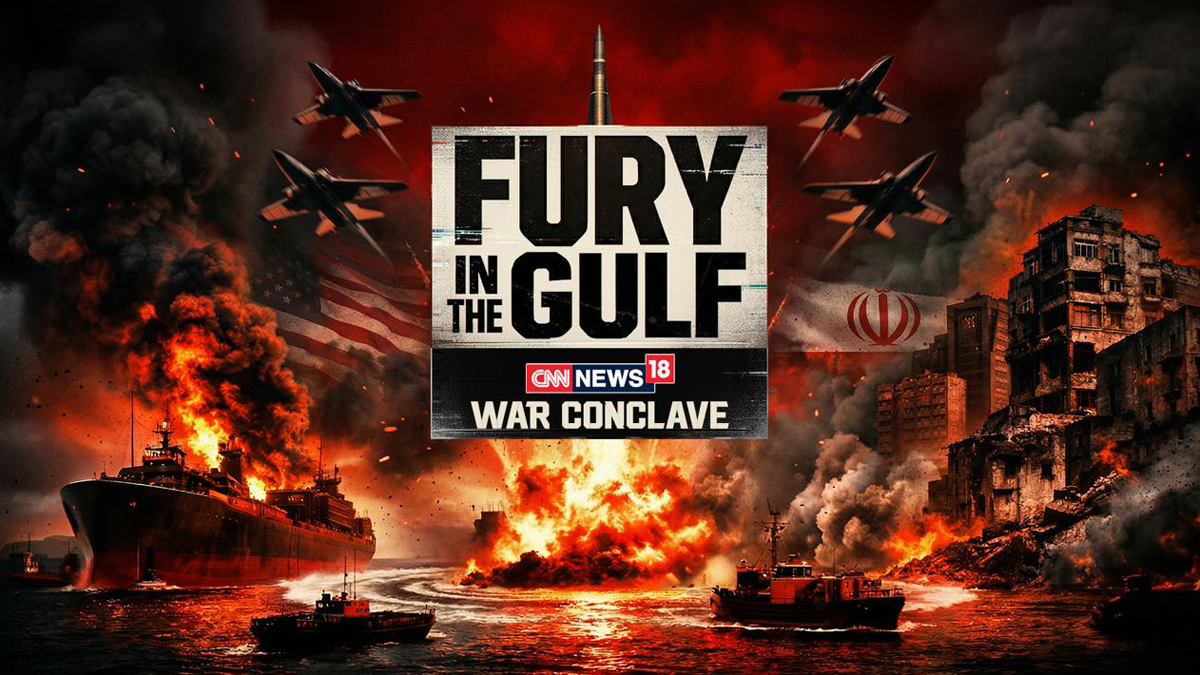
MUMBAI: CNN-News18 is set to host a special three-hour broadcast, Fury in the Gulf – War Conclave, on April 7, aiming to decode the escalating West Asia crisis and its far-reaching implications for India.
Scheduled from 4:00 PM to 7:00 PM, the conclave comes at a time when tensions between Iran and the United States are reshaping global geopolitics and triggering economic uncertainty. With India’s deep energy ties, trade links and large diaspora in the Gulf, the developments carry significant domestic relevance.
Built around the theme ‘Conflict, Consequences, and The Future,’ the programme will feature six curated sessions combining one-on-one interviews and panel discussions. The focus is to cut through the clutter and offer viewers a clearer understanding of the fast-evolving situation.

Key sessions include ‘Diplomacy in Times of War’ featuring Shashi Tharoor, and ‘World After the Iran Conflict’ with voices such as Ram Madhav, Reuven Azar, representatives from the European Union and the Iranian Deputy Envoy. Another session titled ‘Another Dunkirk?’ will bring together K. J. S. Dhillon and Jitin Prasada among others.
CNN-News18 editorial affairs director Rahul Shivshankar said, “In times of war, clarity becomes the most powerful tool. Fury in the Gulf – War Conclave brings together credible voices to address the questions and confusion that arise amid an overwhelming influx of information.”
He added that the initiative is aimed at delivering “facts, perspective, and insight” at a time when misinformation can easily cloud public understanding.
Echoing the sentiment, CNN-News18 CEO– English and business news Smriti Mehra said the conflict marks a defining global moment, with consequences that extend well beyond the region. She noted that the conclave seeks to present the crisis with “depth, nuance and responsibility” so audiences can better grasp its real-world impact.
As geopolitical tensions continue to dominate headlines, the conclave positions itself as an attempt to bring order to the noise, offering viewers a structured, insight-led look at a complex and rapidly shifting global situation.






