News Broadcasting
NDTV & L’Oreal partner for Women of Worth 2016 Awards

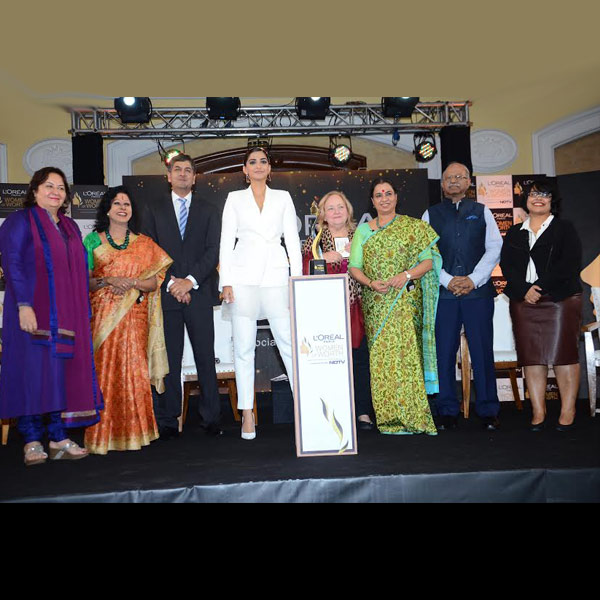
MUMBAI: NDTV has partnered with L’Oréal Paris for the Women of Worth 2016 awards to recognise and celebrate unsung women from different categories.
The awards felicitates the achievements of ordinary women who have achieved extraordinary success in making a difference to the lives of others through their bravery, convictions and drive.
L’Oréal Paris brand ambassador Sonam Kapoor graced the occasion and unveiled the award trophy. Jury members across the eight different categories as well as the four nominees in each of the categories were unveiled.

Introduced by L’Oréal Paris India in 2012, the awards also epitomise the brand’s tagline ‘Because You’re Worth It.’
The jury for this year’s award includes personalities like Rajya Sabha member Anu Aga, Indian Angel Network and NASSCOM co-founder Saurabh Srivastava, Supreme Court senior advocate Dr. Pinky Anand, Wildlife Conservationsit Belinda Wright, Kathak danseuse Shovana Narayan, Centre for Social Research Dr. Ranjana Kumari and L’Oréal India VP marketing Manashi Guha.
The different categories are from an array of fields like sports, business and enterpreneuralship, literature, artistic, social impact, education, science and inventions.
L’Oréal Paris India VP marketing Manashi Guha said, “Women of Worth Awards is philanthropically a huge initiative undertaken by the brand to strongly support the extraordinary contribution made by Indian women in their respective fields. These awards are our small way to distinguish the achievements of such women who embody the spirit and values of the L’Oréal Paris brand. It is the ideal platform for us to salute them and a matter of pride for us to associate with NDTV, who also believes in empowering women.”
The campaign will end in March 2016 through a public voting system in conjunction with jury inputs. A transparent and well-structured voting system for the public will be set up to ensure that the most deserving nominees win. The nominees will be awarded the Women of Worth titles in Mumbai on 28 March, 2016.
Extending her support to the awards, L’Oréal Paris brand ambassador Sonam Kapoor said, “It’s an honor to be a part of this amazing campaign and the Women of Worth awards that is the brainchild of L’Oréal Paris. The brand has always celebrated the strong spirit of women, and these awards are a perfect way to admire and thank these accomplished women who represent the changing face of modern India. With their unwavering passion, determination, selfless contribution and ability to pursue their dreams, they are a true inspiration and I’m extremely happy to be in the presence of such great Women of Worth.”
The nominees have been shortlisted after an extensive research process while identifying each one’s key contribution in their respective fields. It took the panelists roughly three hours to decide on the nominees for each category.
NDTV CEO Vikram Chandra added, “Women empowerment is a cause NDTV has firmly believed in. NDTV has passionately felt about women and their issues from the time we have started. The number of issues taken up by us has been increasing. I think it’s a part of our DNA. We have a high packed jury consisting of some of the prominent names from the field. The Women of Worth initiative to honor real women from different walks of life is an excellent platform to discuss the issues faced by them and find solutions for the same. Extraordinary women are emerging as the real she-roes with their grit and determination. We really hope that through this association, NDTV & L’Oréal become the voice to encourage more women to make a significant difference in our society.”
On International Women’s Day, 8 March, 2016, a conclave with opinion leaders, Women of Worth 2016 jury members, spokespersons from L’Oréal Paris and NDTV will be organised to discuss a range of subjects impacting the evolving role of women in India and issues impacting society.






News Broadcasting
News18 India launches Command Centre war explainer with Arya
New show shifts from debates to decoding global conflicts and impacts
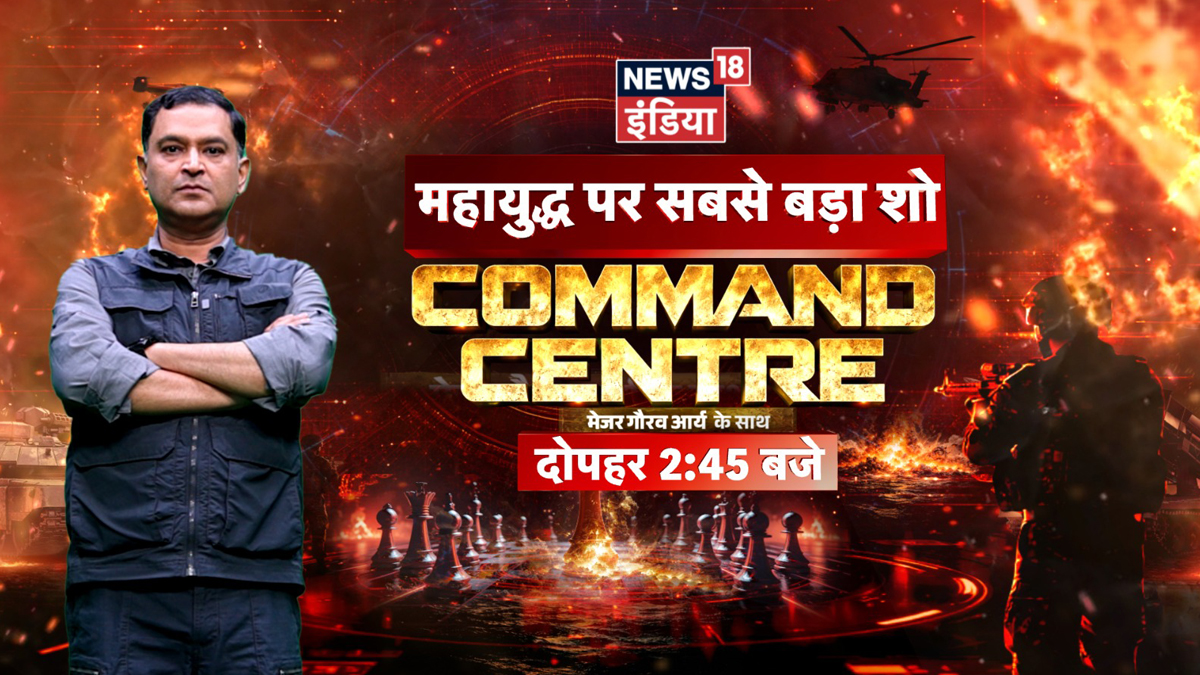
MUMBAI: News18 India has rolled out a new war-focused programme, Command Centre, featuring Gaurav Arya, as it looks to offer viewers a sharper, more grounded take on global conflicts amid rising tensions in West Asia.
Positioned as an “insider war room”, the show moves away from conventional panel debates and instead focuses on explaining military developments, decoding strategy and connecting global events to their everyday impact, from fuel prices to economic shifts.
The format leans heavily on visuals and data. The studio has been designed like a command hub, complete with large LED war maps, real-time graphics and an alert system to track developments as they unfold.
At the centre of it all is Arya, who brings his military background to simplify complex war strategies for viewers. His signature line, “Seedhi baat samjhiye”, anchors the show’s promise of clarity over noise.
News18 India managing editor Jyoti Kamal said, “Command Centre, featuring Major Gaurav Arya is designed to deliver accurate insights and a clear perspective on how evolving conflicts impact everyday life, from household budgets to national security. With expert voices analysing every development in real time, the show goes beyond headlines to decode what’s happening now, what it means, and what could come next.”
Echoing the intent, Gaurav Arya added, “In times of war, confusion is the biggest threat. With News18 India’s Command Centre, we are bringing viewers inside the war room, decoding strategies, tracking every escalation, and explaining, in the simplest terms, what it means for India and for every household. Seedhi baat samjhiye, this is where you understand not just what is happening, but what happens next.”
The weekday show will air in the afternoon slot and will also feature Gaurav Shukla, adding to its editorial depth.
With its mix of analysis, visuals and a clear focus on impact, the show reflects a broader shift in news consumption. Viewers are no longer just watching events unfold, they are looking to understand what those events mean for them.






