News Broadcasting
NDTV issues statement on tax demand of Rs 4.3 bn

MUMBAI: NDTV has issued a statement on the immediate tax demand of Rs 4.3 billion.
It stated on its web site: “The attempt to intimidate and paralyze NDTV has expanded to epic proportions in the last 24 hours. There are new attacks from the CBI and the Enforcement Directorate. In short, there is a three-pronged attack on NDTV by the:
1) CBI
2) Enforcement Directorate
3) Income Tax Department”

“All three agencies are attacking NDTV over one transaction in which GE, USA, made a US$ 150 million investment in NDTV – a perfectly legitimate and publicly, officially declared investment – which they are calling a “sham transaction,” it stated.
“Especially shocking is a demand of Rs. 4.3 billion from the Income Tax Department. The Income Tax Department’s letter, (sent today — 27 July), says NDTV has to pay the amount “immediately now” (sic!). A demand for immediate payment without any notice period is unheard of and smacks of sinister motives by the IT Department,” it added.
NDTV says:
“The IT department has not even completed the assessment of NDTV as directed by the Income Tax Appellate Tribunal (ITAT).
The ITAT had told the IT Department to make a fresh assessment on no less than four issues. These instructions have been flat-out ignored by the IT Department in rushing its tax demand to NDTV.
It is unknown in law to make this sort of “partial tax demand” without completing the entire tax assessment.
Income Tax law only recognises one assessment order – and the IT Department must complete the assessment including the four new factors raised by the ITAT.
After the ITAT order (based on incorrect facts given by the IT Department), NDTV has, by law, 120 days to appeal. It is shocking that even before the appeal can be filed, the tax department has shown such alacrity in demanding the tax. This is the same Tax Department which dragged its feet for three years, seeking more than 20 adjournments in the ITAT.
The new urgency reflects instructions to punish NDTV and to issue a warning to the media at large of the consequences of balanced journalism.
In an undisguised fishing expedition, the CBI has sent NDTV a letter demanding documents from NDTV and its subsidiaries for an unspecified period – this despite NDTV having supplied more than 500 pages of documents only two weeks ago. Strangely, the CBI does not acknowledge the receipt of these documents.
Separately, the Enforcement Directorate informed the Bombay High Court yesterday that it is investigating NDTV for violations under PMLA (Prevention of Money Laundering Act) – it has never, of course, informed NDTV of any such charge. The ED has already spent a good part of the year summoning NDTV management and questioning them repeatedly, without informing the company of what it has done wrong.
The government is making clear the implications of fearless journalism. Despite the illegal and massive pressure, NDTV will not allow its coverage to be affected by these shameful tactics.”
ALSO READ :
Tribunal upholds tax demand, NDTV intends to challenge order
NDTV moves Delhi HC challenging CBI raids






News Broadcasting
CNN-News18 to host Fury in the Gulf conclave on West Asia crisis
Three-hour summit to unpack geopolitical fallout and impact on India
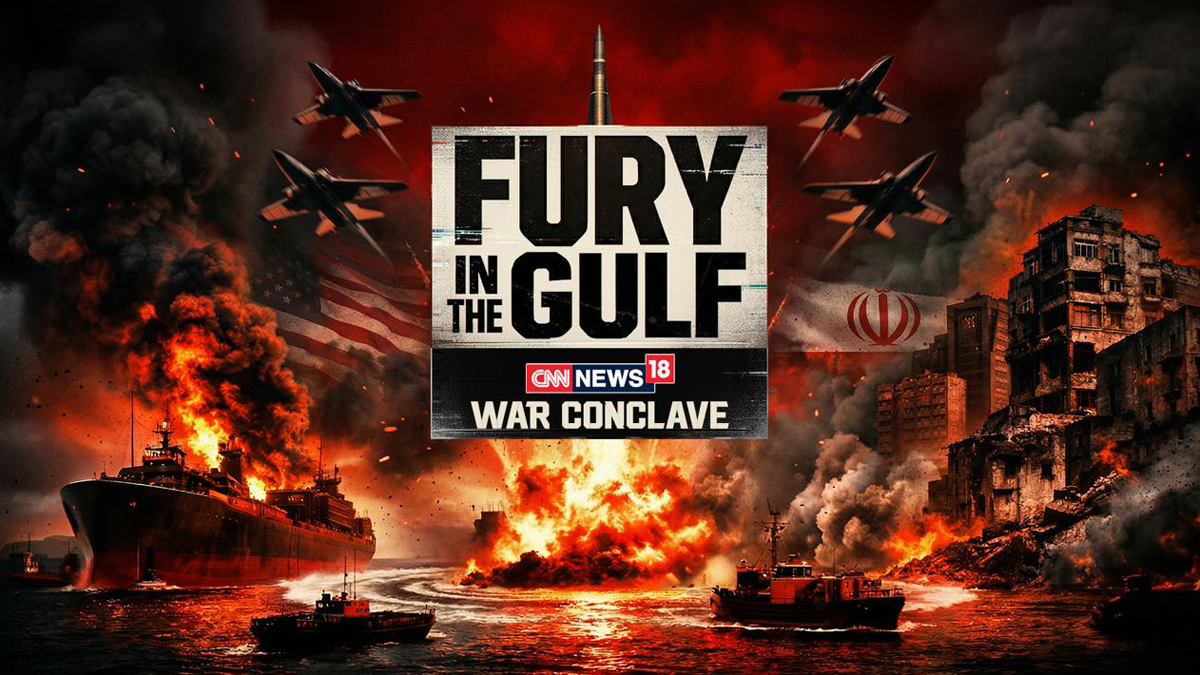
MUMBAI: CNN-News18 is set to host a special three-hour broadcast, Fury in the Gulf – War Conclave, on April 7, aiming to decode the escalating West Asia crisis and its far-reaching implications for India.
Scheduled from 4:00 PM to 7:00 PM, the conclave comes at a time when tensions between Iran and the United States are reshaping global geopolitics and triggering economic uncertainty. With India’s deep energy ties, trade links and large diaspora in the Gulf, the developments carry significant domestic relevance.
Built around the theme ‘Conflict, Consequences, and The Future,’ the programme will feature six curated sessions combining one-on-one interviews and panel discussions. The focus is to cut through the clutter and offer viewers a clearer understanding of the fast-evolving situation.
Key sessions include ‘Diplomacy in Times of War’ featuring Shashi Tharoor, and ‘World After the Iran Conflict’ with voices such as Ram Madhav, Reuven Azar, representatives from the European Union and the Iranian Deputy Envoy. Another session titled ‘Another Dunkirk?’ will bring together K. J. S. Dhillon and Jitin Prasada among others.
CNN-News18 editorial affairs director Rahul Shivshankar said, “In times of war, clarity becomes the most powerful tool. Fury in the Gulf – War Conclave brings together credible voices to address the questions and confusion that arise amid an overwhelming influx of information.”
He added that the initiative is aimed at delivering “facts, perspective, and insight” at a time when misinformation can easily cloud public understanding.
Echoing the sentiment, CNN-News18 CEO– English and business news Smriti Mehra said the conflict marks a defining global moment, with consequences that extend well beyond the region. She noted that the conclave seeks to present the crisis with “depth, nuance and responsibility” so audiences can better grasp its real-world impact.
As geopolitical tensions continue to dominate headlines, the conclave positions itself as an attempt to bring order to the noise, offering viewers a structured, insight-led look at a complex and rapidly shifting global situation.






