News Broadcasting
NDTV, Aaj Tak English ready launch plans

MUMBAI / NEW DELHI: On 1 April if you thought some new news channels would make their debut, as was being envisaged and claimed, it’s not to be. The offerings from both NDTV and TV Today Network will be post-1 April for various reasons.
For Prannoy Roy’s two news channels NDTV India and NDTV 24×7, 14 April is the likely date for their unveiling. NDTV sources say it might even be some days earlier but will not be later than the 14th.
According to information available with indiantelevision.com, the permission for uplink for both TV Today Network (for the English news channel) and NDTV World (NDTV 24×7) is still awaited. Indications are they will have them in hand by next week.
For NDTV though the issue is not so much the licence as the fact that the content commitments for Star News still apply, and once that is through the team would prefer to have a proper test run of the two channels before officially going fully onstream. That way any logistical glitches that may crop up can be ironed out beforehand.
Around the 5th or 6th, NDTV is planning to set forth a full multi-media campaign which will also include roadshows and the like, industry sources say.
TV Today Network, which manages Aaj Tak and proposes to introduce an English news channel, is still tying up some loose ends before its product is put on air.
According to TV Today sources, though there was no deadline set for the launch of the English news channel, but if you take 1 April as a yardstick, then the new channel may get delayed by few days for “reasons beyond our control.”
Still, within the organisation, things are ready and the channel can be put on air anytime. “Only the nuclear button has to be pressed, after the final go-ahead is received from the top,” a source in the company close to the launch process said.
That happens to be the message NDTV is giving out as well. As far as the two NDTV channels are concerned, while most seem to feel that Roy has it spot on as far as NDTV 24×7 goes, they will be watching closely how NDTV India measures up. Leave aside Star News, there are already two well established products in Aaj Tak and Zee News to contend with. And adding Sahara Samay makes the equation even more difficult.
TV Today’s English channel meanwhile, as described by news director Uday Shankar in a recent interview with indiantelevision.com, would be targeted at English-speaking viewers. It has been modeled to suit their tastes, aspirations and viewing habit – all of which are different from that of a Hindi-speaking viewer who watches Aaj Tak.
Though the name is still being kept under wraps, what is known is that it will be a digital channel for which boxes would be needed for cable operators to access the signals for further re-distribution.
Pre-launch distribution activities of the yet-to-be-launched English news channels by TV Today Network hasn’t been that easy, according to cable industry sources. Talks of carriage fee being paid is doing the rounds of the industry.
In Delhi, for example, multi-system operator (MSO) Hathway (in which Star India has a stake) has received the boxes for the English channel, but Siti Cable has not yet received any boxes and talks for distribution too have been low key.
A senior executive of Siti Cable, arguably the largest MSO in the country with a claimed susbcriber base of over 6 million households, said today, “Talks with TV Today Network are not so regular and even the first batch of the boxes have not arrived till today.”
Sony’s One Alliance is seeding the market with boxes that would be needed for the NDTV channels, but ground realities point to the fact that things may have slowed down a bit.
A senior Siti Cable executive in Delhi confirmed that the company has received no boxes from the One Alliance for the NDTV channels that would be beamed in a digital format. In Delhi, Hathway, while concurring with Siti Cable, said that Sony execs have been holding talks for the NDTV channels, but the boxes have not been delivered yet as the “cost is a bit high and it takes time to collect money for such bulk deals.”
Asked to comment, SET-Discovery president Shantonu Aditya had this to say: “We are on target as far seeding of IRD boxes across the country for both the NDTV channels are concerned and we have received a very good response thus far from the cable trade.”






News Broadcasting
CNN-News18 to host Fury in the Gulf conclave on West Asia crisis
Three-hour summit to unpack geopolitical fallout and impact on India
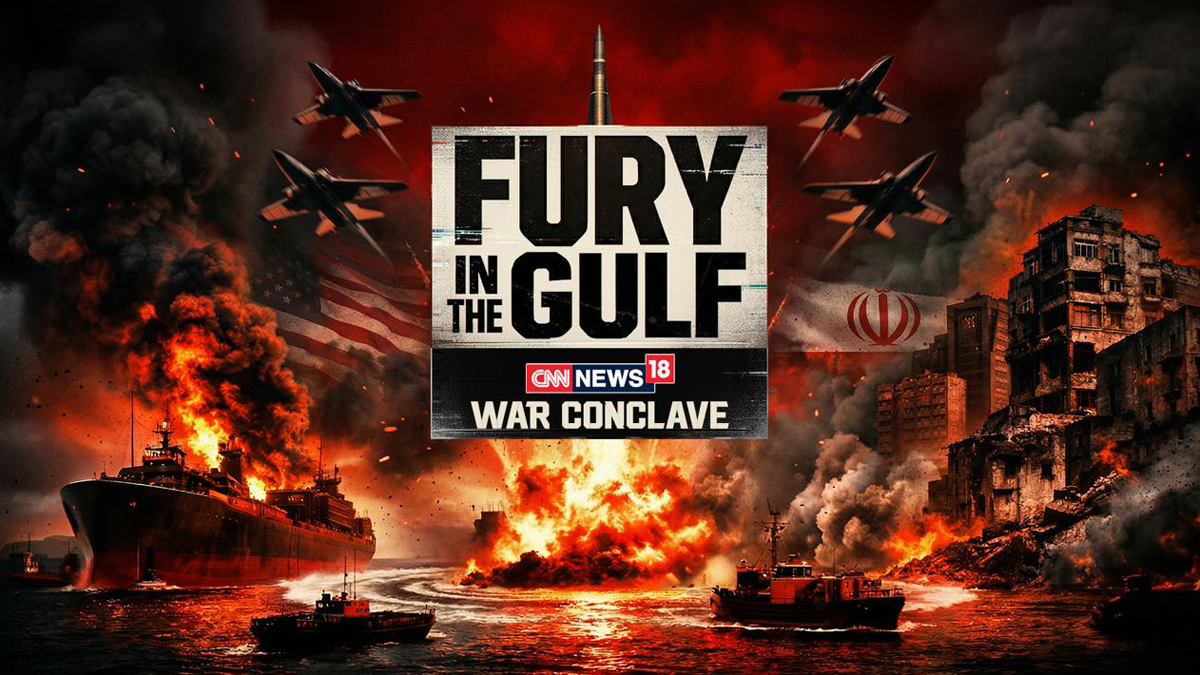
MUMBAI: CNN-News18 is set to host a special three-hour broadcast, Fury in the Gulf – War Conclave, on April 7, aiming to decode the escalating West Asia crisis and its far-reaching implications for India.
Scheduled from 4:00 PM to 7:00 PM, the conclave comes at a time when tensions between Iran and the United States are reshaping global geopolitics and triggering economic uncertainty. With India’s deep energy ties, trade links and large diaspora in the Gulf, the developments carry significant domestic relevance.
Built around the theme ‘Conflict, Consequences, and The Future,’ the programme will feature six curated sessions combining one-on-one interviews and panel discussions. The focus is to cut through the clutter and offer viewers a clearer understanding of the fast-evolving situation.

Key sessions include ‘Diplomacy in Times of War’ featuring Shashi Tharoor, and ‘World After the Iran Conflict’ with voices such as Ram Madhav, Reuven Azar, representatives from the European Union and the Iranian Deputy Envoy. Another session titled ‘Another Dunkirk?’ will bring together K. J. S. Dhillon and Jitin Prasada among others.
CNN-News18 editorial affairs director Rahul Shivshankar said, “In times of war, clarity becomes the most powerful tool. Fury in the Gulf – War Conclave brings together credible voices to address the questions and confusion that arise amid an overwhelming influx of information.”
He added that the initiative is aimed at delivering “facts, perspective, and insight” at a time when misinformation can easily cloud public understanding.
Echoing the sentiment, CNN-News18 CEO– English and business news Smriti Mehra said the conflict marks a defining global moment, with consequences that extend well beyond the region. She noted that the conclave seeks to present the crisis with “depth, nuance and responsibility” so audiences can better grasp its real-world impact.
As geopolitical tensions continue to dominate headlines, the conclave positions itself as an attempt to bring order to the noise, offering viewers a structured, insight-led look at a complex and rapidly shifting global situation.






