News Broadcasting
NDTV 24×7 appoints Soli Sorabjee as channel ombudsman

MUMBAI: The times aren’t doing so well for news channels; and to present the facts without any bias is of utmost importance to many.
Hence, to constantly keep a check on its editorial NDTV 24X7 has appointed an ombudsman to regulate the content on the channel.
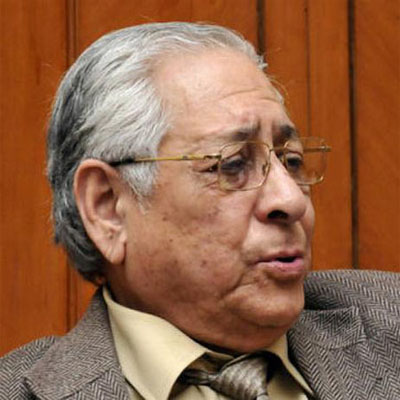
Former attorney general of India Soli Sorabjee has agreed to come on board as an ombudsman who will provide independent perspective on the coverage of the channel as well as investigate into complaints by viewers. It is also a first such initiative by a news channel.

NDTV editorial director and president of the Ethics Committee Sonia Singh said, “Every day, we in the media face new editorial challenges regarding journalistic boundaries and we are delighted that Sorabjee will, with his unchallenged integrity, be able to provide much needed insight and advice.”
A new link has been created called www.ndtv.com/soli to address the issues. Speaking on his appointment NDTV Group vice chairperson KVL Narayan Rao said, “Soli Sorabjee is an independent, highly respected, highly regarded legal luminary, with years of experience in handling issues relating to freedom of expression and freedom of the press and censorship. We are delighted he has agreed to be the Ombudsman for NDTV.”
As a jurist he has argued several cases of constitutional importance in HCs and SCs particularly relating to freedom of press, censorship etc.
NDTV Group CEO and executive director Vikram Chandra added, “NDTV has always been committed to the highest standards of integrity and balance in its news coverage and we have now decided to take that one step further by appointing an independent Ombudsman who can adjudicate on any issues that may come up in the future.”
We at indiantelevsion.com feel that Sorabjee with his experience may just be beneficial to the channel.





News Broadcasting
UDF poised to return to power in Kerala, says Manorama-CVoter survey
Massive opinion poll projects shift in Kerala politics ahead of 2026 Assembly elections.
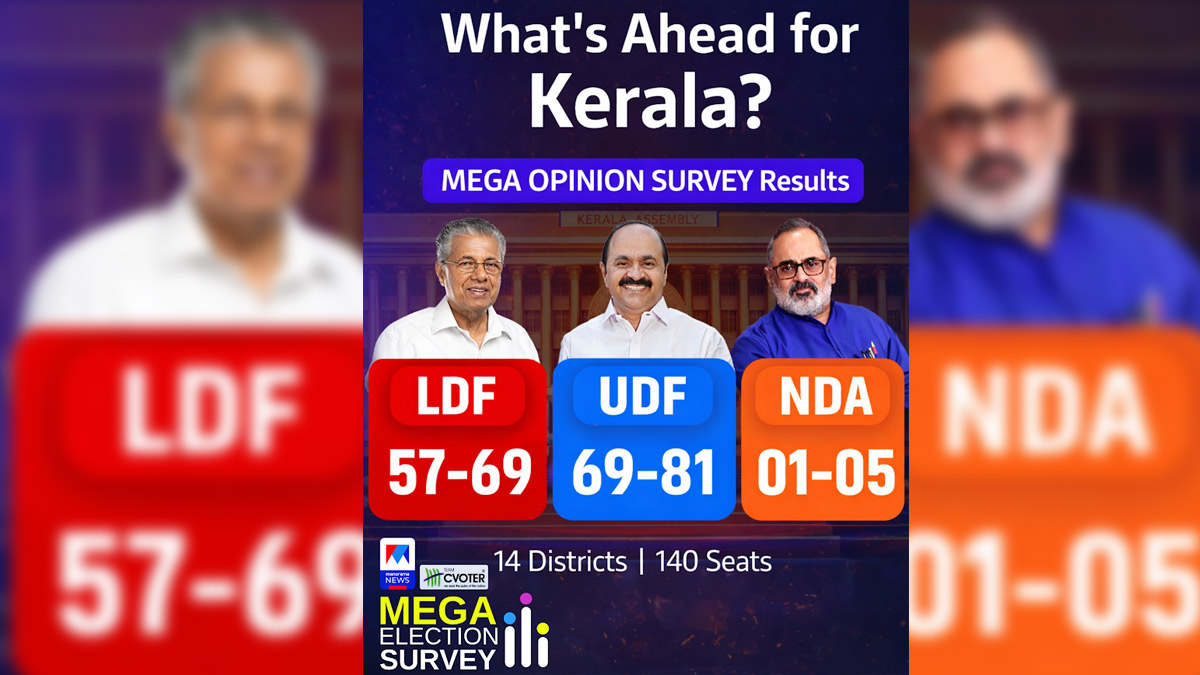
MUMBAI: The winds of change appear to be blowing through Kerala’s political landscape and this time, they seem to favour the United Democratic Front. A comprehensive mega opinion survey conducted by Manorama News in partnership with CVoter projects a potential comeback for the UDF in the upcoming Kerala Legislative Assembly Elections 2026. The survey, covering all 140 constituencies with a massive sample size of nearly 90,000 respondents, predicts the UDF could win between 69 and 81 seats.
The ruling Left Democratic Front (LDF) is expected to secure 57 to 69 seats, a significant drop from the 99 seats it won in the 2021 elections. This would mean the LDF losing 30 to 42 of its sitting seats. Meanwhile, the National Democratic Alliance (NDA), which drew a blank in 2021, is projected to open its account with 1 to 5 seats.
Region-wise, the UDF is expected to make strong gains in Malabar, winning 25 to 34 out of 48 seats, and in Central Kerala, where it could bag 29 to 33 out of 53 seats. In South Kerala, the LDF is likely to retain an edge with 21 to 25 seats, while the UDF may improve to 12 to 16 seats. The NDA could pick up 1 to 3 seats in the southern region.
The survey was conducted between 14 and 26 March 2026, with additional tracker and snap polls carried out from December 2025 to March 2026. A total of 89,693 respondents participated, ensuring representation across all demographics and social segments.
Manorama News has a strong track record of accuracy, with its previous projections closely matching the actual results of the 2019 and 2024 Lok Sabha elections as well as the 2021 Kerala Assembly polls.
In Kerala’s famously fierce political battles, this survey suggests the pendulum may be swinging back. Whether the final verdict matches these numbers or throws up another surprise, one thing is clear, the 2026 Assembly elections are shaping up to be one of the most keenly watched contests in the state’s history.






