I&B Ministry
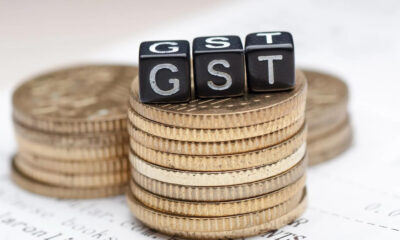
MoF assures that GST will be a game changer for M&E and subsume service tax, entertainment tax & VAT

NEW DELHI: In a major relief to the media and entertainment industry, two senior officials of the Finance Ministry assured the captains of the sector that VAT, service tax and entertainment tax would be subsumed in the proposed Goods and Services Tax.
Terming GST as a game changer, Revenue Special Secretary Rashmi Verma said the rate was being worked out but she reiterated that it would be one and uniform for the entire country.
Member Service Tax and GST V S Krishnan added that Infosys had been given the task of creating a special portal for GST collections and the progress was good.
He said that three processes under way were in the public domain and the stakeholders and citizens could react. As all these were drafts, changes could still be made.
These were the rate of taxation, the law relating to GST, and the technology. The fourth relating to returns would be put in the public domain today itself. Technology was being taken care of by Infosys.
He added that after GST came and the government got time to review its progress, it could be improved over time.
They were responding to remarks made by some industry leaders on the second and final day of the two-day Big Picture summit organized by the Confederation of Indian Industry.
Sector representatives included Farokh Balsara of Ernst and Young, Film Federation of India Vice President Ravi Kottarakara, Hinduja Ventures whole time Director Ashok Mansukhani and Zee Network’s legal expert Avnindra Mohan. A P Parigi, advisor to the Chairman of Network 18 moderated the session.
Verma added that the problem of share of centre and states would be sorted out by the Ministry and need not worry the M and E industry which will just have to pay a single tax.
There will be slabs, but that would be restricted to just two – higher and lower, she added.
She said bringing the Centre and 29 states on one table had been difficult but most problems had been ironed out.
The work of the portion of the state was being worked out but the citizens need have no doubt that he will have to pay just one tax. For the citizen, the apportioning was only of academic interest.
She said there may be some tax levied by some local bodies in some states, but this would be between half per cent to two per cent. While ways were also being found to sort out this problem, it was clear that this would only relate to the manufacturing industry.
She also clarified that the GST would apply both to services and goods.
The M and E industry would benefit as the multiplicity of taxation would vanish.
The entire information will be out on a GST portal by the third week of November, she said. The transitional problems were being worked out, she added.
Answering a point made by one of the earlier speakers who asked whether the M & E sector was being treated at par with sinful industries, she said this was not so. The only sinful industries for the Government were cigarettes and alcohol.
Parigi suggested creation of a separate secretariat with representatives of industry and bodies like the CII.