I&B Ministry
Modi’s monthly broadcast reminds media about National Emergency’s shackles
NEW DELHI: “There might have been locks on newspaper houses, radio might have been speaking just one kind of language,” but “given the opportune moment, the citizens gave an example of the power of Democracy.”
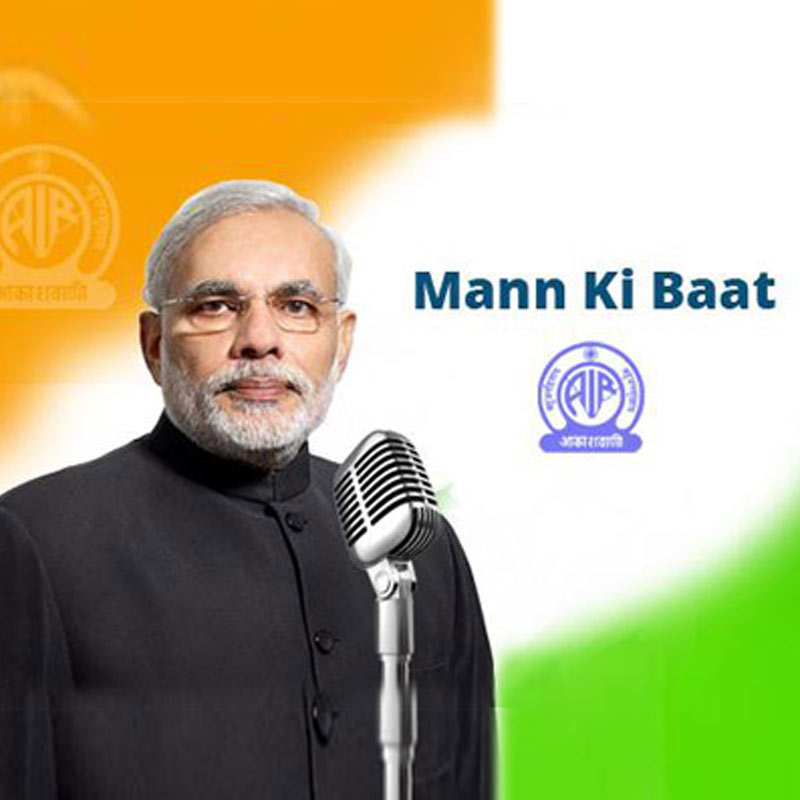
Referring to the National Emergency that was declared on the night of 25-26 June 1975, 41 years ago to the date, in his monthly ‘Mann Ki Baat’, Modi added, “A great example of the democratic strength of the common people was witnessed during Emergency”.
The 21st edition of ‘Mann ki Baat’ on 26 June 2016 on All India Radio coincided with the anniversary of the declaration of the National Emergency of 1975, often referred to as the dark day for the Indian media.
Modi said the country’s strength lies in its people and and making democracy a living embodiment.
He noted at the outset that “sometimes my ‘Mann Ki Baat’ is ridiculed a lot and is criticized much also. However, this can only happen because all of us are committed to democracy.”
(In the May broadcast, Modi had lauded All India Radio for broadcasting his monthly ‘Mann ki Baat’ in regional languages on the day he talks to the nation.)

I&B Ministry
India rolls out Rs 203 crore TDIP scheme to boost 6G push
Revised policy widens access for startups, boosts global telecom standards play
NEW DELHI: India is doubling down on its telecom ambitions with a revamped Technology Development and Investment Promotion scheme, designed to help the country move from participant to power player in global standards.
The Ministry of Communications on Tuesday unveiled revised guidelines for the TDIP scheme, committing Rs 203 crore for the 2026 to 2031 period. The move aims to strengthen India’s presence in international telecom forums while accelerating homegrown innovation in next-generation technologies, including 5G Advanced and 6G.
At the launch, Ministry of Communications union minister for communications and development of north eastern region Jyotiraditya M. Scindia said the updated framework is intended to give Indian players a stronger voice in shaping global telecom rules.
The scheme focuses heavily on increasing participation in key global bodies such as the International Telecommunication Union, 3GPP and oneM2M. Financial support will be provided for attending international meetings, submitting technical proposals, taking leadership roles, and even hosting global events in India.
The idea is straightforward. If India helps write the rules, its technologies stand a better chance of going global.
Beyond policy rooms and conference tables, the revised scheme casts a wider net across the ecosystem. Startups, MSMEs, academia and research institutions are now explicitly included, opening the door for broader collaboration and faster innovation cycles. Pilot projects, proof-of-concept initiatives and real-world demonstrations will also receive support, helping ideas move from lab to market.
Supporting the rollout will be institutions such as Telecommunications Standards Development Society India, Telecom Centres of Excellence India and Telecommunications Consultants India Limited. These bodies will coordinate efforts, build capacity and ensure industry participation aligns with global opportunities.
The initiative ties in with broader efforts by the Department of Telecommunications, including programmes like the Telecom Technology Development Fund and the Bharat 6G Mission, forming a more cohesive push towards future-ready networks.
Also present at the event were Ministry of Communications minister of state for communications and rural development Chandra Sekhar Pemmasani and Department of Telecommunications secretary (telecommunications) and chairman digital communications commission Amit Agrawal.
With this update, India is not just looking to keep pace with global telecom trends. It is aiming to help define them.