iWorld
MCA’s WhatsApp tipline trusted to combat AI-generated misinformation

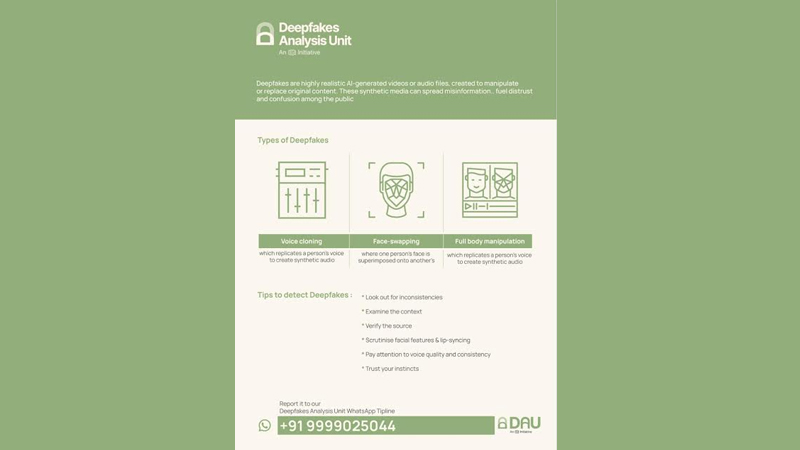
Mumbai: The Misinformation Combat Alliance’s (MCA) Deepfakes Analysis Unit (DAU) Tipline on WhatsApp has emerged as a trusted resource for raising public awareness and a critical instrument in helping combat the spread of AI-generated misinformation. The WhatsApp tipline became available for public use on 25 March 2024 and has received hundreds of messages, successfully assisting people to discern between real and synthetic media.
Users can flag AI-manipulated content in the form of audio notes and videos by sending it to the WhatsApp tipline and will receive assessments on whether a piece of media is AI-generated or contains elements of it. The tipline offers multilingual support in English and three regional languages (Hindi, Tamil, and Telugu).
With millions of Indians using WhatsApp, the collaboration between Meta and MCA represents a continued effort to empower users with tools to verify information on its service, especially to curb the spread of AI-generated misinformation.
In the short span of the DAU tipline being operational, the team has reviewed challenging content manipulated using AI technology. It has seen noticeable trends emerge that can help educate the public on spotting deepfakes, empowering them to debunk false claims and prevent the spread of such misinformation.
Analyzing the trends based on the messages received on the DAU tipline, the bulk of the content has been in the form of videos.
● In most cases where AI is used to manipulate videos, the original audio tracks have been replaced with AI-generated audio. There are multiple examples of this kind of audio tampering in videos featuring actors, businessmen, politicians, and even TV anchors.
● Memes of politicians and their likenesses created using A.I. have sometimes involved face-blending techniques or cheaper techniques lacking sophistication.
● In a few videos analysed, the team was able to assess that the mouth of a subject had been recreated using generative A.I. so that their lip movements could synchronise with their words to produce what is called a lip sync deepfake.
DAU head Pamposh Raina said, “The strength of the DAU lies in the collaborative model which it is building by partnering with detection and forensic experts, which in turn is helping DAU’s fact-checking partners who are an integral part of this project. At the end of the day, our goal is to drive public awareness on the issue of algorithm-based fabrication and I am confident that this kind of a symbiotic model can be replicated across the globe to combat misinformation spread through audio and video content produced using generative AI.”
Next time you’re not sure if something is a deepfake, send it to the DAU tipline on WhatsApp.
1. Start a chat with the DAU on WhatsApp by forwarding audio notes or videos you want to verify to +91 9999025044.
2. In response to your message, you will receive an assessment report on whether a piece of media is AI-generated or contains elements of it.
3. Follow DAU’s WhatsApp Channel where you can receive assessments of verified content in real-time (https://bit.ly/dauwachannel).
MCA is a cross-industry alliance bringing companies, organizations, institutions, industry associations and entities together to collectively fight misinformation and its impact. Currently, MCA has 16 members including fact-checking organizations, media outlets, and civic tech and are inviting strategic partners to collaborate in this industry-wide initiative to combat misinformation and create an enlightened and informed society. Seven detection and forensics partners are lending their expertise and knowledge to support the Deepfakes Analysis Unit.