News Broadcasting
MAYHEM IN AMERICA: A MADE FOR TV ATTACK


Horrific. Ghastly. Dastardly. Inhuman. Unbelievable. Catastrophic. Deadly. Words that have been used to describe the airplane attacks on the World Trade Centre I and II – two icons of the New York landscape and US economic power – and the heart of American defence – the Pentagon.
The world has watched the devastation that has reshaped the Manhattan skyline, and has gasped in horror at the carnage, the uncounted loss of human life. All because of the power of satellite television. Professional cameramen and TV journalists have tailed the rapid developments. Even laymen have contributed their mite through their amateur efforts at filming the sequence of events using handycams.
Obviously, whoever is behind the attacks was seeking maximum impact. Hundred per cent attention globally to the shaming of America and its high falutin anti-terrorism security measures. The world has watched as the centre of capitalism has been brought to its knees, bloodied in ways that will take a long time to heal.

The idea was also to cause paralysis, panic, fear globally. And also elicit a response. Possibly an irrational response.
Images of balls of flame exploding off long-lasting structures as planes slammed into them. Images of those pillars of strength crashing down as if they were made of wet sand were flashed around the world courtesy television.
Television acted as a uniting force as we all grieved over the heinous acts. In some corner of the globe, a group of people would in all possibility be grinning in delight at the Maximum Impact they generated. We may never get to see those images.
But we may well get to see pictures of them much later when they have been blasted off the face of the earth; disintegrated into smithereens, should the world choose to fight back against the perpetrators of the act. Which a rather weak looking President George W Bush Jr has said will happen.
Television channels have all reacted differently while providing coverage of America under attack. Networks such as CNN, CNBC, chose to continue to follow the developments without inserting advertising. The entire affair was of a magnitude beyond commercial considerations. There was a time when CNN would place commercials on its channel, and charge what it wanted, according to industry sources. That has changed over the past couple of years.
Indian news channels Zee, Star and Aaj Tak too kept abreast of developments. But they chose this morning to sprinkle their coverage with TV commercials. Mammon it seemed had the upper hand even in the time of tragedy. After all, it’s not every day that you get audiences rivetted to news channels continuously.
The next few days are going to see news channels continuing to capture viewers’ eyeballs. Hopefully, the commercials will not detract from the mood of the moment. And ad sales teams at the channels will maintain some decorum and decency.
It is a moment for all of us to pause. And for the powers-that-be in India to wake up to possible attacks sometime in future. 1992 happened. It should not be allowed to happen again.
ANIL WANVARI,
CEO, INDIANTELEVISION.COM






News Broadcasting
CNN-News18 to host Fury in the Gulf conclave on West Asia crisis
Three-hour summit to unpack geopolitical fallout and impact on India
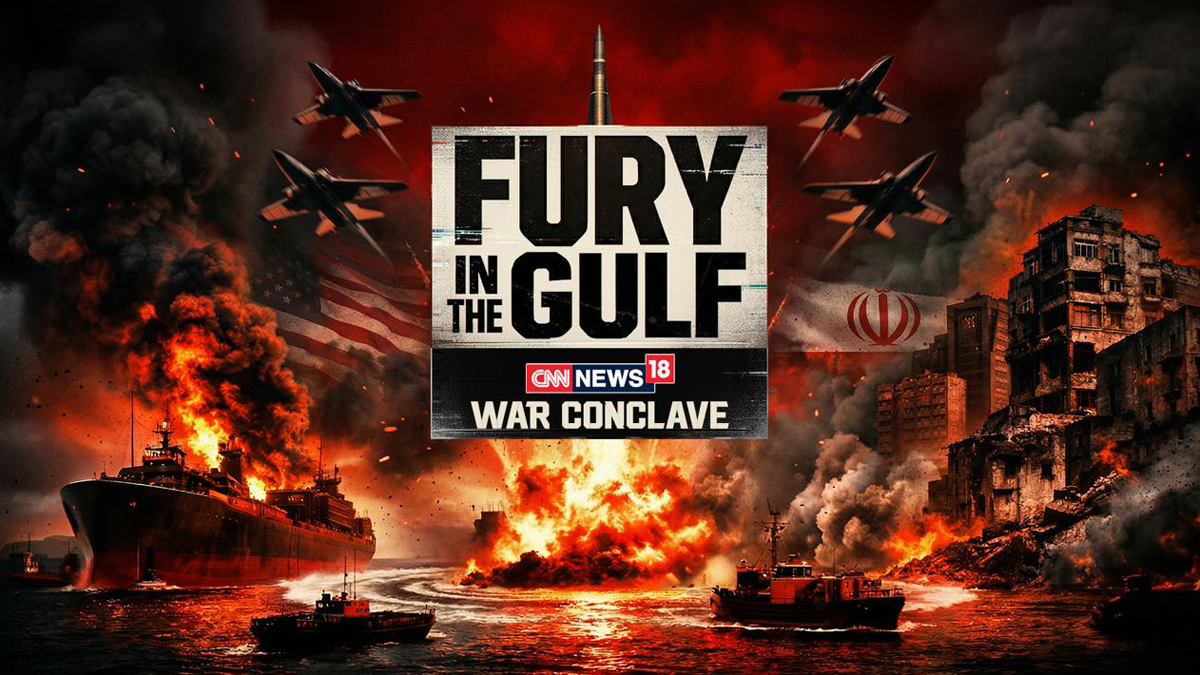
MUMBAI: CNN-News18 is set to host a special three-hour broadcast, Fury in the Gulf – War Conclave, on April 7, aiming to decode the escalating West Asia crisis and its far-reaching implications for India.
Scheduled from 4:00 PM to 7:00 PM, the conclave comes at a time when tensions between Iran and the United States are reshaping global geopolitics and triggering economic uncertainty. With India’s deep energy ties, trade links and large diaspora in the Gulf, the developments carry significant domestic relevance.
Built around the theme ‘Conflict, Consequences, and The Future,’ the programme will feature six curated sessions combining one-on-one interviews and panel discussions. The focus is to cut through the clutter and offer viewers a clearer understanding of the fast-evolving situation.
Key sessions include ‘Diplomacy in Times of War’ featuring Shashi Tharoor, and ‘World After the Iran Conflict’ with voices such as Ram Madhav, Reuven Azar, representatives from the European Union and the Iranian Deputy Envoy. Another session titled ‘Another Dunkirk?’ will bring together K. J. S. Dhillon and Jitin Prasada among others.
CNN-News18 editorial affairs director Rahul Shivshankar said, “In times of war, clarity becomes the most powerful tool. Fury in the Gulf – War Conclave brings together credible voices to address the questions and confusion that arise amid an overwhelming influx of information.”
He added that the initiative is aimed at delivering “facts, perspective, and insight” at a time when misinformation can easily cloud public understanding.
Echoing the sentiment, CNN-News18 CEO– English and business news Smriti Mehra said the conflict marks a defining global moment, with consequences that extend well beyond the region. She noted that the conclave seeks to present the crisis with “depth, nuance and responsibility” so audiences can better grasp its real-world impact.
As geopolitical tensions continue to dominate headlines, the conclave positions itself as an attempt to bring order to the noise, offering viewers a structured, insight-led look at a complex and rapidly shifting global situation.






