Hollywood
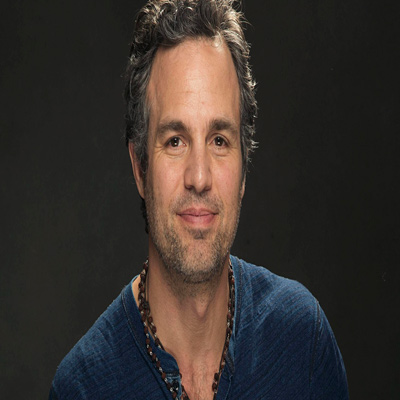
Mark Ruffalo to visit MAMI this year
MUMBAI: Avengers: Age of Ultron star Mark Ruffalo, who plays Hulk in the movie, is likely to be a part of the Mumbai Film Festival (MAMI) this year.
Ruffalo said, “I received an invitation a couple of days ago and am figuring out the dates. I’m really excited about the festival. I have heard a lot about Bollywood and it’d be great if I could visit Mumbai.”
Ruffalo will reprise his role of The Hulk and he was excited to be on set with his fellow Avengers actors and experience again the camaraderie that had formed among all of them. “We all as actors went on this journey together, through this wild thing that became The Avengersand this successful thing and then everyone going off and having all these other successes that spun out of it, and there’s a lot of goodwill between us. So coming back after being away and seeing each other was a very sweet reunion and working together was a lot of fun. There’s a lot of goofing around and a lot of playfulness and digging in when it’s time to dig in on it, so I think that some of the best, most exciting stuff is when they are all together,” he said.
Marvel Studios’ Avengers: Age of Ultron stars Robert Downey Jr., who returns as Iron Man, along with Chris Hemsworth as Thor, Ruffalo as Hulk and Chris Evans as Captain America. Together with Scarlett Johansson as Black Widow and Jeremy Renner as Hawkeye, and with the additional support of Don Cheadle as James Rhodes/War Machine, Cobie Smulders as Agent Maria Hill, Stellan Skarsg?rd as Erik Selvig and Samuel L. Jackson as Nick Fury, the team must reassemble to defeat James Spader as Ultron, a terrifying technological villain hell-bent on human extinction. Along the way, they confront two mysterious and powerful newcomers, Pietro Maximoff, played by Aaron Taylor-Johnson, and Wanda Maximoff, played by Elizabeth Olsen and meet an old friend in a new form when Paul Bettany becomes Vision.
Written and directed by Joss Whedon and produced by Kevin Feige,Avengers: Age of Ultron is based on the Marvel comic book series The Avengers, first published in 1963. The movie is set to release on 24 April, 2015.

Hollywood
Utopai Studios partners Huace to deploy PAI for long form content
Deal includes revenue sharing as Huace adopts AI engine across global ops
MUMBAI: Lights, camera… algorithm, the script just got a silicon co-writer. In a move that signals how storytelling itself is being re-engineered, U.S.-based Utopai Studios has partnered China’s Huace Film & TV Co. Ltd. to bring artificial general intelligence into the heart of long-form content creation.
At the centre of the deal is PAI, Utopai’s cinematic storytelling system, which Huace will deploy as a core engine across its production pipeline from development and creative iteration to global localisation. The partnership includes a large-scale annual usage commitment from Huace, alongside a usage-based revenue-sharing model, underscoring both ambition and commercial confidence on both sides.
For Huace, one of China’s largest film and television companies, the bet is not on automation alone but on scale with control. With distribution spanning over 200 countries and a presence across more than 20 international platforms, including Netflix and YouTube, the company brings a vast content ecosystem where even marginal efficiency gains can translate into significant output shifts. Its extensive TV IP library further positions it as fertile ground for AI-assisted storytelling workflows.
The choice of PAI follows what Huace described as a rigorous evaluation of existing AI tools, many of which remain limited to fragmented use cases such as video generation or editing. What tipped the scales, according to the company, was PAI’s ability to handle long-form narrative complexity maintaining continuity, structure, and creative coherence across entire story arcs rather than isolated clips.
Utopai, for its part, is using the partnership to anchor its international expansion strategy, pitching PAI as an enterprise-ready system built for customisation, privacy, and regulatory adaptability across markets. That positioning becomes particularly relevant as global media companies increasingly scrutinise how AI integrates into proprietary workflows.
The timing is notable. Earlier this month, Utopai upgraded PAI to support three-minute 4K video generation and advanced multi-shot sequencing features designed to tackle one of AI storytelling’s biggest hurdles: consistency across scenes.
What emerges is not just another tech collaboration, but a glimpse into how the grammar of filmmaking could evolve. Because if stories were once crafted frame by frame, the next chapter might just be coded scene by scene.