Cable TV
Make in India push for set-top boxes face challenges


KOLKATA: Last year it made headlines when large DTH players including Tata Sky, Dish TV announced their decision to move manufacturing of a significant portion of set-top boxes (STBs) in India. The announcements were in line with the government’s renewed push for Make in India. But with complexities looming over the initiative, manufacturers remained worried about the impact of the initiative, if it remained limited to just ‘assembling the products in India’.
There have been talks around different aspects of the Make in India push for STBs since the last two years. “In 2020, the department for the promotion of industry and internal trade (DPIIT) formed a committee. It asked the ministry of information and broadcasting (MIB) to be a part of it and a meeting was held with operators and STB manufacturers to gauge the overall situation,” said MyBox Technologies MD and CEO Amit Kharbanda. “STB as an electronic product falls under the purview of the ministry of electronics and information technology (MeitY)Meity, but buyers are regulated by MIB, an ‘unusual situation’.”
According to MIB, Make in India is not just about assembling the product in India but also about promoting Indian designs.

“Our entire HITS business was premised on furthering the mission of ‘Digital India’ – taking signals to remote semi-rural and rural areas across our pan-India satellite footprint; facilitating a digital transition. As regards local sourcing, our Cable Operator Premise Equipment or COPEs bear testimony to our ‘Make In India’ approach; with a significant percentage of locally sourced components. With Set-Top Boxes, we have already moved whatever inventory production was possible, to India. This includes not just India-based manufacturers but also Indian companies. But, the challenge is that several components of the STBs still need to be procured from overseas manufacturers,” said NXTDigital MD & CEO Vynsley Fernandes.
The draft National Broadcasting Policy (NBP) finalised early this year also focused on policies to indigenise the production of consumer premises equipment including the set-top boxes, which are heavily import-dependent. This will be done by setting up a self-reliant local manufacturing ecosystem and roping in the Bureau of Indian Standards (BIS) and other agencies to publish the quality benchmark. The policy also called for setting up measures to rationalise the import tariffs and provide preference to domestically manufactured electronic products and mandate increasing deployment of indigenous equipment.
GTPL Hathway cable TV head and chief strategy officer Piyush Pankaj said, “MIB has been promoting the initiative for the last two-three years, focusing on Indian manufacturers. But, the problem is many components like chipsets still come from a foreign country and are being assembled here. However, the MSO is also buying boxes from Indian vendors.”
While domestic manufactures are trying to make way for Indian designing, it takes more than a year to develop designing. “Indian design companies have competence but the business is not in good shape, so the domestic manufacturers are requesting the operators to cooperate with them. The operators can be worried about the quality of boxes but they can opt for trial orders,” said MyBox Technologies MD and CEO Amit Kharbanda.
On the other hand, some operators have distanced themselves from the matter.
“We support the Make in India initiative. But, we have also clarified that it applies to any product manufactured in India by an entity here, whether it’s an Indian company or a foreign one. As a service provider, I can’t go checking on the antecedents of the company and whether it has ‘designed’ or ‘assembled’ in India, or whether there was a technology transfer or indigenous technology used. It is very complicated for us. We are buying from a company registered in India, paying Indian taxes, not importing. As long as we are doing that, we believe we are buying from India. Now it is up to the government to find out this nitty-gritty and it wants to take a policy initiative,” a senior executive with a large MSO said on conditions of anonymity.





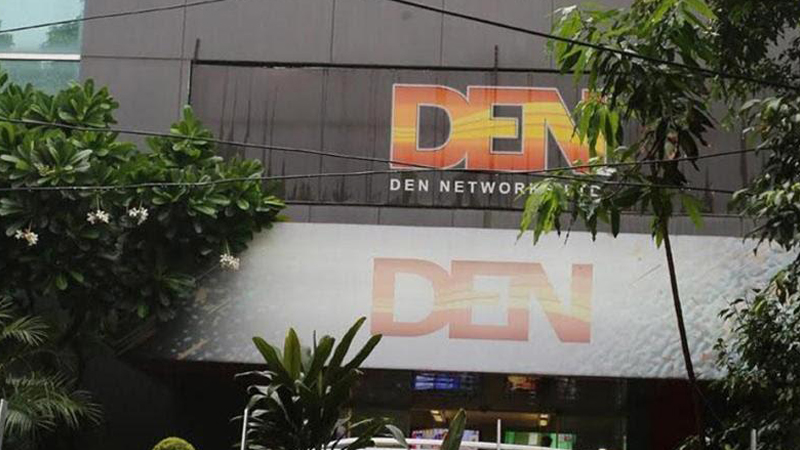
MUMBAI: When margins wobble, liquidity talks and in Q3 FY25-26, cash did most of the talking. Den Networks Limited closed the December quarter with consolidated revenue of Rs.251 crore, marginally higher than the previous quarter but down 4 per cent year-on-year, even as profitability stayed resilient on the back of strong cash reserves and disciplined cost control.
Subscription income softened to Rs.98 crore, slipping 3 per cent sequentially and 14 per cent from last year, while placement and marketing income offered some cheer, rising 15 per cent quarter-on-quarter to Rs.148 crore. Total costs climbed faster than revenue, up 7 per cent QoQ to Rs.238 crore, driven largely by higher content costs and operating expenses. As a result, EBITDA dropped sharply to Rs.13 crore from Rs.19 crore in Q2 and Rs.28 crore a year ago, pulling margins down to 5 per cent.
Yet, the bottom line refused to blink. Profit after tax stood at Rs.40 crore, up 15 per cent sequentially and only marginally lower than last year’s Rs.42 crore. A healthy Rs.57 crore in other income helped cushion operating pressure, keeping profit before tax at Rs.48 crore, broadly stable quarter-on-quarter despite the tougher cost environment.
The real headline-grabber, however, sits on the balance sheet. The company remains debt-free, with cash and cash equivalents swelling to Rs.3,279 crore as of December 31, 2025. Net worth rose to Rs.3,748 crore, while online collections accounted for 97 per cent of total receipts, underscoring strong cash discipline across operations, including subsidiaries.
In short, while Q3 showed signs of operating strain, the financial backbone remains solid. With zero gross debt, steady profits and a formidable cash war chest, the company enters the next quarter with flexibility firmly on its side proving that in uncertain markets, balance sheet strength can be the best growth strategy.








