News Broadcasting
Leveraging data-driven journalism in the age of Connected TV for enhanced news channel performance


Mumbai: In today’s digital backdrop, the coming together of data-driven journalism and connected TV (CTV) has modernized the way news channels function and connect with their viewers. The introduction of CTV has not only spread out the reach of news content but has also presented helpful insights about spectator behaviour, preferences, and engagement metrics. By exploiting the potential of data analytics, news channels can now formulate educated strategic decisions that push performance and improve viewer experience.
Connected TV platforms have turned out to be a repository of statistics, providing news channels with a pool of facts and figures on viewer demographics, geographic locations, viewing patterns, device usage, content consumption habits, ad effectiveness, and conversion rates. This data pool empowers news channels to custom-build their content and programming to be acquainted with the precise requirements and preferences of their audience segments, eventually directing to greater engagement and reliability.
By digging into these records, news channels can not only get a picture of their audiences better but also adjust their content strategy for maximum impressions.

One of the significant benefits of data-driven journalism in the CTV age is the competence to provide individualized content recommendations on the grounds of perceptions collected from spectator numbers. For example, channels like India TV Speed News have effectively accommodated audiences who have a preference for speedy updates by presenting a 24/7 Speed News Channel. This differentiated line of track not only develops viewer contentment but also encourages retention and trustworthiness. This personalised content strategy not only further expands spectator engagement but also promotes an appreciation for the relationship and relevance with the audience.
By leveraging real-time feedback collected through concurrent viewers, news channels can enthusiastically connect with their listeners and modify their content strategy appropriately. Furthermore, predictive analytics play a central character in predicting upcoming trends and audience interests, such as the approaching Election 2024, permitting channels to stay ahead of the curve and bring appropriate and well-timed news coverage.
This hands-on approach to feedback and analytics authorizes news channels to remain clear-headed and responsive to changing viewer preferences and trends. As stated by India TV managing director Ritu Dhawan “Understanding viewer engagement metrics allows Us as a news brand to craft more compelling experiences that resonate with their audience, leading to increased time spent on the platform and higher viewership ratings.”
In conclusion, the integration of data-driven journalism with connected TV presents news channels with unprecedented opportunities to enhance their performance and engage with audiences in more meaningful ways. By leveraging viewer data, personalised content recommendations, real-time feedback, predictive analytics, and strategic promotional strategies, news channels can not only increase viewership and ratings but also foster stronger viewer loyalty and satisfaction. Embracing the power of data in the age of CTV is key to unlocking new levels of success and performance in the ever-evolving landscape of journalism.
This article has been authored by India TV managing director Ritu Dhawan







News Broadcasting
News18 India launches Command Centre war explainer with Arya
New show shifts from debates to decoding global conflicts and impacts
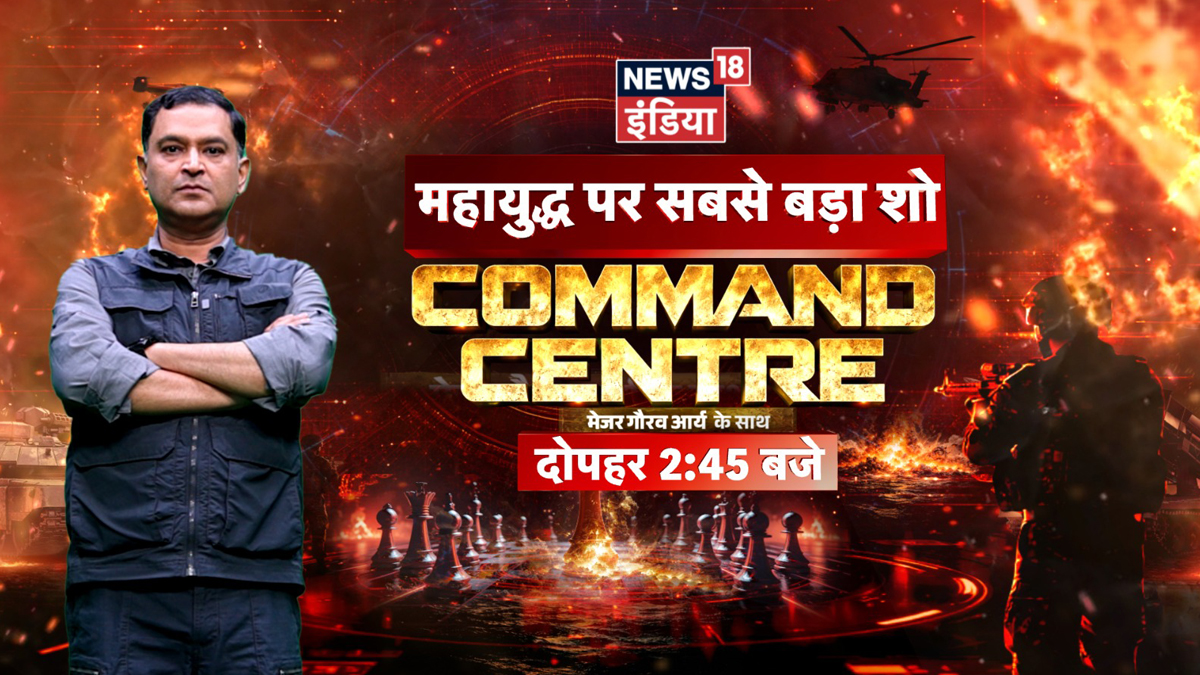
MUMBAI: News18 India has rolled out a new war-focused programme, Command Centre, featuring Gaurav Arya, as it looks to offer viewers a sharper, more grounded take on global conflicts amid rising tensions in West Asia.
Positioned as an “insider war room”, the show moves away from conventional panel debates and instead focuses on explaining military developments, decoding strategy and connecting global events to their everyday impact, from fuel prices to economic shifts.
The format leans heavily on visuals and data. The studio has been designed like a command hub, complete with large LED war maps, real-time graphics and an alert system to track developments as they unfold.
At the centre of it all is Arya, who brings his military background to simplify complex war strategies for viewers. His signature line, “Seedhi baat samjhiye”, anchors the show’s promise of clarity over noise.
News18 India managing editor Jyoti Kamal said, “Command Centre, featuring Major Gaurav Arya is designed to deliver accurate insights and a clear perspective on how evolving conflicts impact everyday life, from household budgets to national security. With expert voices analysing every development in real time, the show goes beyond headlines to decode what’s happening now, what it means, and what could come next.”
Echoing the intent, Gaurav Arya added, “In times of war, confusion is the biggest threat. With News18 India’s Command Centre, we are bringing viewers inside the war room, decoding strategies, tracking every escalation, and explaining, in the simplest terms, what it means for India and for every household. Seedhi baat samjhiye, this is where you understand not just what is happening, but what happens next.”
The weekday show will air in the afternoon slot and will also feature Gaurav Shukla, adding to its editorial depth.
With its mix of analysis, visuals and a clear focus on impact, the show reflects a broader shift in news consumption. Viewers are no longer just watching events unfold, they are looking to understand what those events mean for them.







