Connect with us

Hollywood

Kodak inks deals with six Hollywood studios

Published

on

MUMBAI: Kodak has finalised new film supply agreements with all six major Hollywood studios. As part of these agreements, Kodak will continue to provide motion picture film to 20th Century Fox, Walt Disney Co., Warner Bros. Entertainment Inc., NBC Universal Inc., Paramount Pictures Corp. and Sony Pictures for their movie and television productions. 


“Film has long been – and will remain – a vital part of our culture. With the support of the studios, we will continue to provide motion picture film, with its unparalleled richness and unique textures, to enable filmmakers to tell their stories and demonstrate their art,” said Kodak chief executive officer Jeff Clarke.

Advertisement


Kodak has been engaged in broad discussions with prominent filmmakers, studios, independent artists, production companies, and film processors to enable film to remain a fundamental medium. Last July, the studios made known their intent to play a key role in leading this industry-wide effort.


Advertisement

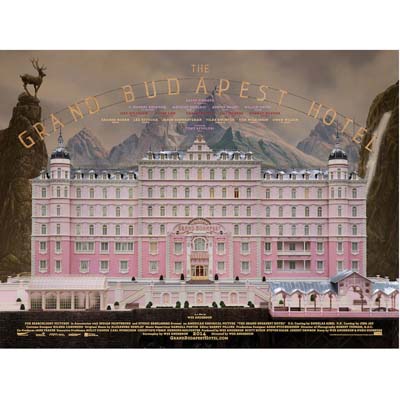
Prior to the agreements being finalized, several highly acclaimed films were produced on film, including Oscar nominees Boyhood, The Grand Budapest Hotel, The Imitation Game, Interstellar, Foxcatcher, Into the Woods, Leviathan, Inherent Vice and The Judge. Additionally, some of the most-anticipated films of 2015 are being shot on Kodak film, such as Star Wars: Episode VII –The Force Awakens, Mission: Impossible 5, Batman v. Superman – Dawn of Justice, Jurassic World, Ant-Man, Cinderella, Entourage and Trainwreck.


These agreements make it possible for Kodak to continue to manufacture motion picture film while also pursuing new opportunities to leverage film production technologies in growth applications, such as touchscreens for smartphones and tablet computers. This also positions the company to remain the premier supplier of camera negative, intermediate stock for post production, and archival and print film.

Advertisement


“With the support of the major studios, the creative community can continue to confidently choose film for their projects. We’ve been asking filmmakers, what makes a project ‘FilmWorthy.’ Their responses have varied from the need for its exceptional depth to its distinctive grain, but overwhelmingly, the answer is ‘the story.’ They need film to tell their stories the way they envision them, and hold a strong desire for it to remain a critical part of their visual language. Enabling artists to use film will help them to create the moments that make cinema history. The agreements announced today are a powerful testament to the power of film and the creative vision of the artists telling them,” said Kodak president of entertainment and commercial films Andrew Evenski.

Advertisement
Click to comment

Leave a Reply

Your email address will not be published. Required fields are marked *

Hollywood

Utopai Studios partners Huace to deploy PAI for long form content

Deal includes revenue sharing as Huace adopts AI engine across global ops

Published

on

MUMBAI: Lights, camera… algorithm, the script just got a silicon co-writer. In a move that signals how storytelling itself is being re-engineered, U.S.-based Utopai Studios has partnered China’s Huace Film & TV Co. Ltd. to bring artificial general intelligence into the heart of long-form content creation.

At the centre of the deal is PAI, Utopai’s cinematic storytelling system, which Huace will deploy as a core engine across its production pipeline from development and creative iteration to global localisation. The partnership includes a large-scale annual usage commitment from Huace, alongside a usage-based revenue-sharing model, underscoring both ambition and commercial confidence on both sides.

For Huace, one of China’s largest film and television companies, the bet is not on automation alone but on scale with control. With distribution spanning over 200 countries and a presence across more than 20 international platforms, including Netflix and YouTube, the company brings a vast content ecosystem where even marginal efficiency gains can translate into significant output shifts. Its extensive TV IP library further positions it as fertile ground for AI-assisted storytelling workflows.

Advertisement

The choice of PAI follows what Huace described as a rigorous evaluation of existing AI tools, many of which remain limited to fragmented use cases such as video generation or editing. What tipped the scales, according to the company, was PAI’s ability to handle long-form narrative complexity maintaining continuity, structure, and creative coherence across entire story arcs rather than isolated clips.

Utopai, for its part, is using the partnership to anchor its international expansion strategy, pitching PAI as an enterprise-ready system built for customisation, privacy, and regulatory adaptability across markets. That positioning becomes particularly relevant as global media companies increasingly scrutinise how AI integrates into proprietary workflows.

The timing is notable. Earlier this month, Utopai upgraded PAI to support three-minute 4K video generation and advanced multi-shot sequencing features designed to tackle one of AI storytelling’s biggest hurdles: consistency across scenes.

Advertisement

What emerges is not just another tech collaboration, but a glimpse into how the grammar of filmmaking could evolve. Because if stories were once crafted frame by frame, the next chapter might just be coded scene by scene.

Continue Reading

Advertisement News18
Advertisement
Advertisement
Advertisement
Advertisement Whtasapp
Advertisement Year Enders

Indian Television Dot Com Pvt Ltd

Signup for news and special offers!

Copyright © 2026 Indian Television Dot Com PVT LTD

This will close in 10 seconds