Hollywood
Kitano Takeshi hits out at Japanese cinema at Tokyo filmfest
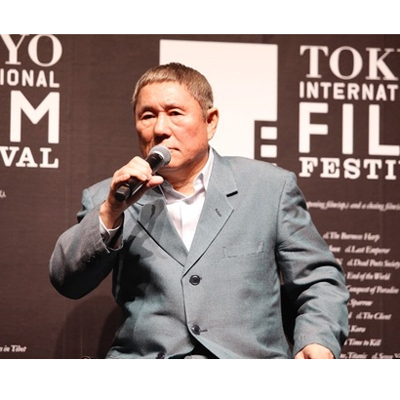
NEW DELHI: Eminent Japanese filmmaker Kitano Takeshi used the occasion of receiving the ‘Lifetime Achievement Samurai Award’ at the Tokyo International Film Festival to speak about the current state of Japanese film industry.
He was one of the two filmmakers who received the award, the other being American filmmaker Tim Burton known for his dark, gothic, macabre and quirky horror and fantasy films such as Beetlejuice, Edward Scissorhands, The Nightmare Before Christmas, Ed Wood, Sleepy Hollow, Corpse Bride, Sweeney Todd: The Demon Barber of Fleet Street, Dark Shadows and Frankenweenie, and for blockbusters such as Pee-wee’s Big Adventure,Batman, its first sequel Batman Returns, Planet of the Apes, Charlie and the Chocolate Factory and Alice in Wonderland.
Speaking on the occasion, Kitano said: “The bad thing about the Japanese film industry is that production companies have relationships with cinemas. Look at the Academy Awards. The Japanese representative needs to be recommended by the film industry, and that is the only one that can be nominated… it irritates me, but if you look at all the Japanese representatives at the Academy Awards, I do not think there is hardly any case in which the film selected is not from the same three or four companies. This year, it would be Shochiku, then it would be Toho, and then it would be Toei. It’s ridiculous!”
Kitano went on to criticise Japanese media for turning a blind eye to industry problems and exaggerating the reception of Japanese films at international film festivals in order to sell ads.
In a mentoring session of sorts between Kitano and eight award-winning young filmmakers, he said: “I know you are up-and-coming, so make sure that you do not get entangled with the major studios.”
The second half of the event mostly consisted of curator and critic Tony Rayns and Cannes Film Festival selector Christian Jeune discussing Kitano’s films and their cultural impact. But Kitano offered little but polite responses to the two foreign guests’ praise, and had to be reminded of the moderator’s questions multiple times after Rayns and Jeune made their respective comments.
Although Kitano himself also insisted that his works are left to the audience to interpret it in their own way, he did explain the way he creates his films.
“I do not have any themes in my mind. I start with a final scene. With that final image in mind, I decide how much story I can put in,” Kitano said, “I create a shot list, and I shoot a film in order to realise that. As for the theme, it is up to the critics to decide what that might be.”

Hollywood
Paramount seeks FCC nod for foreign-backed $110 billion WBD deal
Gulf funds back merger as foreign stake nears 50 per cent, control stays with Ellison
NEW YORK: Paramount Global has approached the Federal Communications Commission seeking approval for foreign investments tied to its proposed $110 billion acquisition of Warner Bros. Discovery, marking another key step in one of the biggest media deals in recent years.
According to regulatory filings made public this week, the investment backing the deal includes major Gulf sovereign funds such as the Public Investment Fund, the Qatar Investment Authority and L’imad Holding Company. Together, foreign investors are expected to hold just under 50 per cent of Paramount’s equity once the transaction is complete.
Despite the sizeable international backing, Paramount has made it clear that voting control will remain with the family of chief executive David Ellison, ensuring the company stays firmly under US control as required by broadcasting rules.
A company spokesperson described the FCC filing as routine for transactions involving foreign capital and stressed that it does not impact the closing of the deal. Under US law, any significant foreign ownership in broadcast licence holders must undergo regulatory review.
The merger itself has already cleared a major hurdle, with Warner Bros. Discovery shareholders approving the deal on 23 April. The transaction values the company at $31 per share, a 147 per cent premium to its earlier trading price, reflecting strong strategic intent behind the tie-up.
If completed, the combined entity will bring together a vast portfolio including Warner Bros. film studios, HBO Max, and networks such as CNN, TNT and Discovery Channel. The deal is currently expected to close in the third quarter of 2026.
However, scrutiny is intensifying. The US Department of Justice has issued subpoenas seeking details on the merger’s potential impact on cinema competition, streaming services and content licensing. Reviews are also anticipated in international markets, including the United Kingdom.
There is also a financial safety net built into the agreement. If regulators ultimately block the deal, Paramount would face a $7 billion break-up fee. Additionally, the company has taken on $2.8 billion in obligations previously owed by Warner Bros. Discovery to Netflix following an earlier terminated arrangement.
Paramount maintains that easing foreign ownership barriers will unlock fresh capital and strengthen its ability to compete in a rapidly evolving media landscape. For now, the spotlight remains on regulators, whose decision will determine whether this global media consolidation moves from script to screen.