iWorld
Kevin Vaz urges lighter regulation as India’s media story hits new high

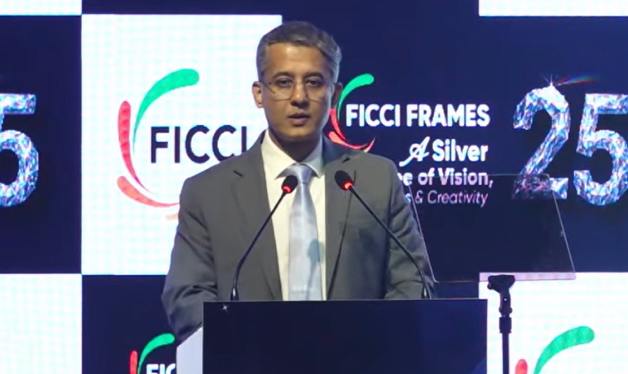
MUMBAI: When the lights came up at Ficci Frames’ silver jubilee edition, JioStar Entertainment CEO and president of the Indian Digital Media Industry Foundation Kevin Vaz, took the stage with a rallying cry: “Rise Together.” The theme Reimagine, Innovate, Strengthen, Empower set the tone for a morning that was equal parts reflection and call to action.
Marking 25 years of one of India’s most influential media and entertainment (M&E) gatherings, Vaz reminded the audience how far the industry has travelled since 2001, when Ficci Frames coincided with the government formally granting industry status to M&E. “It opened the doors to institutional finance, enabling capital flows, investments, and risk-taking in content and technology,” he noted, a turning point that defined India’s creative economy.
Vaz saluted industry stalwarts like Yash Chopra, Karan Johar, and Uday Shankar for steering FRAMES through the years, while welcoming dignitaries including Maharashtra’s Cultural Affairs minister Ashish Shelar, MIB Secretary Sanjay Jaju, and actor Ayushmann Khurrana. “A quarter century of dialogue, discovery, and doing,” he said, “and yet the best is still ahead.”

From satellite TV to OTT, from animation and VFX to gaming, the sector has evolved at lightning speed. India’s “AND” market, Vaz said, stands out globally for how television and digital coexist each expanding the other. “Unlike Western markets, India’s consumers haven’t chosen between TV and digital. They’ve embraced both,” he quipped, adding that the combined strength of PayTV, FreeTV, and Connected TV continues to grow the overall M&E pie.
Sports, too, has emerged as India’s cultural engine. “Cricket may rule, but football, kabaddi and esports are fast catching up,” Vaz observed, calling for ease-of-doing-business reforms to boost live broadcasting from India.
On cinema, he celebrated how regional and independent voices have made global waves from RRR and The Elephant Whisperers at the Oscars to Indian films shining at Cannes and Berlin. “Our stories aren’t just travelling,” Vaz declared, “they’re leading.”
He spotlighted the rise of the AVGC sector, now moving from outsourcing to creating original IP, with 500 plus million gamers and the National Centre of Excellence in Mumbai giving India global creative heft. With MeitY’s support, gaming startups are scaling worldwide proof that technology and storytelling are increasingly entwined.
But amid the applause, Vaz urged urgency. “The pace of change is accelerating,” he warned, “and this calls for stronger collaboration between business and policy-makers.” His sharpest message was reserved for regulators: “The heavy-handed regulation of linear broadcasting has stifled innovation. We need forbearance, a light-touch regime that allows creativity and competition to flourish.”
Broadcasting, contributing nearly 40 per cent of the Indian M&E industry, he emphasised, remains central to the prime minister’s vision of making India the world’s content hub. “We’re in a golden era,” he said, “but to truly lead, quality must match ambition and innovation must be inclusive.”
As Frames 25 concluded its opening key notes Vaz’s address resonated as both celebration and manifesto, a reminder that India’s creative economy, employing millions and inspiring billions, is ready for its next act.
“Together,” he said, “we will Rise reimagining the next 25 years of storytelling, policy, and purpose.”







iWorld
OpenAI hits back at Elon Musk’s lawsuit ahead of trial
Company calls claims “baseless” and accuses Musk of trying to disrupt a rival.
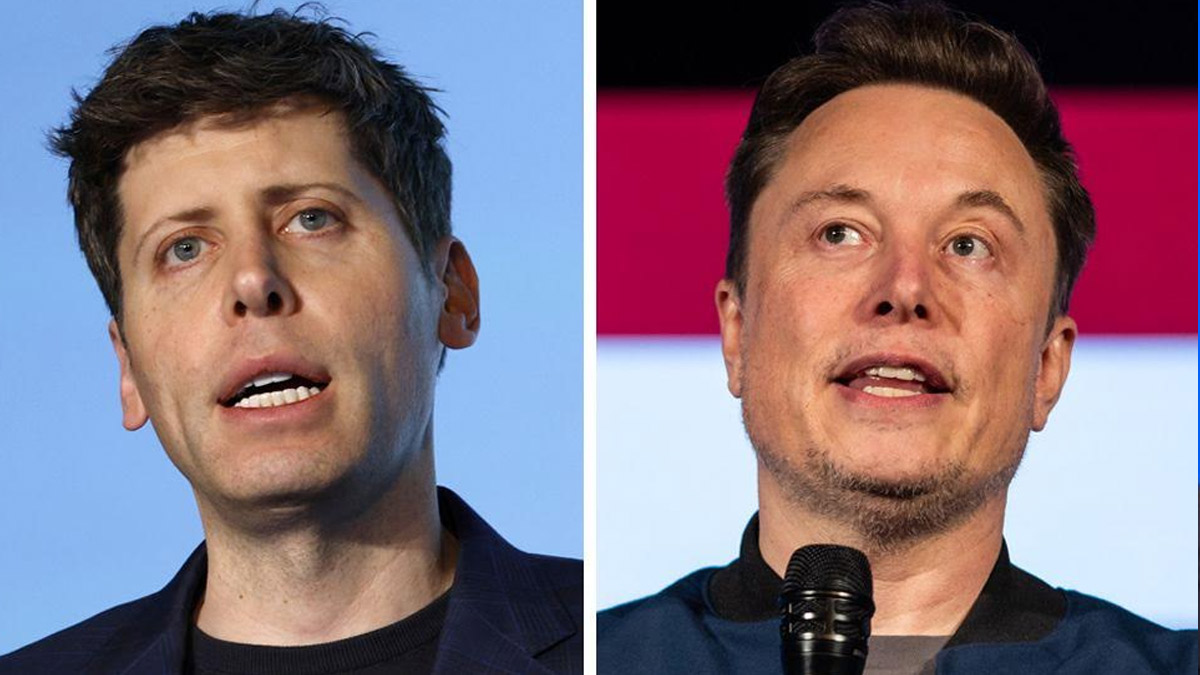
MUMBAI: When the stakes are measured in billions and egos are involved, even Silicon Valley titans can turn a courtroom into a battlefield. OpenAI has issued a sharp public response to Elon Musk’s ongoing lawsuit, accusing the billionaire of filing the case to harass a competitor rather than address genuine concerns. In a strongly worded statement shared on its official X account, OpenAI described Musk’s allegations as “baseless” and suggested the lawsuit is an attempt to disrupt the company as the case heads toward trial later this month in Oakland, California.
The response comes after Musk’s legal team recently amended the complaint, proposing that any damages potentially exceeding $150 billion should go to OpenAI’s nonprofit entity rather than to Musk personally. OpenAI questioned the timing and motive behind this change, calling it a late-stage attempt to “pretend to change his tune” on the nonprofit structure.
The company further labelled the lawsuit a “harassment campaign”, arguing that Musk’s actions are driven by personal rivalry, ego, and a desire for greater control and financial upside.
At the heart of the dispute is Musk’s claim that OpenAI has abandoned its original nonprofit mission of developing artificial intelligence for the benefit of humanity. A co-founder who left in 2018, Musk is seeking governance changes, including the removal of CEO Sam Altman from the nonprofit board, and the return of certain financial gains linked to Altman and President Greg Brockman.
OpenAI has firmly rejected these allegations, maintaining that its current hybrid structure, a public-benefit corporation overseen by a nonprofit parent remains true to its long-term goals. The company has also previously accused Musk of anti-competitive behaviour aimed at weakening its leadership.
As the case prepares for a jury trial, this public exchange highlights the deepening rift between two of the most influential figures in the AI revolution and raises broader questions about governance, mission, and power in the fast-moving world of artificial intelligence.
In the high-stakes game of AI, it seems the real drama isn’t just inside the models, it’s playing out in courtrooms too.






