English Entertainment
Jackson Super Bowl controversy smacks of hypocrisy
MUMBAI: The latest controversy to hit American television revolves around pop icon Janet Jackson partially flashing her bosom during the half time special at the Super Bowl on 1 February.
Media watchdog – the Federal Communications Commission (FCC) – ordered an immediate investigation while both MTV and CBS where the event aired, tendered their apologies.
FCC chairman Michael Powell had the following stinging remarks to make about the event. “I am outraged at what I saw during the halftime show of the Super Bowl. Like millions of Americans, my family and I gathered around the television for a celebration. Instead, that celebration was tainted by a classless, crass and deplorable stunt. Our nation’s children, parents and citizens deserve better.”
All this brouhaha however strikes us as being rather strange and hypocritical coming as it does from a country where shocking stunts on TV and the media are nothing new. At the MTV awards show, Britney Spears and Madonna shared a luscious kiss which was basically a publicity stunt and got the event the desired attention.
In this context, CBS couldn’t have been so naive as to not expect something controversial to occur. Its statement read, “We attended all rehearsals throughout the week and there was no indication that any such thing would happen. The moment did not conform to CBS broadcast standards and we would like to apologise to anyone who was offended.”
This is also not the first time that Jackson has flaunted her sexuality to gain an audience. In the past years, she has appeared on covers of magazines like Rolling Stone in a suggestive manner. Whatever be the outcome of the FCC inquiry, CBS couldn’t have been unhappy with the ratings of the event. It issued a release stating that 143.6 Million Viewers watched all or a part of Super Bowl XXXVIII making it the most watched Super Bowl ever.
Coming back to the controversy, it is an open secret that sexism is very much part of the National Football League’s subtext thanks to the scantily dressed cheerleaders flashing their thighs to the audience, many of whom are minors. Some super bowl ads too have been provocative. However the NFL has generally been careful to keep provocation out of the limelight during the telecast so that even children can soak in the event.
If the FCC is seriously worried about the intrusion of tasteless and inappropriate behaviour then why isn’t it doing anything about some of the reality shows on American television? In Jackson’s defense it can be said that the stunt did not last too long. On reality shows be it Survivor on CBS or Temptation Island on Fox, shocking things happen quite often without anyone raising a hue and cry. FCC’s inaction is surprising considering that it wants broadcasters to exert “a greater degree of social responsibility”.
Of course this is not the first time Viacom has gotten into trouble with the FCC nor will it be the last. Its radio station Infinity has been served notices in the past for violation of indecency rules. At times, the content has explored the dark corners of the human mind like paedophilia.
It now remains to be seen whether the FCC is successful in implementing a stricter code of conduct in a country whose obsession with obscene celebrity behaviour and fascination with controversy circulating in media circles knows no bounds.

English Entertainment
Warner Bros. Discovery shareholders approve Paramount deal
Investors wave through a $111 billion megamerger but deliver a stinging, if toothless, rebuke over half-a-billion-dollar goodbye packages
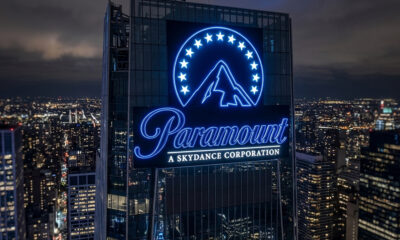
NEW YORK: The shareholders said yes to the deal. They said no to the cheque. At a virtual special meeting on Thursday that lasted barely ten minutes, Warner Bros. Discovery investors voted overwhelmingly to approve Paramount Skydance’s $111 billion acquisition of the company — and then turned around and voted against the lavish exit pay packages lined up for chief executive David Zaslav and his fellow outgoing executives.
Not that it will make much difference. The compensation vote is purely advisory and non-binding. The Warner Bros. Discovery board can, and almost certainly will, pay out as planned.
But the symbolism stings. It is the second consecutive year that WBD shareholders have voted against the executive compensation packages, and this time they had good reason. Zaslav’s exit deal is, by any measure, extraordinary. Under the terms filed with the Securities and Exchange Commission, he is set to receive $34.2 million in cash severance, $517.2 million in equity in the combined company, and $44,195 in continued health coverage — a total of at least $550 million. On top of that, Warner Bros. Discovery has agreed to reimburse Zaslav up to $335 million for taxes assessed by the Internal Revenue Service on his accelerated stock vesting, though the company says that figure will decline depending on when the deal closes. As of March 11, Zaslav also held $115.85 million in vested WBD stock awards — and last month sold a further $114 million worth of WBD shares.
Shareholder advisory firm ISS recommended voting against the compensation measure, citing “problematic” tax reimbursements to Zaslav and the full vesting of his stock awards.
Zaslav will be bound by a two-year non-competition covenant and a two-year non-solicitation of customers and employees after the deal closes.
His lieutenants are not walking away empty-handed either. J.B. Perrette, chief executive and president of global streaming and games, is in line for $142 million, comprising $18.2 million in cash severance and $123.9 million in equity. Bruce Campbell, chief revenue and strategy officer, will receive an estimated $121.5 million, including $18.8 million in severance and $102.7 million in equity. Chief financial officer Gunnar Wiedenfels is set for $120 million, made up of $6.6 million in cash severance and $113.1 million in equity. Gerhard Zeiler, president of international, will get $82.6 million, including $11.9 million in severance and $70.7 million in equity.
The deal itself, clinched in February after Netflix declined to raise its bid for Warner Bros., still needs regulatory clearance from the Justice Department and European authorities. Several state attorneys general are also weighing legal action to block it.
Senator Elizabeth Warren, Democrat of Massachusetts, was unsparing. “The Paramount-Warner Bros. merger isn’t a done deal,” she said after the shareholder vote. “State attorneys general across the country are stepping up to stop this antitrust disaster. We need to keep up this fight.”
If it does go through, the combined entity would be a formidable beast, bringing together Paramount Skydance’s stable — CBS, CBS News, Paramount Pictures, Paramount+, BET, MTV and Nickelodeon — with WBD’s portfolio of HBO, Max, Warner Bros. film and TV studios, DC, CNN, TBS, TNT, HGTV and Discovery+. Paramount has said it expects $6 billion in cost savings from the merger, which is Wall Street shorthand for mass layoffs on a significant scale.
The ten-minute meeting was presided over by chairman Samuel Di Piazza Jr., with Zaslav, Campbell, Wiedenfels and chief communications officer Robert Gibbs in virtual attendance. Di Piazza was bullish. “We appreciate the support and confidence our stockholders have placed in us to unlock the full value of our world-class entertainment portfolio,” he said. “With Paramount, we look forward to creating an exceptional combined company that will expand consumer choice and benefit the global creative talent community.”
Zaslav echoed the sentiment. “Over the past four years, our teams have transformed Warner Bros. Discovery and returned the company to industry leadership,” he said. “Today’s stockholder approval is another key milestone toward completing this historic transaction that will deliver exceptional value to our stockholders.”
Paramount Skydance struck a similar note. “Shareholder approval marks another important milestone towards completing our acquisition of Warner Bros. Discovery,” it said in a statement, adding that it looked forward to “closing the transaction in the coming months.”
The shareholders have spoken on the merger. On the pay, they were ignored before the vote was even counted.