News Headline
Innovation the mantra in a time of increasing fragmentation

Before embarking on a discussion about the marketing strategies used by Indian TV channels in 2007, it will be worthwhile to see what the picture could be in a few years.
A recent report says that India will have 700 TV channels by the end of 2009. “Broadcasters will be forced to slash advertising rates and spend heavily on improving technology to ensure their channels are carried into homes, or face the prospect of being swallowed up by rivals,” the report adds.
In fact, TV advertising was at its peak during the third quarter of 2007, with the food and beverages sector leading with 15 per cent share of overall TV advertising. The medium also saw a 33 per cent increase in volumes during January-September 2007, over the corresponding period the previous year.

For sure, this predicted crossfire from newly launching TV channels has already brought about a number of changes in the marketing strategies of the channels. Generally speaking, these changes or trends may be summarized as follows:
- Increased fragmentation due to more channels.
- More money going into mobile marketing (SMS) stealing share from traditional media.
- Increased use of online social marketing strategies – Orkut, MySpace.
SMS voting in TV shows is not a new phenomenon. Based on the premise that if a person can afford a mobile phone, s/he can surely be a potential voter, channels encourage viewers to remotely participate in the shows and support their favourite contestants.
The numbers speak for themselves. 2005 was a record year when more than 350 million messages and phone calls were zapped on account of television. With the number of singing and dancing and acting competitions on TV channels increasing every month, and adding sms activity by the news channels, the number of messages sent this year is estimated to be in the region of 750 million.
Speaking of new channels, it is in the dominant general entertainment genre, whose Hindi-language soaps and movies corner about 40 per cent of all TV ad revenues, where the most serious action is.
One thing, therefore that is certain, is that the Indian television industry is no longer run by a few monopolies. Star India will face new launches from rival Zee Entertainment Enterprises as well as from NDTV, Viacom 18, INX Media and who knows who else.
The Star Network has shown considerable ingenuity in their marketing initiatives. As Star Network marketing head Prem Kamath said, “In order to target a wider section of audience, we shifted focus to smaller towns and organized ground events. Since cricket has a unifying influence on the large bulk of Indian populace, we used cricket-centric programmes to attract a greater viewership and will build on our strengths next year.”
Indeed, this year cricket has been among the more widely used means of attracting audiences for a number of channels. For example, INX News has roped in Sourav Ganguly as their brand ambassador. INX Media founder and CEO Indrani Mukerjea says, “Sourav is one of the most loved stars from India’s collective passion, cricket. We are proud that Sourav, too, has been keen to be associated with the INX Network.” INX News will be launching an English news channel NewsX in early 2008.
In a recent interview, INX Media group director, brand and communications, Anthony Pettifer told indiantelevision.com that their marketing campaigns were chiefly aimed at “creating a buzz and a permanent platform as well as entertaining the target audience”. “Since we started from ground zero, we needed a logo and a motto to carve a niche in the mass market of Hindi GEC. Our original logo ‘9X,’ with the ‘X’ in eye-catching orange, has proved to be hugely successful, while our motto ‘9 times more entertainment’ is in complete accord with the logo. To dramatize our positioning, we made sure that our marketing initiatives incorporated two elements of Indian life – cricket and Bollywood. We strategically planned our channel’s launch with the release of Om Shanti Om and made use of cinema screens as a vehicle for communication. To be a leader from day one, we also organized innovative ground activities in retail malls across Mumbai and Delhi,” he added.
There was of course Sony Entertainment Television (SET India), which had its spell of cricket action with its telecast of ICC Cricket World Cup in March. That India’s early exit skewered Sony’s plans was of course a beyond everyone’s control.
Commenting on his channel’s marketing strategies, SET India executive vice-president, sales and revenue management Rohit Gupta says, “Our programming has been tailored to cater to a young target audience belonging to the 15-35 age group. This year, we have been successful in offering a unique content. Amber Dhara, for example, is a first-of-its-kind serial that tells the story of two conjoined sisters; no other TV channels have ever dared to deal with this theme. We are also committed to offering viewers a package of Hindi blockbusters on weekends.” To revive SAB TV’s flagging fortunes, the channel has introduced 10 new shows in the last two months. Moreover, the channel has organized a number of ground events to promote its hugely successful Indian Idol 2007. Asked about the channel’s innovations in the field of marketing, pat replied Gupta, “We pioneered the concept of client servicing in the TV industry.
Zee TV is confident that newer marketing initiatives will take the channel even higher. Indeed, with ingenious marketing strategies, Zee’s newest scion Zee Next organised a number of innovative on-ground activities. “Our outdoor activities have been a great success. We plan to build on our strengths in accordance with the viewers’ response,” says Zee Next marketing head Tarun Mehra.
However, media experts opine that newcomers like NDTV Imagine and INX Media are serious contenders as well, and needless to say, with the launch of Zee Next, Zee TV is faced with an unavoidable competition with itself.
The road ahead may be exciting and promising for those who dare to compete in the Hindi GEC space, but it sure is going to get tougher and rougher than ever before. Marketing will be as much about innovating on the run as about using time tested strategies.



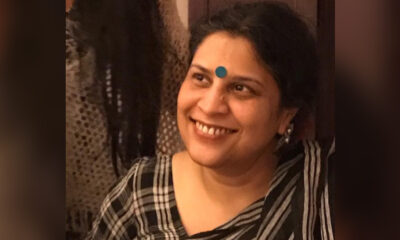




NEW DELHI: Hamdard Laboratories gathered a cross-section of India’s achievers in New Delhi on Friday, handing out the Hakeem Abdul Hameed Excellence Awards to figures who have left their mark across healthcare, education, sport, public service and the arts.
The ceremony, attended by minister of state for defence Sanjay Seth and senior officials from the ministry of Ayush, celebrated individuals whose work blends professional success with a sense of public purpose. It was as much a roll call of achievement as it was a reminder that influence is not measured only in profits or podiums, but in people reached and lives improved.
Among the headline awardees was Alakh Pandey, founder and chief executive of PhysicsWallah, recognised for turning affordable digital learning into a mass movement. On the sporting front, Arjuna Awardee and kabaddi player Sakshi Puniya was honoured for her contribution to the game and for pushing women’s participation onto bigger stages.
The cultural spotlight fell on veteran lyricist and poet Santosh Anand, whose songs have echoed across generations of Hindi cinema. At 97, Anand accepted the honour with characteristic humility, reflecting on a life shaped by perseverance and hope.
Healthcare honours spanned both modern and traditional systems. Manoj N. Nesari was recognised for strengthening Ayurveda’s place in national and global health frameworks. Padma shri Mohammed Abdul Waheed was honoured for his research-backed work in Unani medicine, while padma shri Mohsin Wali received recognition for his long-standing contribution to patient-centred care.
Education and social development also featured prominently. Padma shri Zahir Ishaq Kazi was honoured for decades of work in education, while former Meghalaya superintendent of Police T. C. Chacko was recognised for public service. Goonj founder Anshu Gupta received an award for his dignity-centred rural development initiatives, and the Hunar Shakti Foundation was honoured for empowering women and young girls through skill development.
The Lifetime Achievement Award went to former IAS officer Shailaja Chandra for her long career in public healthcare and governance, particularly in the traditional systems under Ayush.
Speaking at the event, Hamdard chairman Abdul Majeed said the awards were a tribute to those who combine excellence with empathy. “These awardees reflect Hakeem Sahib’s belief that healthcare, education and public service must ultimately serve humanity,” he said.
Minister Seth struck a forward-looking note, saying India’s young population gives the country a unique opportunity to become a global destination for learning, health and wellness by 2047.
The ceremony also featured the trailer launch of Unani Ki Kahaani, an upcoming documentary starring actor Jim Sarbh, set to premiere on Discovery on 11 February.
Instituted in memory of Unani scholar and educationist Hakeem Abdul Hameed, the awards have grown into a national platform that celebrates those building a more inclusive and resilient India. For one evening at least, the spotlight was not just on success, but on service with substance.






