News Headline
India launches its heftiest satellite yet

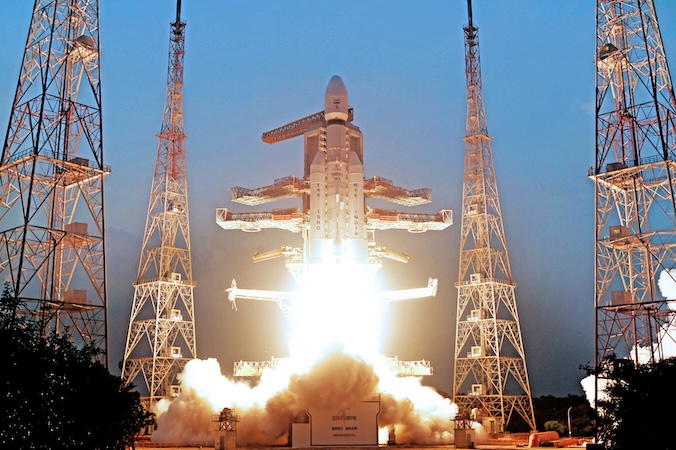
SRIHARIKOTA: India just flexed its space muscles. On 2 November, the Indian Space Research Organisation (Isro) hurled its heaviest communications satellite ever into orbit from home soil—a 4,400 kg behemoth called CMS-03 that will keep the navy’s ships, submarines and aircraft chattering across the Indian Ocean. The launch from Sriharikota at 5:26 pm marked the end of an embarrassing era: no longer must India send its bulkiest satellites abroad for a lift.
The rocket doing the heavy lifting was LVM3, ISRO’s most powerful launcher and now nicknamed “Bahubali” for its Herculean payload capacity. This souped-up version sports a beefier cryogenic upper stage—the C32, carrying 32,000kg of fuel and belching 22 tonnes of thrust, a 10 per cent upgrade on the previous model. It can now haul 4,000kg to geosynchronous orbit and 8,000kg to low Earth orbit without breaking a sweat.
Until now, India’s chunkier satellites hitched rides with foreigners. France’s Arianespace launched the 5,854kg GSAT-11 and 4,181kg GSAT-24. Elon Musk’s SpaceX ferried the 4,700kg GSAT-20. No more. Isro chairman V Narayanan crowed about the mission being “a shining example of Atmanirbhar Bharat”—self-reliant India, in case the point wasn’t clear enough.
The CMS-03, also known as GSAT-7R, isn’t just heavy; it’s clever. Bristling with indigenous components, the multiband satellite will provide encrypted voice, data and video links for 15 years, giving the Indian Navy real-time situational awareness across a vast oceanic region. The navy called it a testament to national self-sufficiency in maritime defence.
This was LVM3’s eighth consecutive successful launch, following triumphs like Chandrayaan-2, Chandrayaan-3 (which made India the first nation to land near the lunar south pole), and OneWeb satellite deployments. The upgraded rocket also feeds directly into Isro’s Gaganyaan programme, which aims to send astronauts into space. Three uncrewed missions are planned first, including one carrying Vyommitra, a robotic astronaut, later this year.
Narayanan said the space organisation is eyeing seven more launches by March 2026, with another LVM3 mission slated for December. India’s space sector, he declared, is “soaring high.
With launches this meaty, it’s hard to argue.