Hindi
IMDb: Indian cinema sheds its Bollywood skin

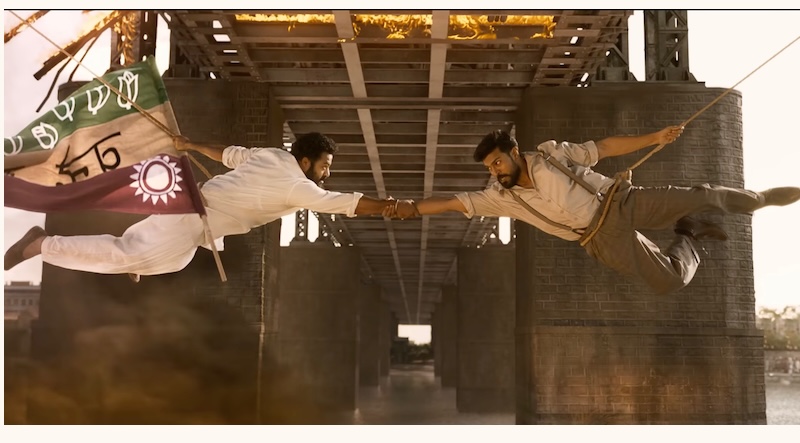
MUMBAI: Forget popular Hindi movies (read that as a word we, at indiantelevision.com prefer not to use: Bollywood). The Hindi film industry’s stranglehold on Indian cinema is over, replaced by a dazzling mosaic of regional powerhouses that are collaborating, competing and conquering audiences from Chennai to Chicago. That is the striking conclusion of a new report from IMDb, the world’s most popular film database, which has crunched data from 250 million monthly users to chart 25 years of transformation in Indian cinema.
The analysis, released on 30 September and titled 25 Years of Indian Cinema (2000-2025), covers the top five most popular Indian films released each year between January 2000 and August 2025. It paints a picture of an industry in flux, one that has moved decisively away from the Hindi-centric model that dominated the turn of the millennium. The 130 films examined collectively garnered more than 9.1 million user ratings—an average of over 70,000 per film—offering a unique longitudinal view of global audience tastes across languages, formats and release models.
“The Indian film industry has always been cyclical, so this quarter century mark is a good vantage point to look forward and see what that evolution means for stories and storytellers in the years ahead,” says IMDb India. head Yaminie Patodia. The data, she argues, provides a singular, neutral proxy for audience engagement, independent of platform, geography or release window. “This moment marks a coming of age for Indian cinema—one that embraces a richer tapestry of voices from across industries, driven by collaborations and diverse narrative styles.”

The numbers tell a compelling story of disruption and democratisation. The mass-appeal film is staging a remarkable comeback, with audiences across India gravitating towards stories in which they see themselves reflected rather than aspirational fantasies set in foreign locales. 12th Fail (2023), a gritty drama about civil service examination candidates, stands as the sole Hindi film to crack the top ten most popular Indian films in southern states over the past five years—proof that regional boundaries dissolve when the story resonates with universal themes of struggle and ambition.

This shift represents a fundamental recalibration of audience preferences. For decades, Hindi cinema dominated through sheer industrial muscle and distribution networks, even in markets where Hindi was barely spoken. Now, audiences are voting with their attention spans, and they are choosing authenticity over linguistic familiarity. The mass movie—once derided by critics as lowbrow—has been rehabilitated as the truest expression of popular sentiment.
Cross-industry collaboration is driving unprecedented scale. Twelve of the 25 most popular films from the past five years feature substantial partnerships across direction, casting, music and distribution. Directors such as Lokesh Kanagaraj and S.S. Rajamouli, each with four titles in the dataset, are the architects of this new pan-Indian cinema, crafting spectacles that transcend linguistic lines. Rajamouli’s RRR and the Baahubali franchise exemplify this approach: Telugu-language films with national appeal, global reach and budgets to match Hollywood blockbusters.
These collaborations are strategic, not accidental. A Tamil director might cast a Kannada star, commission music from a Hindi composer and distribute through a Telugu production house. The result is a film that feels local everywhere and foreign nowhere, a cinematic Esperanto that speaks to shared cultural touchstones rather than regional peculiarities.
The star system, too, is evolving in ways that would have seemed unthinkable a generation ago. Shah Rukh Khan remains king, appearing in 20 of the top 130 films analysed—a testament to his enduring appeal and canny project selection. But the nature of stardom itself has changed. Today’s stars function less as guaranteed box-office magnets and more as multipliers of a film’s inherent strengths. The days of a star “carrying” a mediocre script through sheer charisma are largely over. Audiences, empowered by streaming services and social media, are savvier and more demanding.
Hrithik Roshan and Aamir Khan follow Shah Rukh with 11 films each in the dataset, then Deepika Padukone with 10, Ajay Devgn with seven, and Amitabh Bachchan, Priyanka Chopra Jonas and Rani Mukerji with six apiece. The report suggests it is time to stop searching for “the next Shah Rukh Khan”—not because there are no talented actors, but because the industrial conditions that created such singular dominance no longer exist. The market is too fragmented, the competition too fierce, and audiences too diverse for any one star to achieve comparable hegemony.
Perhaps most intriguingly, language has morphed from barrier to genre. Telugu and Kannada films excel in spectacle-driven entertainment—think gravity-defying action sequences and operatic emotional beats. Malayalam cinema has carved out a reputation for grounded realism, tackling social issues with nuance and restraint. Tamil films have found success in balancing social themes with commercial appeal, delivering messages wrapped in entertainment.
Audiences now use language as a reliable shorthand for narrative style, choosing films based on preferred storytelling approaches rather than viewing language as an obstacle. A viewer seeking escapist entertainment might opt for a Telugu film regardless of whether they speak the language, trusting subtitles to bridge the gap. This represents a profound shift in how Indian cinema is consumed and understood—not as a collection of separate industries defined by linguistic boundaries, but as a spectrum of narrative styles that happen to be expressed in different tongues.
Aamir Khan dominates the “crossover hits” category—films with high global popularity that have travelled far beyond the usual markets for Indian cinema. His Dangal, PK, Taare Zameen Par and 3 Idiots have conquered international audiences with their universal themes and emotional accessibility. Indeed, 3 Idiots is the most popular Indian film worldwide on IMDb, with 468,000 user ratings and an aggregate score of 8.4 out of ten. The film’s critique of India’s pressure-cooker education system resonated from Beijing to Berlin, proof that specific cultural contexts can illuminate universal human experiences.
 Geography matters, and the report reveals fascinating regional preferences. RRR is the most popular Indian film of all time in America, where its action spectacle and historical themes found an audience hungry for something different from the Marvel formula. 3 Idiots holds the top position in Britain, the rest of Europe and Australia, markets where Indian diaspora populations remain substantial. Dangal tops charts in the UAE and China—the latter a particularly significant achievement given China’s restrictive quotas on foreign films. K.G.F: Chapter 2 is most popular in Pakistan, Baahubali 2: The Conclusion in Singapore, and Taare Zameen Par in Brazil.
These geographical variations underscore how different markets respond to different aspects of Indian cinema. American audiences seem drawn to epic scale, European audiences to social commentary wrapped in comedy, Chinese audiences to sports dramas, and Pakistani audiences to action thrillers. Understanding these preferences is crucial for an industry that increasingly depends on international revenues to justify its ballooning budgets.
Directors have emerged as the key architects of this new era. Lokesh Kanagaraj, S.S. Rajamouli, Sanjay Leela Bhansali, Rajkumar Hirani and Farhan Akhtar have each delivered four hits in the 25-year period analysed. Their success underscores a broader truth: in this new era of Indian cinema, the director’s vision matters as much as the star’s wattage. Rajamouli’s name alone can guarantee an opening weekend; Bhansali’s aesthetic is instantly recognisable; Hirani’s brand of socially conscious comedy has defined a genre.
This directorial ascendancy mirrors global trends. Just as audiences flock to see “the new Christopher Nolan film” or “the latest from Denis Villeneuve”, Indian audiences are beginning to follow directors as much as stars. The auteur theory, long dismissed in India’s star-driven industry, is finally finding purchase.
The report, drawing on IMDb’s vast database and global reach, provides a rare neutral perspective on an industry often analysed through the distorting lens of box-office collections—a metric plagued by opacity, manipulation and regional variation. User ratings, whilst imperfect, offer a more democratic measure of engagement and satisfaction.
The data suggests Indian cinema has reached a genuine coming of age—one that embraces a richer tapestry of voices from across industries, driven by collaboration and diverse narrative styles. The old Hindi cinema hegemony is dead, replaced by something more complex, more interesting, and potentially more sustainable: a true national cinema that honours regional identities whilst building bridges between them. Long live Indian cinema.






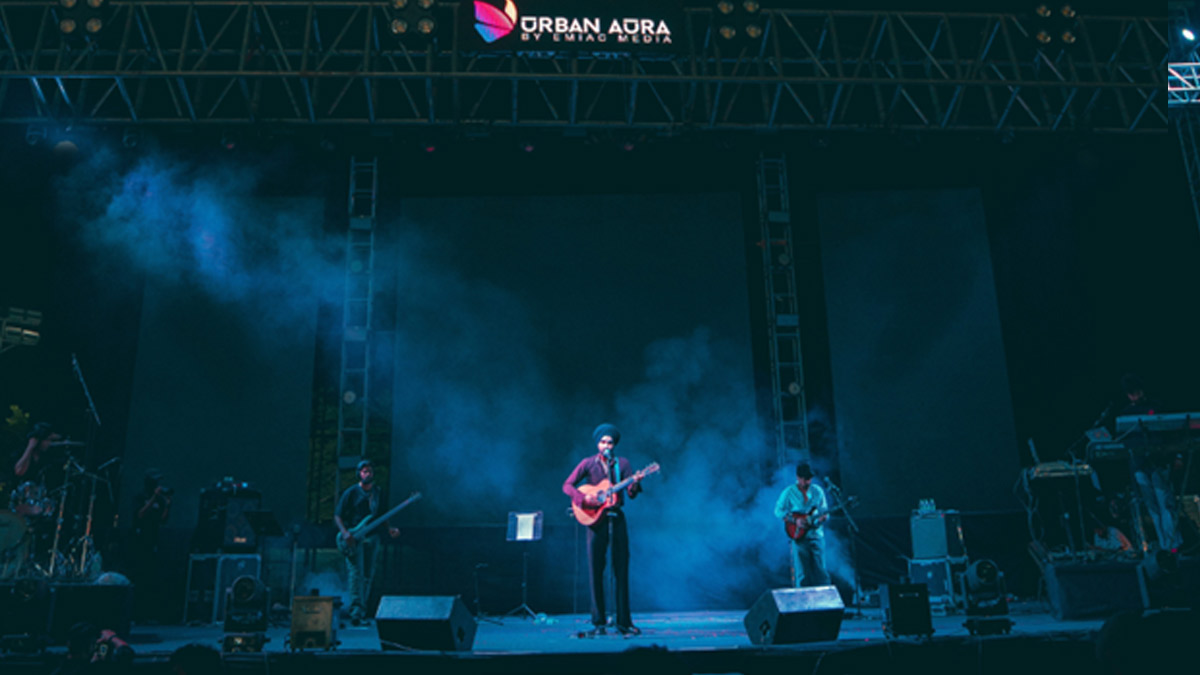
In a music industry that often rewards speed, spectacle, and instant recall, Navjot Ahuja’s journey feels refreshingly different. His story is not built on noise. It is built on patience, discipline, emotional honesty, and a quiet commitment to becoming better with every passing year. After 14 years of struggle, learning, performing, and writing, Navjot stands today as an artist whose success has not changed his centre. If anything, it has only made his purpose clearer.
For Navjot, music has never been about chasing fame alone. It has always been about expression. It is about writing more truthfully, singing more skillfully, understanding himself more deeply, and becoming a kinder human being in the process. That rare clarity is what gives his journey its beauty.
Where It All Began: A Writer Before a Singer
Indian singer and songwriter Navjot Ahuja’s musical journey began in the most familiar of places: school assemblies. But even then, what was growing inside him was not only the desire to sing. It was the need to write.
Long before he saw himself as a performer, he had already discovered the emotional release that writing offered him. For Navjot, words became the first true channel for feeling. Songwriting came before singing because writing was the only way he could let emotions flow through him fully. That inner pull shaped his artistic identity early on.
Like many young musicians, he sharpened his craft by creating renditions of popular songs.
Those experiments became his training ground. But the turning point came in 2012, when he wrote his first original song. That moment did not just mark the beginning of songwriting. It marked the beginning of self-definition.
A Calling He Did Not Chase, But Accepted
What makes the latest Indian singer-songwriter Navjot’s story especially compelling is the way he describes his relationship with music. He does not frame it as a career he aggressively pursued. In his own understanding, music was not something he chose. It was something that chose him.
There was a time when he imagined a very different future for himself. He wanted to become a successful engineer, like many young people shaped by ambition and conventional expectations. But life had a different script waiting for him. During his college years, around 2021, music entered his life professionally and began taking a firmer shape.
That shift was not driven by image-building or industry ambition. It came from acceptance. Navjot embraced the fact that music had claimed him in a way no other path could. That sense of surrender continues to define the artist he is today.
An Artist Guided by Instinct, Not Influence
Unlike many singers who speak openly about idols, icons, and musical role models, Navjot’s creative world is built differently. He does not believe his music comes from imitation or inherited influence. He listens inward.
He has never considered himself shaped by ideals in the traditional sense. In fact, he admits that he does not particularly enjoy listening to songs, especially his own. His decisions as a songwriter and singer come from instinct. He writes what feels right. He trusts what his inner voice tells him. He positions his music according to what he honestly believes in, not what trends demand.
That creative independence gives his work a distinct emotional sincerity. His songs do not feel calculated. They feel alive.
The Long Years of Invisible Struggle

Every artist carries a chapter of struggle, and Navjot’s was long, demanding, and deeply formative. One of the biggest challenges he faced was building continuity as the best new indian singer songwriter in an era where musical collaboration is increasingly fluid.
For emerging singers, especially those trying to build with a band, consistency can be difficult. Instrumentalists today have more opportunities than ever to freelance and perform with multiple artists. While that growth is positive and well deserved, it can make things harder for singers who are still trying to establish a steady team and sound around their work.
For Navjot, one of the most difficult phases came during 2021 and 2022, when he was doing club shows almost every day. It was a period of relentless performance, but not always personal fulfillment. He was largely singing covers because clubs were not open to original songs that audiences did not yet know.
For a new Indian singer and songwriter, that can be a painful compromise. To perform constantly and still not have the freedom to share your own voice requires not just resilience, but restraint.
“Khat” and the Grace of Staying Unchanged
After 14 years of effort, Navjot’s new love song Khat became a defining milestone. Professionally, he acknowledges that the song changed how society viewed him as a musician. It strengthened his place in the public eye and altered his standing in meaningful ways.
Yet personally, he remains unchanged.
That is perhaps the most striking part of his story. Navjot says his routine is still the same. His calm is still the same. His writing process is still the same. He does not want success or failure to interfere with the purity of his art. For him, emotional detachment from public outcomes is essential because the moment an artist becomes too attached to validation, the writing begins to shift.
His joy comes not from numbers, but from the attempt. If he has tried to improve his skill today, if he has written his heart out more honestly than before, then he is at peace.
Growth, Not Glory, Remains the Real Goal
Even now, Navjot is not consumed by labels such as singles artist, performer, or digital success story. His focus remains deeply personal. He wants to sing better. He wants to play instruments better. He wants to understand himself more. And he wants to become a kinder person.
That is what makes Navjot Ahuja’s journey so moving. It is not simply the story of a musician finding recognition. It is the story of an artist who continues to grow inward, even as the world begins to look outward at him. In an age obsessed with applause, Navjot reminds us that the most meaningful success often begins in silence, honesty, and the courage to remain true to oneself.






