Connect with us

Hollywood

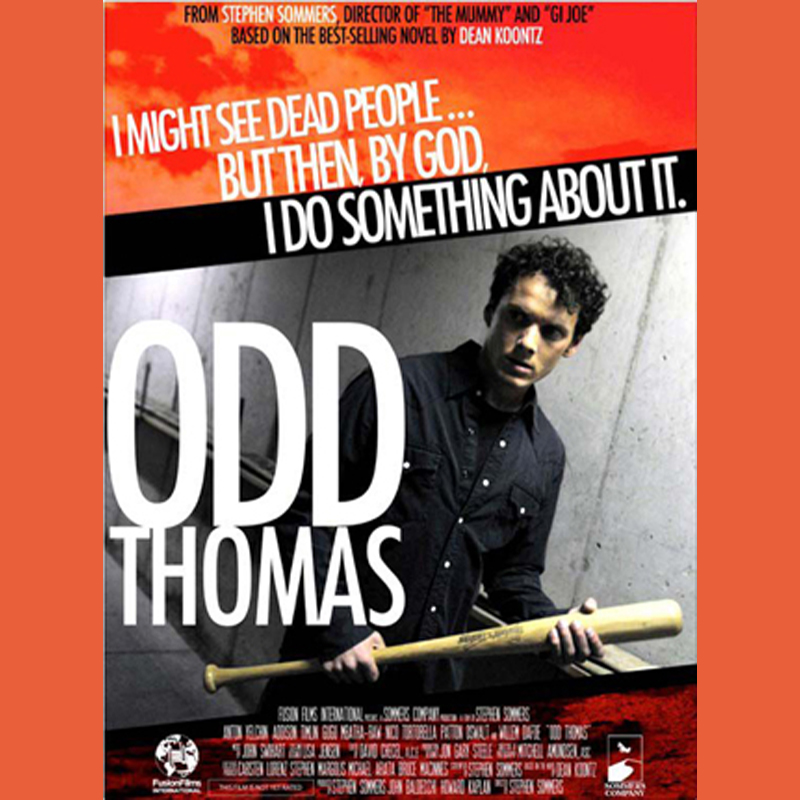
Image Entertainment acquires thriller Odd Thomas

Published

on

“Director Stephen Sommers’s spectacular style and extraordinary vision translates so well to the big screen for this material,” said Bromiley. “We are proud to distribute the film and introduce the magical world of Odd Thomas to a wider audience.”


The deal was negotiated by Bromiley, Mark Ward and Jess De Leo on behalf of Image Entertainment and Paul Hudson on behalf of the filmmakers.

Advertisement


Dean Koontz is an American author, known for his bestselling suspense thrillers. Fourteen of his novels reached the number one position on the New York Times hardcover and paperback bestsellers lists, including Odd Hours, Midnight, The Bad Place, Cold Fire, Hideaway, Dragon Tears, Intensity, Sole Survivor, From the Corner of His Eye, One Door Away From Heaven, The Husband, Relentless, What the Night Knows and 77 Shadow Street. Koontz is one of only a dozen writers that have achieved this milestone. His books have been published in 38 languages and he has sold over 450 million copies to date.


Advertisement

Recent Image Entertainment releases include The Colony with Laurence Fishburne, Bill Paxton and Kevin Zegers, Paradise with Julianne Hough, Russell Brand, Octavia Spencer and Holly Hunter, written, directed and produced by Diablo Cody and the upcoming The Adventurer: The Curse of the Midas Box starring Michael Sheen, Lena Headey, Sam Neill and Aneurin Barnard and Rage starring Nicolas Cage and Danny Glover.

Click to comment

Leave a Reply

Your email address will not be published. Required fields are marked *

Hollywood

Utopai Studios partners Huace to deploy PAI for long form content

Deal includes revenue sharing as Huace adopts AI engine across global ops

Published

on

MUMBAI: Lights, camera… algorithm, the script just got a silicon co-writer. In a move that signals how storytelling itself is being re-engineered, U.S.-based Utopai Studios has partnered China’s Huace Film & TV Co. Ltd. to bring artificial general intelligence into the heart of long-form content creation.

At the centre of the deal is PAI, Utopai’s cinematic storytelling system, which Huace will deploy as a core engine across its production pipeline from development and creative iteration to global localisation. The partnership includes a large-scale annual usage commitment from Huace, alongside a usage-based revenue-sharing model, underscoring both ambition and commercial confidence on both sides.

For Huace, one of China’s largest film and television companies, the bet is not on automation alone but on scale with control. With distribution spanning over 200 countries and a presence across more than 20 international platforms, including Netflix and YouTube, the company brings a vast content ecosystem where even marginal efficiency gains can translate into significant output shifts. Its extensive TV IP library further positions it as fertile ground for AI-assisted storytelling workflows.

Advertisement

The choice of PAI follows what Huace described as a rigorous evaluation of existing AI tools, many of which remain limited to fragmented use cases such as video generation or editing. What tipped the scales, according to the company, was PAI’s ability to handle long-form narrative complexity maintaining continuity, structure, and creative coherence across entire story arcs rather than isolated clips.

Utopai, for its part, is using the partnership to anchor its international expansion strategy, pitching PAI as an enterprise-ready system built for customisation, privacy, and regulatory adaptability across markets. That positioning becomes particularly relevant as global media companies increasingly scrutinise how AI integrates into proprietary workflows.

The timing is notable. Earlier this month, Utopai upgraded PAI to support three-minute 4K video generation and advanced multi-shot sequencing features designed to tackle one of AI storytelling’s biggest hurdles: consistency across scenes.

Advertisement

What emerges is not just another tech collaboration, but a glimpse into how the grammar of filmmaking could evolve. Because if stories were once crafted frame by frame, the next chapter might just be coded scene by scene.

Continue Reading

Advertisement News18
Advertisement
Advertisement
Advertisement
Advertisement Whtasapp
Advertisement Year Enders

Indian Television Dot Com Pvt Ltd

Signup for news and special offers!

Copyright © 2026 Indian Television Dot Com PVT LTD

This will close in 10 seconds