IBC
IBC 2025 brings the future of media to Amsterdam

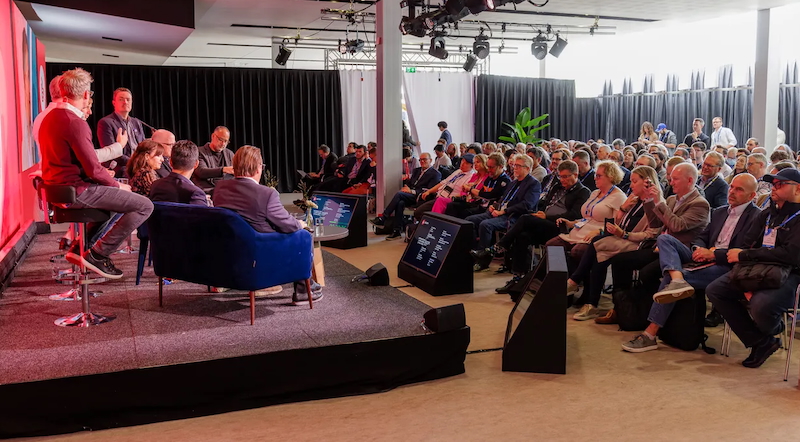
AMSTERDAM: Amsterdam’s RAI convention centre will become the global capital of media and technology from 12–15 September when IBC 2025 opens its doors to broadcasters, streamers, studios and tech firms from around the world.
The show will run 10:30–18:00 on opening day, 09:30–18:00 across the weekend and close at 16:00 on Monday. Organisers have built the edition around the theme of innovation, with a newly minted Future Tech hub in Hall 14. Here visitors can test emerging tools such as artificial intelligence, cloud-native production workflows, augmented reality, virtual sets, immersive audio-visual formats and sustainability-driven hardware.
A three-day conference, from 12–14 September, features more than 300 speakers drawn from major broadcasters, global streaming platforms, technology vendors and creative studios. Panels will probe platform evolution, revenue models, AI integration and the next wave of interactive storytelling. JioStar’s Prashant Khanna is one of the headlined speakers being featured at IBC this year.

Elsewhere, the IBC Innovation Awards will celebrate cutting-edge deployments, while the Accelerator Media Innovation Programme offers collaborative trials of experimental tech. Free-to-attend theatres and showcase stages promise continual demos and debate on content delivery, rights management, talent development and the fast-changing business landscape.
Beyond the exhibition floor, organisers are pitching IBC 2025 as a working laboratory: a place where engineers, producers and executives can handle new kit, swap ideas and chart the next phase of global media transformation.







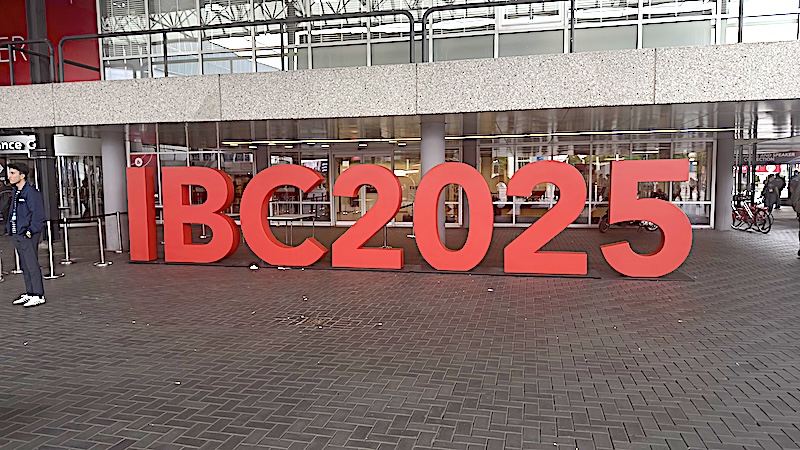
AMSTERDAM: Amsterdam’s RAI convention centre became the epicentre of media’s digital revolution last week as 43,858 industry professionals descended on IBC2025, the world’s largest broadcasting and entertainment technology show. From global media giants to plucky start-ups, 1,300 exhibitors and 600 speakers gathered to chart the future of an industry in the throes of transformation.
The event’s success reflects an industry caught between disruption and opportunity. Visitors from 170 countries—from veteran broadcasters to streaming insurgents—came seeking answers to questions that keep chief executives awake at night: how to harness artificial intelligence without losing the human touch, and how to stay relevant as viewing habits fragment across countless platforms.
IBC chief executive Michael Crimp declared the event had “delivered real business outcomes” with “overwhelmingly positive feedback.”
What struck him most, he said, was the prevailing “sense of optimism and purpose”—a notable sentiment in an industry more accustomed to existential dread.
The debut of Future Tech in Hall 14 captured much of this optimism. Here, punters could witness live demonstrations of generative and agentic AI, immersive media experiences, and cloud-native workflows. France Télévisions showcased a 5G-enabled aircraft, whilst others explored private networks and sustainable innovation—all buzzwords that would have seemed like science fiction a decade ago.
“We’re witnessing a pivotal moment of innovation,” said Tata Communications global business leader Brijesh Yadev. The hyperbole may be familiar, but the underlying sentiment rings true: the industry is scrambling to reinvent itself before others do it for them.
This urgency was palpable in the quality of conversations on the show floor. Gone were the days of casual networking; exhibitors reported “more strategic” discussions focused on “future-looking solutions” and “next-phase investments.”
The conference programme reflected these concerns, with packed sessions on AI, new business models, and sustainability. Icons like Thelma Schoonmaker, the Oscar-winning editor who worked with Martin Scorsese, provided creative inspiration alongside more prosaic technical papers on practical innovation.
Perhaps most tellingly, the industry is finally acknowledging that technology alone won’t save it. IBC2025 emphasised people and talent, with initiatives focused on skills development and inclusion.
The show floor itself told the story of an industry in flux. Established giants like Amazon Web Services, Microsoft, Sony, and Samsung rubbed shoulders with newcomers such as Baron Weather, Momento, and Remotly. Each hall showcased advances in production, distribution, and streaming—the building blocks of tomorrow’s entertainment ecosystem.
For all the talk of transformation, IBC2025 proved that some things endure. The event remains the world’s essential meeting place for media professionals. In an increasingly digital world, the value of face-to-face connection—and the deals that flow from it—appears undiminished.
Whether this optimism translates into sustainable business models remains to be seen. But for four days in Amsterdam, at least, the industry felt confident about its ability to shape its own destiny rather than have it shaped by others.






