DTH
How DTH got digitisation right

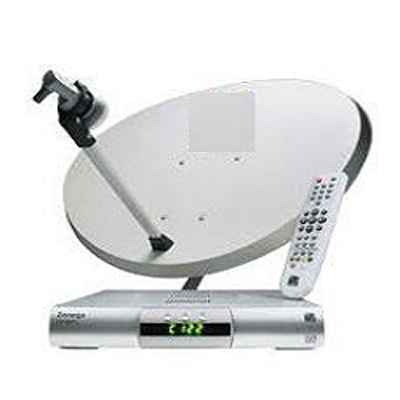
MUMBAI: Two years gone, two more in hand. But the cable TV industry is still grappling with getting its act right for digitisation. It was 10 years ago when the direct to home (DTH) players entered the Indian market with huge tasks in hand: introduce and convert people from the analogue regime into the digital ecosystem.
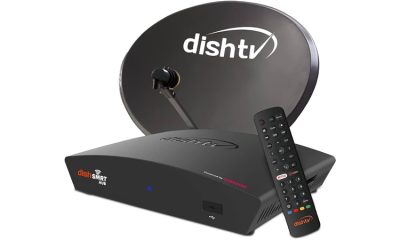
Currently, the DTH sector commands about 36 million active subscribers (as per the recent TRAI report). While Dish TV was first to enter, it was soon followed by Tata Sky, Sun Direct, Airtel Digital TV, Videocon d2h and Reliance Digital. Not to forget, Prasar Bharati’s DD Freedish.
How did the DTH industry manage to cultivate the business model which the MSOs are still finding cumbersome? Ask the DTH players and they say, it is because of their direct contact with the customer. “We were able to deal directly with the customer and provide a business model the way we wanted to. There isn’t any intermediary,” says Dish TV CEO RC Venkateish.

Agrees Sun Direct CEO Mahesh Kumar, “DTH adopted the retail distribution model akin to aggressive FMCG/ telecom companies which is purely B2C. Majority of the employees at the senior and middle level are from the retail background.”
The MSOs on the other hand had been running the analogue business, handled mostly by the local cable operators (LCOs). It was only after being pressurized by the government and regulator that they finally took up digitisation and started work on creating a proper business model. Tata Sky CEO Harit Nagpal feels that MSOs are working like puppets. “Cable operators are looking at digitisation as forced upon them. Digitisation is not about putting a box; this is inconvenient for the customer. It has to be sold to the customer as empowerment and not as a curse. DTH has done that.”
While initially convincing the customer to switch from analogue to digital DTH wasn’t easy, what went in their favour was superior product offering with better quality sound and picture and selection of channels and packaging. “When DTH first came, it was the only digital offering. The country was largely analogue. That was the big advantage we had. We started from zero and had the opportunity to build the billing system and packaging,” says Venkateish.
The claims made by DTH ops were supported by setting up call centres, backend and investment in brand building. However, what all executives agree as the best tool is the prepaid mode of payment. “The biggest success factor of the DTH model is the prepaid model which is a very transparent business model,” says Kumar.
Nagpal feels that the crux of their model is the consumer centric approach, which MSOs don’t have. “You can activate and deactivate channels and packages whenever you want. Go on a holiday and don’t recharge. This is not yet possible in cable. The benefits of flexibility and empowerment in the case of DTH are in the customers’ hands,” he says.
The only difference in the two is the pricing models for packages. While DTH starts its base pack at around Rs 200 to Rs 220, cable gives the entire channel list for approximately Rs 250. But Nagpal disagrees, stating that MSOs are not subject to taxes and also gets carriage fees from broadcasters. Whereas DTH, despite paying taxes and also paying for content, gives channels at a decently low cost with options of adding more.
Kumar points out that DTH community has been able to segment the market and the customer which has helped the industry to do up-selling and consistently improve average revenue per user. Though the initial uptake of dishes was slow, over the years it has picked up speed. The choice of packages, HD channels, addition of newer channels and easy payment methods have put them on the better side of digitisation.
While DTH did have the upper hand in entering the market with a fixed plan of action, it is about time the MSOs come to terms with getting addressable digitisation done rather than just fixing boxes in homes. “DTH got digitisation right because we looked at it from what benefits it has to customer and not what the regulator is asking me to do,” points out Nagpal.





DTH
DD Free Dish e-auction revenue dips to Rs 642 crore as slot sales fall
Revenue dips as revised norms reshape bidding in 94th round
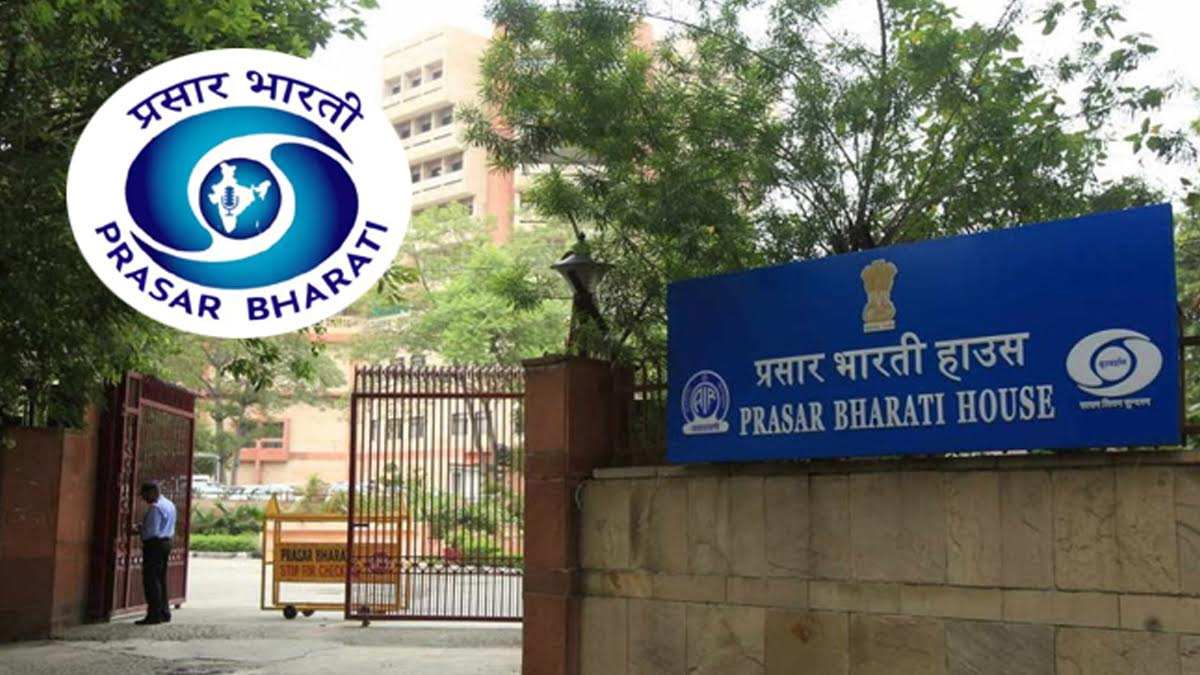
NEW DELHI: Prasar Bharati’s DD Free Dish has closed its 8th annual, and 94th overall, e-auction for MPEG-2 slots with total collections of Rs 642 crore for the period April 1, 2026 to March 31, 2027.
That is lower than last year’s Rs 780 crore haul, with 55 slots sold compared with 61 in FY25–26. The softer topline reflects both a slimmer inventory and a recalibrated auction framework.
This was the first auction conducted after amendments to the e-auction methodology, including tighter eligibility norms and a revised reserve price structure for MPEG-2 slots. The stated aim was greater transparency and more serious participation. The immediate outcome appears to be more measured bidding in certain categories.
Day one set the tone. Eight slots were sold, six in the premium Bucket A+ and two in Bucket A. The strong early action in A+, which typically houses Hindi GECs and movie channels, reaffirmed the enduring appeal of mass Hindi programming on the platform.
Among the broadcasters securing slots in the initial rounds were Zee Entertainment Enterprises, Sony Pictures Networks India, Viacom18’s Colors network, Sun Network and Shemaroo Entertainment. Their continued presence signals that, despite the pull of digital platforms, Free Dish remains a strategic must have for legacy networks chasing scale in price sensitive markets.
The final bouquet of 55 channels leans heavily towards Hindi news, movies, devotional fare, Bhojpuri and regional programming.
In Hindi news, familiar heavyweights such as Aaj Tak, ABP News, India TV, News18 India, Republic Bharat and Zee News made the cut. Entertainment and movie offerings include Colors Rishtey, Star Utsav, Dangal TV, Sony Pal, Shemaroo TV, Goldmines, B4U Movies and Zee Biskope. Devotional viewers will find Aastha, Sanskar and Sadhna Gold among the selected channels.
Regional representation includes Sun Marathi, Fakt Marathi, PTC Punjabi and GTC Punjabi.
Equally telling were the absences. Broadcasters such as Big Magic, Filamchi Bhojpuri, India News, Bharat Express, Movieplex Maithili, TV9 Marathi, Shemaroo Marathibana, Zee Chitra Mandir and Satsang did not participate. The pullback is particularly visible across Marathi, Bhojpuri, Maithili and spiritual programming. Industry observers point to the revised reserve prices, tighter eligibility norms and a reassessment of commercial viability as possible factors.
DD Free Dish continues to beam into over 40 million homes, largely in rural and semi urban India. For advertisers and broadcasters alike, it offers efficient access to Bharat markets where pay TV penetration remains uneven and OTT subscriptions are limited.
The moderation in revenue this year may be read as a pause rather than a retreat. Fewer slots, a reworked auction playbook and evolving broadcaster strategies have clearly shaped outcomes. Yet premium Hindi entertainment retains its pull, and the platform’s mass reach remains hard to ignore.
As the FY26–27 line-up settles in, the mix of winners and walkaways will define the private satellite channel landscape on DD Free Dish for the year ahead.