iWorld
Hoopr and Universal Music India launch artist accelerator programme

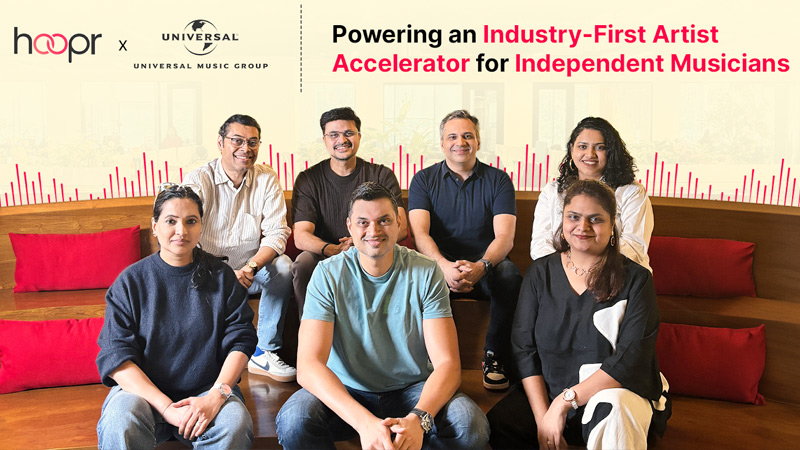
MUMBAI: India’s independent music scene just got a serious power chord. Hoopr, the country’s leading music licensing platform, has teamed up with Universal Music India to roll out an industry-first Artist Accelerator Programme aimed at nurturing the next generation of homegrown musicians. The initiative promises more than applause. It offers money, mentorship and a clear path to getting heard and paid.
Designed for emerging independent artists, the programme tackles the usual roadblocks head on. Selected musicians will receive end-to-end support across publishing, distribution, sync and micro-sync opportunities, along with brand collaborations. In short, artists get to focus on making music while the machinery around them actually works.
A central part of the programme is the creation of a fresh catalogue of original tracks. These will be released on Hoopr’s YouTube channel Songfest and published on Hoopr Smash, its music-tech platform. Songfest has already built a reputation through collaborations with artists such as Monali Thakur, Shalmali Kholgade, Nikhil D’Souza and Ash King, alongside award-winning brand music projects.
There is also a nostalgic twist. Artists will be invited to reimagine iconic Universal Music India classics, with selected recreations set to drop on UMG India’s Revibe YouTube channel. Old favourites, new voices, fresh audiences.
Universal Music Group’s global distribution and marketing muscle, paired with Hoopr’s extensive independent artist community, creates a single launchpad for visibility and monetisation. For emerging musicians, that combination could be game changing.
Participants will be chosen through curated auditions open to Hoopr’s community of thousands of artists, with selections made by Universal Music India. Those selected will receive A and R guidance, studio access, mixing and mastering, music video production and sync opportunities facilitated by Hoopr.
Open to all genres and languages, the programme arrives at a moment when independent music is topping charts and brand partnerships are booming. It is a timely reminder that the future of Indian music is being built outside the mainstream, one bold track at a time.
Universal Music Group India and South Asia chief revenue officer Viral Jani, said the partnership reflects UMG’s artist-first approach and its commitment to discovering new talent from anywhere. Hoopr co-founder and CEO Gaurav Dagaonkar, called the initiative a long overdue breakthrough that brings fairness, scale and transparency to the indie music ecosystem.
For listeners, it means more new music. For artists, it could mean the difference between being heard and being forgotten.