News Headline
Guest column: Lockdown learnings for TV land

MUMBAI: The Covid2019 pandemic has given us an opportunity to reflect on how we go about our daily lives, and has taught us to be leaner and greener both at work and at home. The lockdown has brought many together, a few apart, and brought out the best and the worst in us. Cocooned in our homes with the spectre of Covid2019 looming over us has led to radical changes in our consumption habits across categories. Television is no exception and the way we consume media and entertainment has changed as well. The absence of original content has seen broadcasters rummaging through their larder for content and this search has manifested itself in dusting off legacy shows, a renewed love for movies, an insatiable appetite for news, a grudging acceptance of dubbed content and the emergence of user-generated content amongst others.
Whether these changes are transitory, quasi-permanent, or permanent, only time shall decide but a few crucial learnings during this period are highlighted below:
Curation is as powerful as creation

It has been an accepted norm that original content ratings are significantly higher than recycled content ratings. However, the careful curation of legacy shows, the introduction of dubbed shows and movies, and proactive FPC management have ensured that many truisms had to be revisited. There has been a blurring of prime time versus non-primetime ratings, original versus repeat ratings and discrete versus continuous content. So moving forward curation is at par with creation but both fundamentally require a deep understanding of viewers' sensibilities, need states, and cultural sensibilities and sensitivities.
Recycle, repeat and reuse is the new mantra
Re-telecast of successful mythological shows delivered ratings in their original as well as dubbed avatar across markets. Channels across markets juggled their programming strategies over the past few months to give prominence to mythological shows such as Mahabharata, Ramayan, etc. The mythological shows bought in an element of hope and belonging during the time of unprecedented uncertainty. Gauging the audience’s response, reruns of erstwhile popular fiction shows also became a norm during the lockdown and were being aired alongside original shows.
Language is no longer a barrier
Thanks to the rising availability and popularity amongst viewers, regional language content has emerged as a key growth driver for TV viewership. Indian audiences are more than willing to consume content in their respective languages. In the past few years, rural electrification and smartphone penetration have also added to the popularity of regional language content.
Movies have found their mojo
Film-based content not only performed well in Hindi speaking markets but also in southern markets. According to BARC India data, the movie genre saw a 27 per cent growth in primetime viewership share in the south market as compared to the pre-Covid2019 period. Driven by the fact that movies, as a form of content, appeal to all age groups in a family and encourage co-viewing, the category emerged as the primary source of entertainment on GECs across markets.
Families are the new TG
Amidst the pandemic, during the time of lockdown, television cemented its role of bringing families together. Lockdown led channels to gradually move from ‘women-centric’ entertainment to ‘family-centric’ entertainment. Content consumption patterns have now changed from ‘me’ to ‘we’.
Senior citizens can pack a powerful punch
The population of senior citizens is projected to increase to 20 per cent by 2050. Pre-Covid2019, senior citizens were always underestimated as a target group. The lockdown phase defined them as a significant target group and led us to acknowledge them as an important audience while curating content.
To conclude, as Socrates said, “The secret of change is to focus all of your energy, not on fighting the old, but on building the new.” While this has been a tough year for everyone across markets, we have grown in a few and may have declined in a few others, but in either case, we have maintained our position for 2020. We are constantly learning from our viewers every day. As we move along, our lockdown learnings continue to provide us with an opportunity to become significant and far more meaningful.
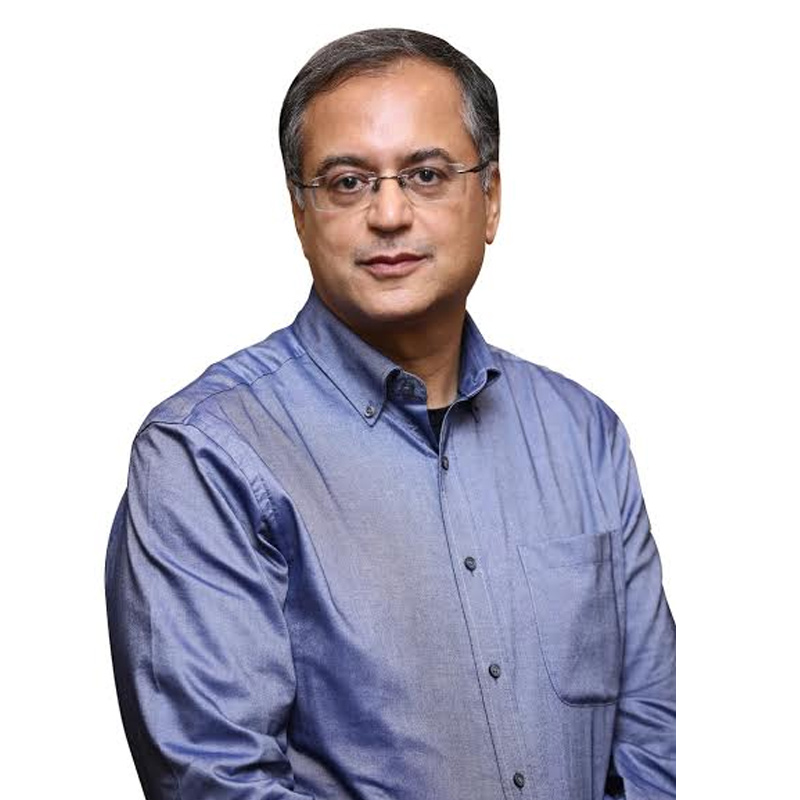
(The author is business head, Viacom18 regional entertainment – Kannada and Marathi clusters. Indiantelevision.com may not subscribe to his thoughts.)







NEW DELHI: Hamdard Laboratories gathered a cross-section of India’s achievers in New Delhi on Friday, handing out the Hakeem Abdul Hameed Excellence Awards to figures who have left their mark across healthcare, education, sport, public service and the arts.
The ceremony, attended by minister of state for defence Sanjay Seth and senior officials from the ministry of Ayush, celebrated individuals whose work blends professional success with a sense of public purpose. It was as much a roll call of achievement as it was a reminder that influence is not measured only in profits or podiums, but in people reached and lives improved.
Among the headline awardees was Alakh Pandey, founder and chief executive of PhysicsWallah, recognised for turning affordable digital learning into a mass movement. On the sporting front, Arjuna Awardee and kabaddi player Sakshi Puniya was honoured for her contribution to the game and for pushing women’s participation onto bigger stages.
The cultural spotlight fell on veteran lyricist and poet Santosh Anand, whose songs have echoed across generations of Hindi cinema. At 97, Anand accepted the honour with characteristic humility, reflecting on a life shaped by perseverance and hope.
Healthcare honours spanned both modern and traditional systems. Manoj N. Nesari was recognised for strengthening Ayurveda’s place in national and global health frameworks. Padma shri Mohammed Abdul Waheed was honoured for his research-backed work in Unani medicine, while padma shri Mohsin Wali received recognition for his long-standing contribution to patient-centred care.
Education and social development also featured prominently. Padma shri Zahir Ishaq Kazi was honoured for decades of work in education, while former Meghalaya superintendent of Police T. C. Chacko was recognised for public service. Goonj founder Anshu Gupta received an award for his dignity-centred rural development initiatives, and the Hunar Shakti Foundation was honoured for empowering women and young girls through skill development.
The Lifetime Achievement Award went to former IAS officer Shailaja Chandra for her long career in public healthcare and governance, particularly in the traditional systems under Ayush.
Speaking at the event, Hamdard chairman Abdul Majeed said the awards were a tribute to those who combine excellence with empathy. “These awardees reflect Hakeem Sahib’s belief that healthcare, education and public service must ultimately serve humanity,” he said.
Minister Seth struck a forward-looking note, saying India’s young population gives the country a unique opportunity to become a global destination for learning, health and wellness by 2047.
The ceremony also featured the trailer launch of Unani Ki Kahaani, an upcoming documentary starring actor Jim Sarbh, set to premiere on Discovery on 11 February.
Instituted in memory of Unani scholar and educationist Hakeem Abdul Hameed, the awards have grown into a national platform that celebrates those building a more inclusive and resilient India. For one evening at least, the spotlight was not just on success, but on service with substance.






