I&B Ministry
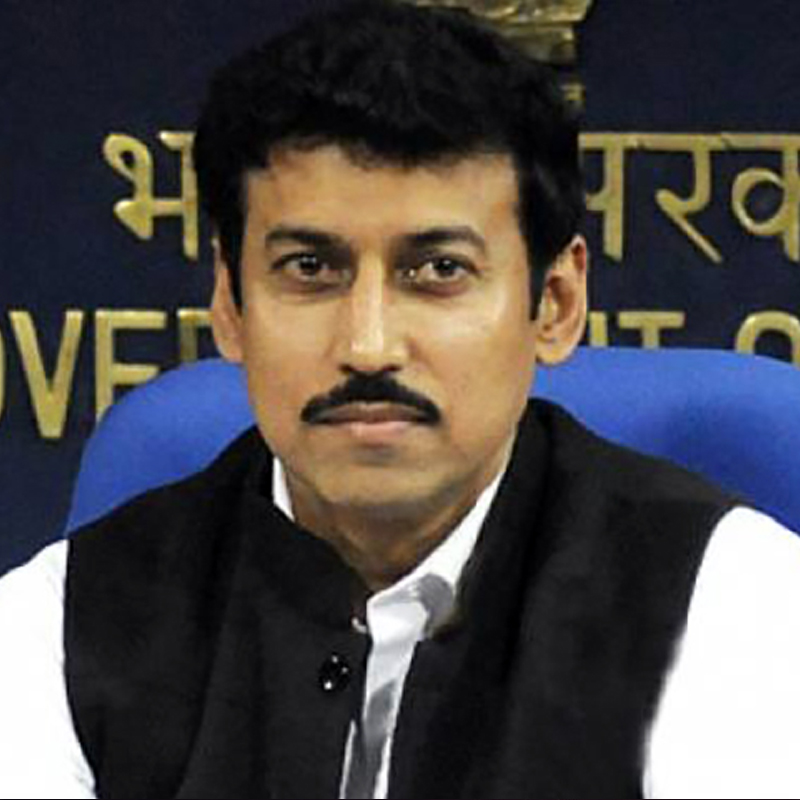
Govt warned 55 violators of programme & ad codes in 3 yrs, says Rathore
NEW DELHI: The government issued 55 advisories or warnings since 2014 to various channels for violation of the Programme or Advertising Codes, the Parliament has been told.
These include four advisories to all channels of which two were issued this year, one relating to telecast of Republic Day events with accompaniment of sign language.
There were nineteen cases in 2014, 17 in 2015, 16 last year and three this year, the minister of state for information and broadcasting Rajyavardhan Rathore said.
In most cases, channels have been issued warnings or advisories and in some cases to run apology scrolls.
Permission to uplink and downlink private satellite TV channel is granted in accordance with the extant Policy Guidelines of Uplinking and downlinking of TV channels in India. Such permission holder companies, are required to abide by all the rules and regulations mentioned in the Policy Guidelines.
Whenever any information/complaints about alleged irregularities in the functioning of any TV channel or their allied companies comes to the notice of this ministry, action is taken on case to case basis, under the provisions of the Policy Guidelines.
In addition, all permitted broadcasters are required to ensure that all programmes and advertisements telecast on private satellite TV channels and transmitted/retransmitted through the Cable TV Network are required to adhere to the Programme and Advertisements Codes prescribed under the Cable Television Networks (Regulations) Act, 1995 and Cable Television Networks Rules, 1994 framed thereunder.
ALSO READ :
No plan for one-stop broadcast authority at present, says Rathore
Prasar Bharati finds transmitter tenders plaint unsubstantiated
Govt rules out TV channel categorisation (updated)

I&B Ministry
India rolls out Rs 203 crore TDIP scheme to boost 6G push
Revised policy widens access for startups, boosts global telecom standards play
NEW DELHI: India is doubling down on its telecom ambitions with a revamped Technology Development and Investment Promotion scheme, designed to help the country move from participant to power player in global standards.
The Ministry of Communications on Tuesday unveiled revised guidelines for the TDIP scheme, committing Rs 203 crore for the 2026 to 2031 period. The move aims to strengthen India’s presence in international telecom forums while accelerating homegrown innovation in next-generation technologies, including 5G Advanced and 6G.
At the launch, Ministry of Communications union minister for communications and development of north eastern region Jyotiraditya M. Scindia said the updated framework is intended to give Indian players a stronger voice in shaping global telecom rules.
The scheme focuses heavily on increasing participation in key global bodies such as the International Telecommunication Union, 3GPP and oneM2M. Financial support will be provided for attending international meetings, submitting technical proposals, taking leadership roles, and even hosting global events in India.
The idea is straightforward. If India helps write the rules, its technologies stand a better chance of going global.
Beyond policy rooms and conference tables, the revised scheme casts a wider net across the ecosystem. Startups, MSMEs, academia and research institutions are now explicitly included, opening the door for broader collaboration and faster innovation cycles. Pilot projects, proof-of-concept initiatives and real-world demonstrations will also receive support, helping ideas move from lab to market.
Supporting the rollout will be institutions such as Telecommunications Standards Development Society India, Telecom Centres of Excellence India and Telecommunications Consultants India Limited. These bodies will coordinate efforts, build capacity and ensure industry participation aligns with global opportunities.
The initiative ties in with broader efforts by the Department of Telecommunications, including programmes like the Telecom Technology Development Fund and the Bharat 6G Mission, forming a more cohesive push towards future-ready networks.
Also present at the event were Ministry of Communications minister of state for communications and rural development Chandra Sekhar Pemmasani and Department of Telecommunications secretary (telecommunications) and chairman digital communications commission Amit Agrawal.
With this update, India is not just looking to keep pace with global telecom trends. It is aiming to help define them.