I&B Ministry
Government to look at law for preventing attacks on press
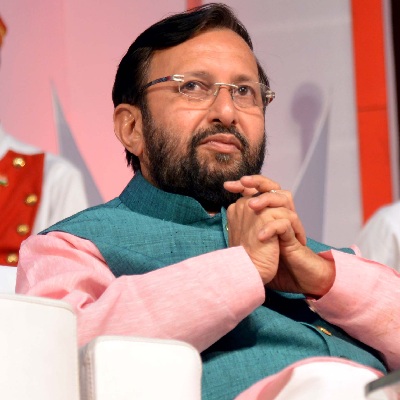
MUMBAI:Prakash Javadekar has been making a lot of appearances since he took over as the new Information and Broadcasting Minister. For a man who is aiming to be a media-friendly rather than a media-shy I&B Minister, Javadekar took the centrestage at the Red Ink Awards held in Mumbai on 7 June, to send across a message from the government to the media fraternity.
He started off by stating that the essence of democracy is the freedom of press and the Modi government is fully committed to the full freedom of media and it is their cardinal principle. While he questioned whether press meant owners, editors, the journalists or the readers and viewers, he also reminded the media that “society expects accuracy, balance and fairness from the media.”
According to Javadekar, self-regulation is better than censorship. “I don’t like the word regulation. It should be self-restraint. Media needs to think whether it will play only what the public is interested in viewing or if it will also play what is in the public’s interest,” he said.
Attacks on the press are not unknown of and Javadekar in his speech did not fail to acknowledge it. “This needs to be prevented. We will surely see if there is a possibility of a central law for prevention of attacks on press,” he stated.
Expectations from the new Minister are high and he is in no hurry to come up with a game plan on the various issues. “There are many issues pending such as foreign direct investment in media, FM news, social media, digital media, digitisation etc. These are issues we will talk to all the stakeholders and then come to a consensus. We don’t want to thrust some decision on the whole sector but evolve it by consensus.”
He also stated that both the print and the electronic media will flourish in the upcoming years.

I&B Ministry
Prasar Bharati sets EPG standards for DD Free Dish platform
New specs define 7-day guide, LCN mapping, and device compatibility.
MUMBAI: Your TV guide just got a backstage pass structured, scheduled, and far more in sync. Prasar Bharati has released detailed technical specifications for Electronic Programme Guide (EPG) services on DD Free Dish, laying down a standardised framework for how channels and programme information are organised and delivered. At the core of the update is a defined EPG data structure, covering genre-based categorisation, scheduling formats, and Logical Channel Numbering (LCN). The aim is simple: make navigation less guesswork and more guided experience across the platform’s over 40 million households.
The specifications also introduce a seven-day programme guide window for each channel, alongside clear rules for channel grouping and LCN mapping effectively deciding not just what you watch, but how easily you find it.
On the technical front, the document outlines requirements for Program Specific Information (PSI) and Service Information (SI), including descriptor usage across tables such as PAT, BAT and NIT. It further details service lists and network linkage parameters, giving OEMs and developers a clearer blueprint for integration.
Importantly, the framework is designed to work seamlessly with television sets equipped with in-built satellite tuners, enabling users to access DD Free Dish directly without additional hardware, an incremental but meaningful step towards simplifying access.
The platform will continue to operate on GSAT-15 transponders, using MPEG-4 compression and DVB-S2 transmission standards, ensuring continuity even as the interface evolves.
While largely technical, the move signals a broader push towards standardisation and user-friendly discovery in India’s free-to-air ecosystem because sometimes, the real upgrade isn’t what’s on screen, but how easily you get there.