I&B Ministry
Government and Meta launch ‘Scam se Bacho’ campaign to fight cyber scams


Mumbai: The ministry of information & broadcasting and Meta have joined forces to launch the ‘Scam se Bacho’ campaign, a national initiative focused on raising awareness about online scams and cyber frauds. The campaign, which was unveiled in New Delhi by information & broadcasting secretary, Sanjay Jaju aims to equip citizens with the skills needed to navigate the growing digital threats facing India.
In collaboration with key ministries including the ministry of electronics and information technology (MeitY), the ministry of home affairs (MHA), and the Indian cyber crime coordination centre (I4C), the campaign aligns with the government’s ongoing efforts to enhance cyber safety and digital literacy. As India witnesses extraordinary digital growth, with over 900 million internet users and leading the world in UPI transactions, there has been a parallel increase in cyber fraud, with 1.1 million cases reported in 2023.
Jaju emphasised the campaign’s significance, stating, “Scam se Bacho is more than just an awareness drive. This campaign can be a national movement that empowers Indian citizens with the tools and knowledge to protect themselves from these threats. By leveraging Meta’s global expertise, the campaign will ensure our digital progress is matched by robust digital security.”

The ‘Scam se Bacho’ initiative goes beyond traditional awareness efforts, focusing on fostering a culture of digital safety and vigilance. It aims to provide citizens with actionable insights to safeguard against online scams and equip them with the resources to stay ahead of evolving cyber threats. The campaign’s launch aligns with the prime minister’s call for stronger measures to combat cybersecurity challenges, advocating for an informed and resilient digital society.
The government and Meta’s joint efforts represent a comprehensive strategy to confront rising cyber risks, ensuring that as India continues to achieve significant milestones in its digital journey, the nation remains protected from threats.







I&B Ministry
IT Rules tweaks are clarificatory, not expansion of powers: MeitY
Govt signals flexibility as platforms push for clarity on user content rules
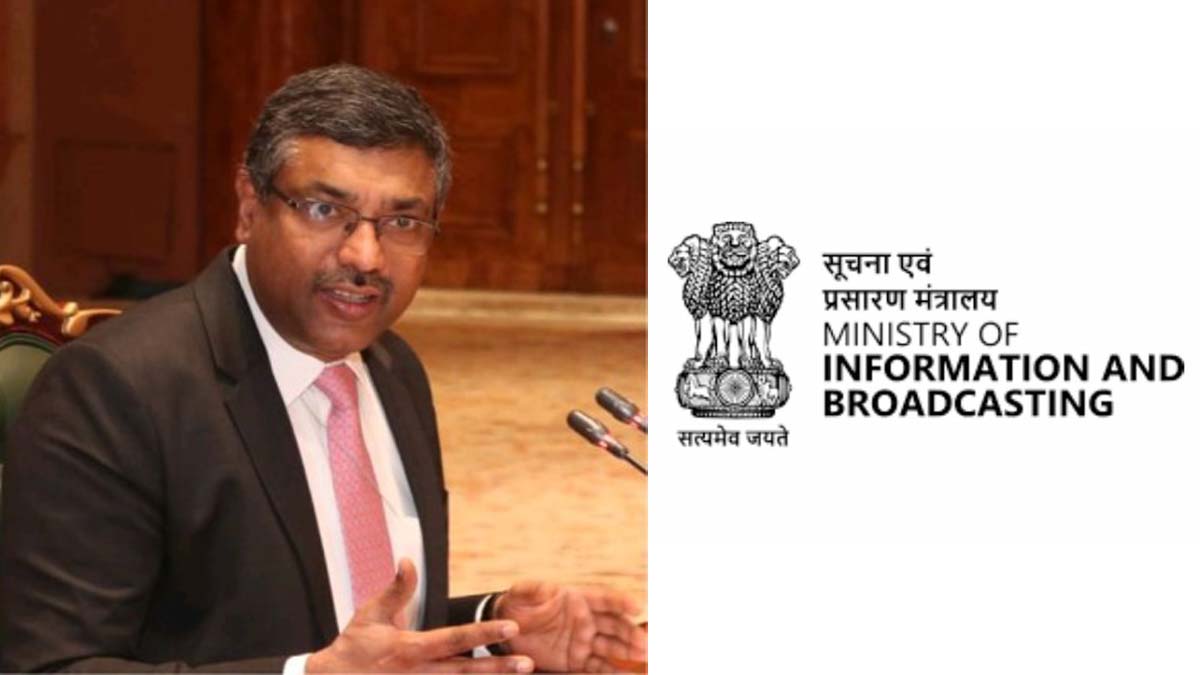
NEW DELHI: The Centre has sought to dial down concerns over its proposed amendments to the IT Rules, with Ministry of Electronics and Information Technology secretary S Krishnan asserting that the changes are intended as clarifications rather than an expansion of regulatory powers.
Pushing back against criticism from platforms and civil society, S Krishnan said the amendments “do not in any way actually give us wider powers” and are meant to remove ambiguity in how existing provisions are applied. He added that the trigger came largely from within the ecosystem, with intermediaries themselves seeking clearer guidance on compliance, takedowns and record preservation.
At the heart of the debate is the growing friction between platforms and policymakers over responsibility for user-generated content. Intermediaries have argued that they should not be treated on par with publishers, particularly when content is created and uploaded by users. Krishnan acknowledged this concern, noting that “a sharper distinction” between user content and publisher content is needed and is currently under examination.
The issue becomes more complex in enforcement scenarios. While registered publishers can be directly asked to modify or remove content, intermediaries often lack control over the original creator. “In such cases, the intermediary cannot direct those changes,” Krishnan explained, underlining the need for procedural nuance.
Another key proposal under discussion is to bring user-generated news and current affairs content within a more unified regulatory ambit, potentially under the Ministry of Information and Broadcasting. The move follows suggestions that a single authority should handle such content, regardless of whether it originates from a publisher or an individual user.
Even as the government frames the amendments as a tidy-up exercise, fault lines remain. Industry players have flagged concerns over compliance burdens, especially for smaller businesses, and questioned whether advisories could effectively become binding without explicit legislative backing. Krishnan said the government is mindful of these risks and is exploring ways to ease obligations, including possible relaxations under certain provisions.
The ministry is also considering consolidating multiple advisories and guidelines into a more structured framework, a step widely seen as addressing long-standing confusion over what platforms are expected to follow.
On takedowns, the government has reiterated that due process will remain unchanged. Krishnan stressed that actions will continue to be governed by established procedures, with reasons recorded and review mechanisms in place. He also pointed to the surge in deepfakes and synthetic media as a factor behind rising content disputes, calling it a “scale challenge” for regulators.
Interestingly, Krishnan also framed social media platforms as commercial entities rather than pure vehicles of free expression, hinting at a broader shift in regulatory thinking as platform economics come into sharper focus.
With stakeholders seeking more time and, in some cases, a rollback of the proposals, the government has kept the consultation process open-ended. Krishnan said further revisions remain on the table, signalling a willingness to adapt the draft based on feedback.
For now, the message from MeitY is clear: the rules may not be tightening in intent, but the effort to define them more clearly is well underway.






