I&B Ministry
Gov asks Prasar Bharati to work out action plan for implementing Sam Pitroda Committee report: Javadekar

NEW DELHI: Prasar Bharati has been asked to prepare an action plan for undertaking the studies/reviews/audits on recommendations of the Sam Pitroda Committee.
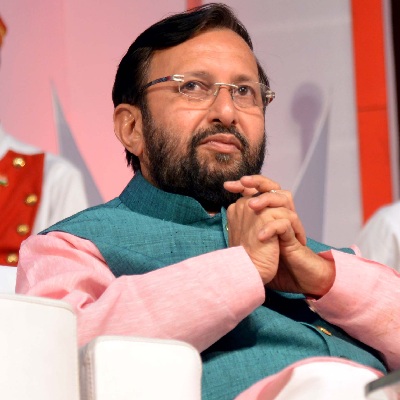
Information and Broadcasting Minister Prakash Javadekar told Parliament today that the pubcaster had been asked to apprise the Ministry about the outcome reports.
In his reply, the Minister said that the report included recommendation of a study of independent sources of finances of Prasar Bharati.
Meanwhile, a senior Prasar Bharati official who did not want to be named said that the Ministry should first clarify whether it has accepted or rejected the Pitroda report.
The Pitroda Committee set up to review the working of Prasar Bharati had in its report in January this year stressed the need for constituting a Parliamentary Committee, as originally envisaged in the Prasar Bharati Act 1990 to ensure that the pubcaster discharges its duties in accordance with the provisions of the Act and Government defined duties.
In the report submitted to the then Information and Broadcasting Minister Manish Tewari, it had recommended reorganisation of the pubcaster’s Board to make it a professionally managed body and make it more effective in guiding the organisation.
Pitroda noted that Prasar Bharati’s vision must be to become a genuine ‘public broadcaster’ as against a ‘government broadcaster’.
The report said there is need to effectively complete transfer of ownership and management of assets and human resource to Prasar Bharati ‘to make the organisation administratively and financially autonomous of government.’
A regulatory body has to be set up to ensure public accountability of Prasar Bharati with respect to all content broadcast on its television and radio networks. The regulatory body should be a sub-committee of the Prasar Bharati Board.
Interestingly, the Committee has suggested setting up of Prasar Bharati Connect (PBC) as the third arm of the public service broadcaster, independent of Doordarshan and All India Radio, to expand the social media. PBC should be mandated to manage the various social media initiatives of all the wings of Prasar Bharati. It also wants a social media strategy of Prasar Bharati.
The Committee was set up on 28 January last year and had decided to set up 11 working groups on different issues and has now come out with a report on eight main areas: governance and organisation, funding, human resource, content, technology, archiving, social media and global outreach.
It has said that in addition to the public broadcasting function, there is a distinct requirement for the state to broadcast messages and accomplishments of public interest which can be met by using existing public and private broadcaster infrastructure.
The Committee suggests amending the 1990 Act was necessary so as to impart genuine and effective autonomy to the organisation.
Apart from Pitroda who is advisor to the Prime Minister of India on Public Information Infrastructure & Innovation and chairman of the National Innovation Council, the other members include additional secretary and nominated Prasar Bharati Board member J S Mathur. National Innovation Council member Shekhar Kapur, former I&B secretary Asha Swarup, Vikram Kaushik who is a business strategist and brand advisor and part-time member on the Prasar Bharati Board; M P Gupta from the Indian Institute of Technology in Delhi, B K Gairola who is mission director (e-Governance) and Prasar Bharati CEO Jawhar Sircar who was the convener.