I&B Ministry
Prasar Bharati submits D2M roadmap as policy decisions near
EY report outlines nationwide rollout plan as trials expand to 19 cities.


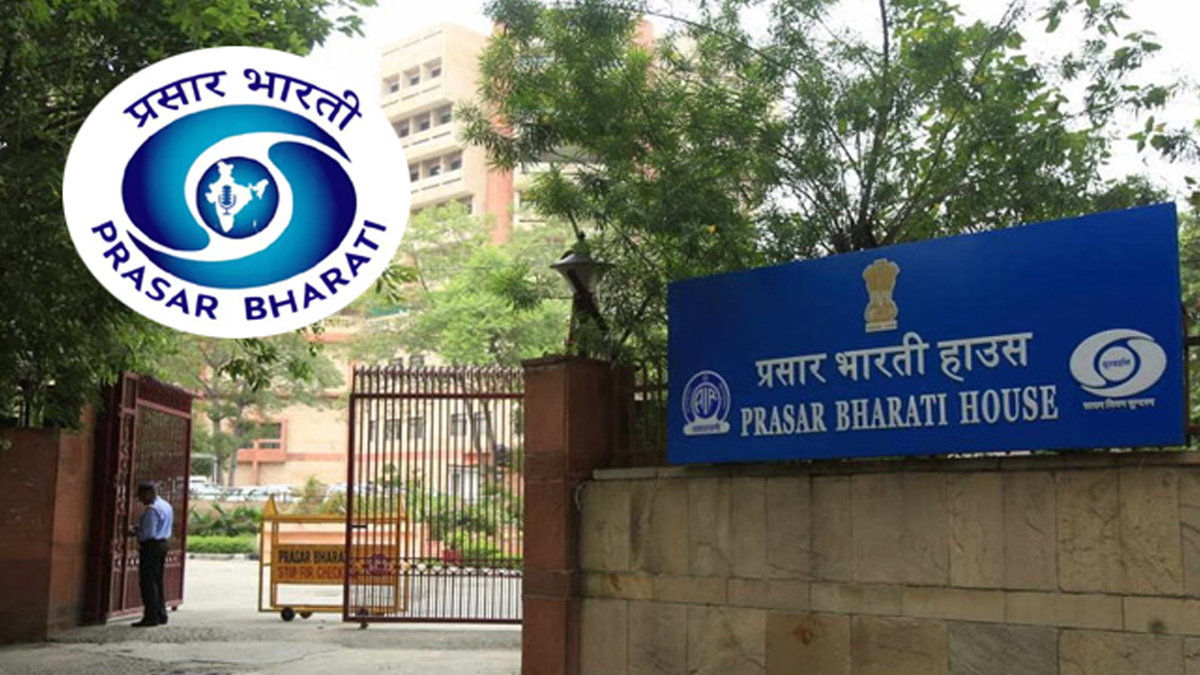
MUMBAI: The next screen revolution may not need a data pack at all. India’s ambition to deliver television, educational content and emergency alerts directly to mobile devices without internet connectivity has moved a step closer to reality, with Prasar Bharati submitting a detailed Direct-to-Mobile (D2M) implementation roadmap to the Ministry of Information and Broadcasting (MIB).
Prepared by consultancy firm Ernst & Young (EY), the Detailed Project Report (DPR) is expected to serve as a blueprint for the future of D2M broadcasting in India. According to media reports, the public broadcaster accepted the report after multiple revisions and stakeholder consultations before forwarding it to the ministry for consideration.
At its core, D2M technology aims to bypass conventional internet networks, allowing video content, news updates, educational programming and emergency alerts to be transmitted directly to compatible devices. Supporters believe it could transform content delivery, particularly in regions where internet access remains patchy or expensive.
The EY report goes beyond technology. It outlines a nationwide implementation strategy, recommends a public-private partnership (PPP) framework and proposes a long-term commercial model designed to sustain operations once the service scales up.
The submission arrives at a crucial moment. A recent report by the Parliamentary Standing Committee on Information and Communications Technology urged the government to accelerate policy decisions surrounding D2M, citing encouraging results from ongoing pilot projects and proof-of-concept trials.
In response, the ministry informed the committee that Prasar Bharati had been tasked with preparing a comprehensive roadmap that incorporates inputs from government departments, industry stakeholders and technical experts.
India’s confidence in the technology is rooted in extensive field testing. In partnership with IIT Kanpur and Saankhya Labs, now part of Tejas Networks, Prasar Bharati is currently conducting D2M trials across more than 19 cities. The pilots are evaluating both high-power and low-power transmission models to determine the most efficient deployment strategy.
Earlier demonstrations in Delhi and Bengaluru successfully showcased the ability to stream multimedia content directly to mobile devices without relying on traditional broadband infrastructure. Industry experts argue that such a system could also help ease network congestion during major live events and emergencies by shifting heavy content delivery away from mobile data networks.
The initiative recently received another boost when the Committee of Secretaries approved allocation of the 470–582 MHz spectrum band for D2M services and backed a PPP-led implementation model. However, the path to rollout is not entirely clear.
While broadcasters have largely welcomed the technology, telecom operators remain cautious. The Cellular Operators Association of India (COAI) has expressed concerns that dedicating the spectrum to D2M could affect future mobile broadband expansion and has called for broader consultations before final decisions are made.
Proponents counter that D2M should be viewed as a complementary platform rather than a competitor to telecom networks, creating an additional channel for content distribution while reducing pressure on existing infrastructure.
The technology’s ambitions stretch beyond smartphones. Recent demonstrations by Intel and Tejas Networks have shown content being delivered directly to laptops without Wi-Fi or internet access, opening potential applications in education, disaster communication and public information services.
For now, the DPR places D2M firmly on policymakers’ desks. Whether it becomes India’s next major broadcasting platform will depend on how regulators balance the competing interests of broadcasters, telecom operators and technology providers. But one thing is increasingly clear, the future of content delivery may travel through the airwaves as much as through the internet.