Applications
Google developing AI to control computers, aims for seamless automation
Mumbai: In a bold leap towards the future of technology, Google is developing an artificial intelligence system capable of fully taking over and operating computers. The tech giant’s latest AI initiative aims to push the boundaries of automation by allowing AI to perform tasks traditionally handled by humans, such as managing applications, executing commands, and even troubleshooting issues. This development was first reported by ‘The Information’ and has since stirred a wave of anticipation and concern within the tech community.
The project, dubbed ‘Project Tailwind’, seeks to automate computer operations, potentially transforming the way people interact with technology. Google’s approach involves training the AI to execute tasks across various software applications, thereby reducing the need for human intervention. The AI system could streamline tasks ranging from data entry and document formatting to more complex activities like coding and data analysis.
Google’s ambitious project could redefine automation, particularly in business environments where repetitive tasks dominate. With AI capable of running computers autonomously, organisations might see increased productivity and cost savings. Additionally, this technology could pave the way for new AI-driven solutions across various industries, from customer service to software development.
However, the initiative has also raised questions about privacy and security. Experts caution that an AI with the ability to control computers may present risks if not properly regulated. There is a growing need to establish guidelines on how such AI systems will be deployed and monitored to ensure they operate within ethical boundaries.
As AI continues to evolve, its impact on the workforce is a topic of debate. With Project Tailwind, Google could be ushering in a new era where AI becomes an integral part of daily operations, potentially reshaping the future of work. The development is expected to bring significant changes in the way businesses and individuals approach routine tasks, driving greater efficiency.

Applications
Inshorts Group chief Deepit Purkayastha joins IAB video council for Southeast Asia and India
The co-founder and chief executive of the short-form content platform has been inducted into the IAB SEA+India Video Council, giving India a stronger voice in shaping digital video frameworks
NOIDA: India has long been the world’s most chaotic, multilingual and mobile-first digital market. Now, one of its most prominent short-video executives is getting a seat at the table where the rules are written.
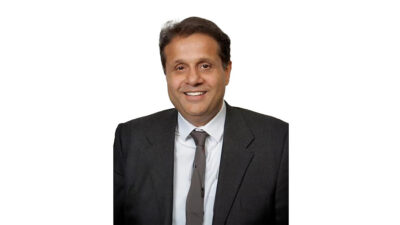
Deepit Purkayastha, co-founder and chief executive of Inshorts Group, has been selected as a member of the IAB SEA+India Video Council for 2026. Run by the Interactive Advertising Bureau, the council brings together senior leaders from Southeast Asia and India to shape standards, best practices and measurement frameworks for the fast-evolving video and digital advertising ecosystem.
The timing is pointed. According to the IAMAI-Kantar Internet in India Report 2025, over 588 million Indians are now consuming short-video content, with growth increasingly driven by rural and non-metro audiences. India’s active internet user base has crossed 950 million, with 57 per cent of users now coming from rural markets. Yet the frameworks that govern how video consumption is measured and monetised were largely designed for single-language, Western markets and have struggled to keep pace with the scale, diversity and complexity of India’s digital landscape.
Purkayastha is no stranger to these debates. He already serves on the AI Council at Marketing and Media Alliance India and as co-chair of the Digital Entertainment Committee at the Internet and Mobile Association of India. His induction into the IAB SEA+India Video Council extends that influence into the global video standards arena.
Inshorts Group sits squarely at the intersection of these forces. Its flagship product, Inshorts, India’s highest-rated short news app, reaches 12 million active users with 60-word news summaries. Its sister platform, Public App, reaches 80 million monthly active users across more than 700 districts and 12 languages, serving communities that most global platforms barely register.
Purkayastha said the opportunity was about building something more representative. “India today sits at the centre of the global video ecosystem, but the frameworks that define how value is created and measured have not always kept pace with the realities of our market,” he said. “Being part of the IAB SEA+India Video Council is an opportunity to contribute to a more representative and future-ready approach, one that accounts for diversity in language, context, and user intent.”
As a council member, Purkayastha will contribute to shaping regional standards across video advertising, measurement and platform governance, with a focus on frameworks that are native to India’s multilingual, mobile-first ecosystem rather than imported from global benchmarks designed elsewhere.
For years, India has been content to play by rules written for other markets. Purkayastha’s induction is a signal that it is done waiting to be consulted and ready to start writing them.