Distribution
Glass-free live 3D TV exhibited at IFA Berlin

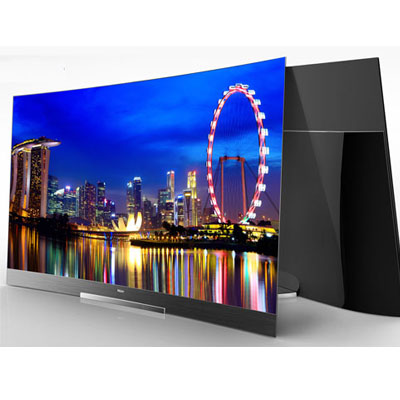
MUMBAI: Global alternative visual solutions provider Newsight GmbH has together with companies Grundig and 3D Image Processing (3D IP) succeeded in capturing live video and streaming it through an autostereoscopic 3D display system in real time whereas prior 3D content had been limited to post-production material.
The achievement of streaming live content in a glasses-free, three-dimensional television format was exhibited at this year’s Consumer Electronics show Internationale Funkausstellung (IFA) in Berlin.

“This breakthrough will revolutionize home entertainment,” said Newsight chairman & CEO Jay Bingle. “We are leading the way to a new era in television – comparable to the passage from black-and-white to colour TV.
Historically the IFA has always been the preferred platform to introduce milestones in the development of television to a broad public: in 1967 the first colour TV, in 1983 the first stereo colour TV. And now in 2005 the transition to live 3D TV without glasses, states an official release.
To date, 3D content has had to go through a post-production process where it was specifically rendered for viewing without glasses. With this new breakthrough from Newsight/3D-IP/Grundig, subject matter can now be captured and transmitted in glasses-free 3D in real time. This eventually introduces an entirely new way to experience everything from sporting events to reality TV. Projected timing for the in-home experience is seen within the next few years given infrastructure and other requirements. As a first milestone, the plan is to broadcast a live sporting event in 3D in a selected venue during the football World Cup 2006.
The innovation is based on the ability to capture 3D with a remarkable single stereo-camera 1920×1080 (HDTV) in combination with a real-time processing operation. In the past, such 3D content was typically captured with eight or sometimes two cameras, and then it was processed for delayed off-line playback.
With this new advancement, a scene is captured live in two perspectives using a professional high-resolution stereo camera with special image processing hardware code-named Black Betty, developed by partner company 3D-IP. These two data streams are then routed through a converter chip, which synthesizes multiple viewpoints from a 3D scene in real time. A total of eight stereo views are generated, combined and then played back on a modified Grundig Tharus 3D TV screen. “This technical and human challenge, which led to the final breakthrough, was possible thanks to our industry-leading experts.” said Paul-Louis Meunier, managing director of Newsight GmbH, the release adds.
The Tharus, a standard flat panel TV, is converted into a 3D display by integrating a filter, specially developed by Newsight, into the TV set. Eight pictures are shown simultaneously and projected in different directions, so that the eye of the observer perceives each of the different perspectives. 3D glasses are not needed with this system: the 3D image can be seen with the naked eye.

New Delhi: Prasar Bharati has thrown open applications for fresh capacity on DD Free Dish, signalling a timely opportunity for broadcasters looking to expand reach without long-term lock-ins. The public service broadcaster has issued a dual notice for its 95th and 96th online e-auctions, aimed at filling vacant MPEG-2 and MPEG-4 slots on a pro-rata basis for February and March 2026.
The two auctions are tentatively scheduled to begin on January 27, with allotments valid from February 1, 2026. Applications for both auctions close on January 21 at 3 pm, giving channels a narrow window to get their bids in.
The 95th e-auction will cover vacant MPEG-2 slots, while the 96th will focus on MPEG-4 capacity. Participation is limited to satellite television channels holding valid downlinking and uplinking permissions from the ministry of information and broadcasting. International public broadcasters cleared by the ministry are also eligible.
As with previous rounds, channels have been grouped into buckets based on genre and language, with sharply differentiated reserve prices reflecting reach and demand.
For the MPEG-2 auction, Hindi and Urdu general entertainment channels sit at the top of the pile. The starting reserve price for bucket A+ in the first round is Rs 2,63,48,000. Movie, music and sports channels in Hindi and Urdu follow in bucket A at Rs 2,10,14,000. Bhojpuri channels and other Hindi and Urdu genres, excluding devotional content, fall under bucket B with a reserve of Rs 1,78,62,000. Hindi and Urdu news channels in bucket C start at Rs 1,33,27,000, while bucket D, which includes regional language channels, English news and devotional or spiritual channels, begins at Rs 1,13,96,000.
The MPEG-4 auction comes in at a far leaner price point. News and current affairs channels in Hindi, English or pan-India languages, grouped under bucket G1, start at Rs 13,41,000. Non-news genres under bucket G2 have a reserve of Rs 8,80,000. Regional languages such as Marathi, Punjabi and Gujarati in bucket R2 begin at Rs 4,84,000. Southern language channels in Tamil, Telugu, Kannada and Malayalam, grouped under bucket R1, start at Rs 81,000, the same reserve price set for other scheduled 8 regional languages in bucket R3.
Prasar Bharati has underlined that compliance will be closely watched. Broadcasters must ensure that at least 75 per cent of their monthly programming, excluding advertisements, aligns with the declared genre and language. Any deviation could trigger show-cause notices or even removal from the DD Free Dish platform.
For channels chasing reach in a crowded market, the message is clear. The window is brief, the prices are set and the audience is waiting. On DD Free Dish, visibility still comes cheap, but only for those ready to move fast.






