Connect with us

Hindi

Gangs Of Wasseypur 2 : Much ado about nothing

Published

on

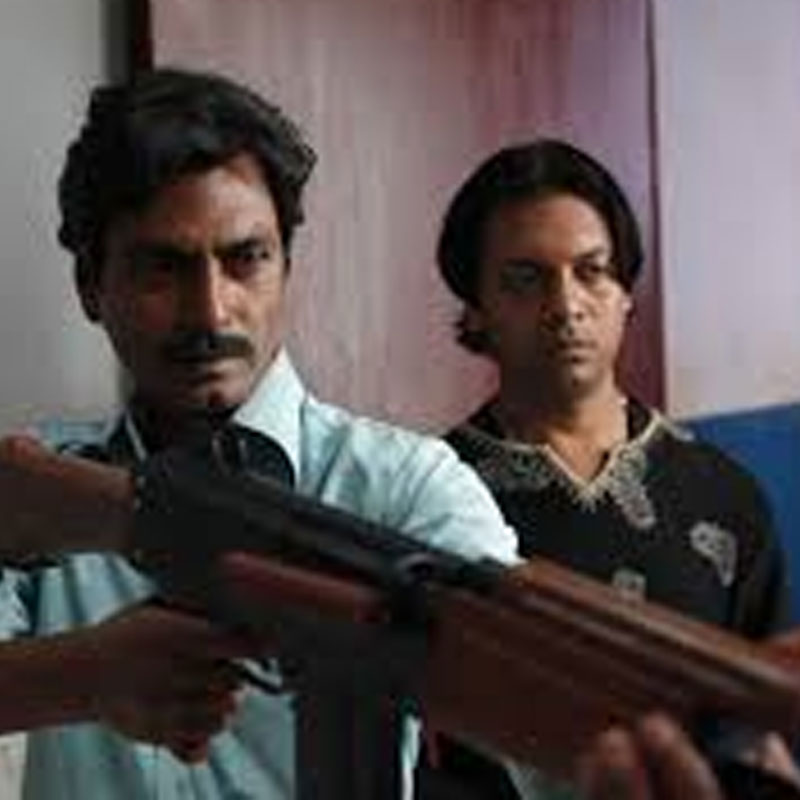
MUMBAI: If Gangs Of Wasseypur was not enough of an overdose of local gang wars, Gangs Of Wasseypur 2 is worse. It is like being invited for dinner and then having hours of family holiday videos inflicted upon you with a running commentary by the host. The story continues with yet another generation of Khans carrying on the enmity with the Quereshis who have survived round one. The string-puller-cum-rule-maker of the wars of the clans is still the same, Bahubali Ramadhir Singh (Tigmanshu Dhulia). What has changed is the way of killing: guns of all kinds have replaced knives and swords. If one looks at the sequence of events in this story of the clans, it is obvious that the Hollywood classic The Godfather has been brought in to Jharkhand and slaughtered without mercy.

Sardar Singh is killed at the end of Gangs Of Wasseypur with bullets shot at him from every conceivable angle. Times have changed and the place has become the breeding ground for wannabe dons, just like wannabe Sachin Tendulkars and wannabe Salman Khans are sprouting all over in real India. One of the aspirants for the kingdom is Khan‘s own half brother, Zeishan. That is why it is even more pertinent for the Khan clan to guard its reputation and top position in the underworld. As soon as Sultan‘s body is laid to rest, the elder son, Danish Khan (Vineet Singh), sets out to find his father‘s killers but is soon killed himself. The second one, Faizal Khan (Nawazuddin Sidiqui) is unmoved; he is heavily into smoking weed and romancing his wife to be, Mohsina (Huma Quereshi).

The good for nothing Sidiqui may have been written off, taunted and called names by his mother, Richa Chadda, but he belies all expectations. Waiting for the mourning period to get over, he strikes on his enemies. Following the old filmy pattern, he starts from the bottom rung. Why can‘t he go for the top plotters of his family‘s ruin? After all, Ramadhir Singh and the perpetrator of the murder of his father and elder brother, Sultan Quereshi (Pankaj Tripathi), is roaming all over, exposing himself. But that would mean the film would end in half an hour!

Advertisement

The killings continue, with children and women all being fair targets for the Quereshis as long as the person bears a Khan tag. Killed in the spree are Sardar‘s (Manoj Bajpayee) widow, Richa Chadda, her youngest son and elder son Vineet Singh‘s widow. This takes the enmity a bit to the extremes. This and many such sequences not only not add to the content value of this film but only help prolong it. As a result, it slows down and becomes boring. Also, like his father, Nawazuddin changes businesses at whim and the one he chooses for himself stays his monopoly; nobody else dare indulge in same business.

Playing the Quereshis and Khans against each other, Dhulia has survived so far because he has changed sides as and when needed and has never been in the forefront. However, his son is foolhardy and against the wishes of his father, who always chides him for being a fool, wants to prove himself. He keeps provoking the Quereshis to go behind the Khans. They are provided automatic guns and grenades and the fight to the finish takes place on the Khan residence. Closeted in one room deep into the house, the family survives as Nawazuddin sneaks out to get treated for a bullet wound and later retaliate. The man leading the Quereshis, Tripathi, is spotted and killed easily enough but Dhulia is not so easy to finish. He is ensconced safely in the big town, Dhanbad, well guarded. Nawazuddin has an aide in his half brother, Zeishan. The climax is prolonged what with Nawazuddin using one gun after another to empty the bullets on Dhulia, who is cornered and settled on a toilet seat. All one can see of him is his blood when the shooting is over so as to not make this sequel pale in anyway compared to its first part in depicting gore where weapons like swords were used and blood flowed freely!

This over two and half hour film is mainly about killings but there is also an attempt at humour, even if it is of the crude type. Like the band led by Yashpal Sharma, playing a fitting song at funerals or weddings or the three boys named Definite, Perpendicular and Tangent; then there is honeymoon night with Nawazuddin and Huma and the whole house shakes due to the vigour with which they make love. Whatever humour is tried in dialogue it is of the vulgar kind.

Advertisement

Performances of the artistes are generally good with real life portrayals; Nawazuddin Siddique excels as he never goes overboard and treats his role in a matter-of-fact manner. Richa Chadda and Tigmanshu Dhulia carry on from the earlier part of the film and are as effective in Part 2 as in Part 1. The same goes for Piyush MIshra and Pankaj Tripathi. Of the others, Mohsina as the film buff and Zeishan Quadri as the don aspirant are both good and natural. Direction by Anurag Kashyap is indulgent; he tries to cram too much into the film and uses violence as the shocker but such shock value can work only occasionally. That the film is divided in two parts is fine but even as such the length of each part is too much. Music is purely local except one where Huma uses English words in a song to encourage Nawazuddin each time there is a setback.

Gangs Of Wasseypur 2 is even less effective than its earlier part. After all, part one has shown all that the makers wanted to show except the culmination of a family feud. The film‘s Wednesday release to rake in as much as it can before Ek Tha Tiger hits the screens next week, may only have affected the film the wrong way.


Advertisement
Click to comment

Leave a Reply

Your email address will not be published. Required fields are marked *

Hindi

GUEST COLUMN: Why film libraries & IPs are the new engines of growth

Unlocking value through catalogue strength and IP synergy

Published

on

MUMBAI:In a media landscape defined by fragmentation, platform proliferation, and ever-evolving audience behavior, the economics of filmmaking are undergoing a fundamental shift. No longer confined to box office performance, a film’s true value is now measured across an extended lifecycle that spans digital platforms, syndication networks, and global markets. As content consumption becomes increasingly non-linear and algorithm-driven, film libraries and intellectual properties (IPs) are emerging as strategic assets, capable of delivering sustained, long-term returns. For Mohan Gopinath, head – bollywood business at Shemaroo Entertainment Ltd., this transformation signals a decisive move from hit-driven models to portfolio-led value creation. In this piece, Gopinath explores how legacy content, when intelligently repurposed and distributed, can unlock recurring revenue streams, why the interplay between catalogue and original IP is critical, and how media companies can build resilient, future-ready entertainment businesses.

For all these years, we thought that a film is successful if it performs well in theatres. There are opening weekend numbers, box office milestones, and distribution footprints that gave a good picture of how the movie has done commercially and also tell us about its cultural impact. However, there are multiple platforms today, always-on content ecosystem, which has caused a shift. Today, the theatrical performance is not the culmination of a film’s journey but merely the beginning of a much longer and more dynamic lifecycle.

Film libraries today are emerging as high-value, constantly evolving assets that deliver sustained returns well beyond initial release cycles. This becomes a point of great advantage for legacy content owners with diverse catalogues, to shape long-term business outcomes.

Advertisement

According to FICCI-EY, the media and entertainment industry of India achieved a valuation of Rs 2.78 trillion in 2025 which is expected to reach Rs 3.3 trillion by 2028 through a compound annual growth rate of approximately 7 per cent and digital media will bring in more than Rs 1 trillion to become the biggest sector which generates about 36 per cent of overall market revenues.

This shift is the expansion of distribution endpoints. We know how satellite television was once the primary secondary window but today, it coexists with YouTube, OTT platforms, Connected TV, and FAST channels. Each of these platforms caters to distinct audience demographics and consumption behaviors, helping content owners to obtain more value from the same asset across multiple formats.

For instance, films that had great reruns, now find continuous engagement across digital platforms. On YouTube, classic Hindi cinema continues to attract significant viewership, reaching audiences across generations and geographies with remarkable consistency. At Shemaroo Entertainment, this is reflected in our film library shaped over decades as part of a long association with Indian entertainment. From classics such as Amar Akbar Anthony to much-loved entertainers like Jab We Met, Welcome, Dhamaal, Phir Hera Pheri, Dhol, Golmaal, and Bhagam Bhag, many of these titles continue finding new audiences while retaining their place in popular memory. Their enduring appeal reflects how culturally resonant stories can continue creating value over time.  Similarly, FAST channels have created curated, always-on environments where catalogue content can continue to thrive through star-led and genre-based programming.

Advertisement

This multi-platform approach has very well transformed films into long-tail IP assets which are capable of generating recurring revenue across advertising, subscription, and syndication models. 

The evolution of audience behavior is equally important. Nowadays, it’s more important to find what’s more relative than what’s recent as viewers are more influenced by mood, memories, and algorithmic suggestions than by release schedules. Even if a movie was released decades ago, it can trend alongside a newly released movie, if surfaced in the right context. Thoughtful packaging, whether through festival-based playlists, actor-driven collections, or genre clusters, allows catalogue content to remain dynamic and continuously discoverable. Shemaroo Entertainment has built extensive film libraries over decades and its focus has mostly been on recontextualizing content for the consumption of newer environments. This process doesn’t just include digitization and restoration, but also re-packaging of films as per platforms.

Syndication itself has evolved into a key growth driver. In perspective, when looking at the domestic market, curated content packages continue to find strong demand across broadcast and digital platforms. Meanwhile, in the international market, especially in markets like Middle East, North America and Southeast Asia, the appetite for Indian content is opening up new monetization avenues. Here, the ability to package and position catalogue content effectively becomes as important as the content itself.

Advertisement

Importantly, the need to re-package catalogue content does not diminish the role of new content. In fact, originals and fresh IP are essential to sustaining the long-term value of a film library because they act as discovery engines that bring audiences into the ecosystem, while catalogue content drives depth, retention, and repeat engagement. 

This interplay between the “new” and the “known” is what defines a robust content strategy today. While new films generate spikes in consumption, catalogue titles offer familiarity and comfort. These are factors that are increasingly valuable in an era of content abundance and decision fatigue. This is also shaping our strategy, drawing value from both a deep catalogue assets and a growing focus on original IPs to strengthen long-term audience engagement and build more predictable revenue streams.

There is growing recognition that long-term value in entertainment will be shaped not only by how intelligently existing content continues to live, travel and find relevance, but also by how consistently new stories are created to renew that ecosystem. In that sense, film libraries and original IP are not parallel bets, but reinforcing engines of growth. For media companies, the opportunity lies in making these two forces work together, because that is increasingly where more resilient and predictable businesses are being shaped.

Advertisement

Note: The views expressed in this article are solely the author’s and do not necessarily reflect our own.

Continue Reading

Advertisement News18
Advertisement
Advertisement
Advertisement
Advertisement Whtasapp
Advertisement Year Enders

Indian Television Dot Com Pvt Ltd

Signup for news and special offers!

Copyright © 2026 Indian Television Dot Com PVT LTD