Hindi
From reel to real change as IMDb maps 25 years of indian cinema

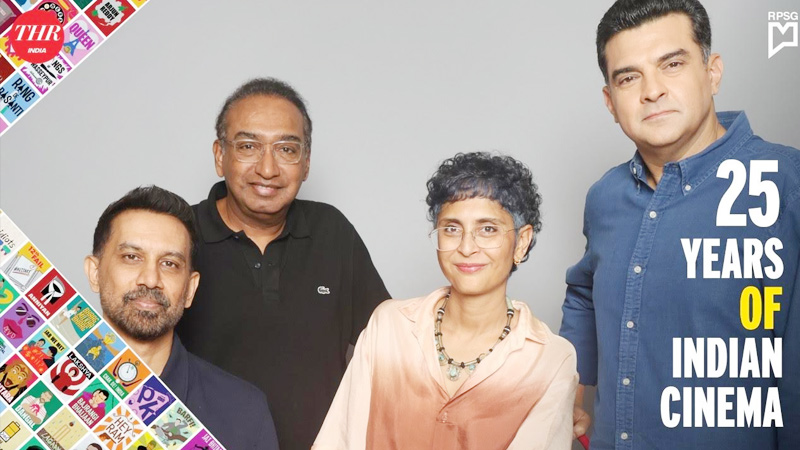
MUMBAI: Lights, camera, reflection! As IMDb turned the spotlight on 25 Years of Indian Cinema (2000–2025), a new script of change unfolded, one where superstardom is shared, stories are decentralised, and the audience now holds the director’s chair.
In a spirited roundtable hosted by Anupama Chopra for The Hollywood Reporter India, industry stalwarts Siddharth Roy Kapur, Kiran Rao, Sameer Nair and Raj Nidimoru dissected the shifting contours of India’s cinematic universe. The conversation, anchored in IMDb’s landmark report, delved deep into how streaming, social media, and audience evolution have rewritten Bollywood’s rulebook.
“Stardom has been democratized,” said Siddharth Roy Kapur, noting how the halo once reserved for a handful of megastars has now spread across platforms and personalities. Rao agreed, adding that today’s fascination lies less with the cult of celebrity and more with the craft itself. “It’s stopped being all cult of personality. There are so many more artists now that people are interested to watch,” she said, highlighting how Youtubers, comics, and digital creators now rival traditional film stars in influence.
Raj Nidimoru pointed out the industry’s long-standing blind spot, the lack of sustained investment in building women’s stardom. “The hero is treated like a franchise,” he said, “but the same pipeline doesn’t exist for actresses. You can’t expect overnight success for female-led films when you haven’t built that equity over time.” His words struck a chord, echoing an industry still learning to give its heroines equal narrative and commercial weight.
The conversation turned south quite literally as Kapur acknowledged the audacious ambition of regional cinema. “There’s something to be said for the ambition of South films,” he remarked, attributing their boldness partly to the less corporatised funding ecosystem. “They go all in. That chaos fuels creativity.”
Nidimoru added a telling anecdote from his Stree shoot in Chanderi: “The cook was watching a dubbed Telugu film that’s all they watched.” For him, the distinction between North and South cinema no longer holds. “It’s one Indian film industry now,” he said.
Sameer Nair proposed a compelling concept CSR for creativity. “The industry needs its own form of CSR Creative Social Responsibility,” he said, urging filmmakers to balance profit with purpose. “For all the commercial stuff we aspire to, we must ensure creativity is preserved and shared almost like saving the knowledge of the race.”
As the discussion drew to a close, it was clear that Indian cinema’s next 25 years won’t just be about bigger budgets or bolder scripts but about inclusion, integrity, and imagination.
After all, the story of Indian cinema has never been just about stars on screen. It’s about who gets to shine next.
Watch the full discussion here